Answer: Marine-grade ceramic coatings provide durable UV, salt, and oxidation protection for fiberglass, gel coat, paint, and more. They’re best for boat owners, RV travelers, and marine hobbyists seeking long-lasting shine with easier cleaning. Top picks below are selected for different use cases, from DIY-friendly sprays to pro-grade graphene formulations. This guide helps you compare durability, application ease, and surface compatibility across five strong options.
| Product | Best For | Surface | Notes |
|---|---|---|---|
| Meguiar’s Marine & RV Hybrid Ceramic All Surface Sealant | DIYers seeking simple spray-and-wipe | Fiberglass, Gel Coat, Paint, Metal, Glass | Versatile and easy to apply; good gloss and UV protection |
| Glidecoat Marine Ceramic Coating 160ml | Long-term marine protection | Fiberglass, Gel Coat, Paint | Marine-grade, tested in harsh environments |
| Boat Juice Protection Boat Ceramic Coating | High-gloss finish with UV protection | Fiberglass, Gel Coat, Painted surfaces | SiO2-based with strong hydrophobic properties |
| Glidecoat Alpha Graphene Ceramic Coating | Pro-level durability | Marine, Automotive, RV | Graphene-enhanced for extreme durability |
| AquaDoc Boat Ceramic Coating Spray | Showroom shine and water beading | Boats, Yachts, Watercraft | SiO2-based spray with lasting hydrophobic barrier |
Meguiar’s Marine & RV Hybrid Ceramic Sealant

Features include a spray-and-wipe format for ease of use, delivering durable ceramic protection that boosts gloss and water beading. It is designed primarily for boats, RVs, fiberglass, and gel coat, but is safe on paint, metal, vinyl, and glass surfaces. Best for: DIY enthusiasts who want quick, versatile protection without complex steps. Caution: Even with safe formulations, test on a small area first to verify surface compatibility and appearance, especially on highly oxidized or delicate finishes.
Glidecoat Marine Ceramic Coating 160ml

Best for: boat owners seeking a dedicated marine-grade ceramic coating. This coating adds a nanoceramic protective layer to gel coat or paint, offering UV and chemical resistance while restoring color and gloss. It has been tested in harsh marine environments, with independent testing indicating strong salt and UV protection. Caution: The product requires proper surface preparation and curing in a controlled environment for maximum durability; avoid applying in high humidity or extreme temperatures.
Boat Juice Protection Boat Ceramic Coating

Best for: users wanting high gloss with strong UV protection and hydrophobic performance. The coating uses SiO2 chemistry to deliver long-lasting protection against oxidation and fading while maintaining a slick, easy-to-clean surface. Caution: This is a coating spray; ensure even coverage and avoid pooling, which can affect finish uniformity on large areas.
Glidecoat Alpha Graphene Ceramic Coating

Best for: professionals or dedicated hobbyists seeking premium protection with graphene-enhanced durability, extreme gloss, and enhanced hydrophobic properties. The Alpha Graphene formulation aims to outperform standard ceramic coatings in durability and water beading. Caution: Graphene-based coatings can be more sensitive to surface preparation quality; ensure a clean, smooth substrate and follow curing guidance precisely.
Marine Ceramic Coating For Boats (GrandAutocts)

Best for: boat owners seeking a robust spray-on option that improves UV resistance and provides a protective layer against salt and oxidation. The product claims to deliver an insane shine while simplifying hull care. Caution: Availability and packaging vary; verify current sizing and surface compatibility before purchase.
AquaDoc Boat Ceramic Coating Spray
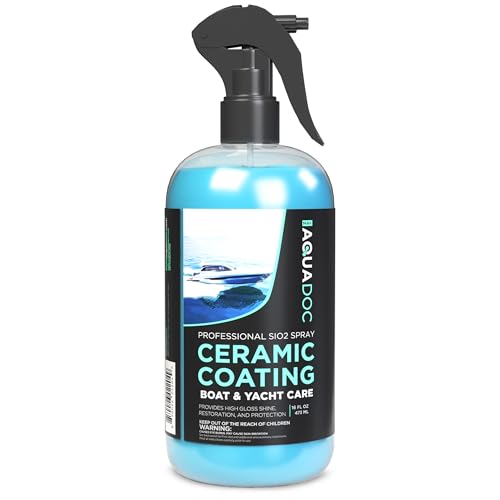
Best for: boaters who want a SiO2-infused spray that creates a hydrophobic, water-repellent barrier and deep gloss. The coating aims to protect against UV and mineral deposits while simplifying post-trip cleaning. Caution: Sprayer technique and even application are important for uniform protection; apply in shade and follow cure times precisely.
Buying Guide: Key Purchase Considerations
- Surface compatibility: Check whether the coating is recommended for fiberglass, gel coat, paint, metal, or glass. Some products are multi-surface, while others excel on specific substrates.
- Durability and environment: Marine coatings should resist salt, UV, and chemicals. Consider regional climate and marina exposure when choosing a formula.
- Application method: Sprays offer quick protection; wax-like or paste formulations may require more steps. Ensure you have proper surface prep and curing conditions.
- Gloss versus protection balance: Some coatings prioritize high gloss; others balance gloss with durability and hydrophobic performance.
- Maintenance and re-coating: Look for coatings that allow easy reapplication or top-off layers to extend durability without heavy removal.
- Safety and handling: Follow manufacturer guidelines for ventilation, gloves, and curing times. Some formulations may have stronger fumes or require specific substrates.
FAQ
- Q: Are marine-grade ceramic coatings suitable for fiberglass boats? A: Yes, most are designed for fiberglass, gel coat, and painted surfaces, offering UV and salt protection.
- Q: Which product is easiest for beginners? A: A spray-and-wipe formula like Meguiar’s Marine & RV Hybrid Ceramic Sealant is typically easiest for first-timers.
- Q: Do these coatings require professional installation? A: Some high-end graphene or pro-grade options may benefit from professional prep and application, but many are DIY-friendly with clear instructions.
- Q: How long do coatings typically last in marine environments? A: Durability varies by product and conditions; some packages claim extended protection with proper maintenance and curing.
- Q: Can I use these coatings on non-mib surfaces? A: Many are safe on multiple materials, but always verify compatibility with your specific substrate before application.