For boaters using ethanol-blended fuels, choosing the right marine fuel additive is essential to prevent corrosion, varnish buildup, and fuel system issues. This guide highlights five proven options that help stabilize ethanol-containing fuels, keep injectors clean, and improve reliability on the water. Each product is chosen for different boat types and usage patterns, from casual weekend anglers to frequent sea travelers. The following buyer-friendly overview helps you compare effectiveness, suitability, and potential limitations so you can select the best fit for your vessel.
Summary of chosen products:
| Product | Best For | Key Benefit |
|---|---|---|
| All engine types, casual and seasonal boaters | Comprehensive fuel system cleaning and corrosion protection | |
| Boats with ethanol blends, long storage | Enzyme technology to prevent ethanol-related issues | |
| Year-round performers, multiple tanks | Full fuel cleaner and water removal, keeps fuel fresh | |
| Intermediate to high-use boats | Maintains fuel freshness and cleans deposits | |
| Large fuel reserves, frequent use | Long-term stabilization, cleans carb and injectors |
STA-BIL 360 Marine Ethanol Treatment And Fuel Stabilizer

Best for comprehensive fuel system protection, including corrosion prevention and cleaning. This STA-BIL formula uses PEA additives to cleanse the entire fuel system, including injectors, lines, and pumps, while removing water, gum, and varnish. It aims to optimize fuel performance and improve engine longevity. It is well suited for boaters who use ethanol blends and want year-round protection with in-season cleaning benefits.
Who it’s best for: boat owners seeking a robust all-in-one treatment that both stabilizes fuel and maintains fuel system health. Caution: as with any cleaner, follow dosing directions to ensure compatibility with older fuel systems.
STAR BRITE Star Tron Enzyme Fuel Treatment

Best for engines facing ethanol-related issues and extended idle periods. Star Tron uses enzyme technology to help engines start more reliably and run cleaner after inactivity, while removing gum and varnish deposits. It is designed to prevent and cure ethanol-related problems and can maximize fuel economy by keeping the fuel delivery system clean.
Who it’s best for: boaters looking to minimize ethanol-related starting and idle issues, especially after storage or winterization. Caution: enzymatic formulas may rely on proper mixing with fuel; follow product directions for optimal results.
Ethanol Shield Marine Fuel Stabilizer & Preservative (2 Pack)

Best for regular use across multiple tanks. This dual-pack includes a full fuel cleaner and water-removal capability, helping to preserve fuel and slow aging. It features a proprietary P.E.A.-based detergent to keep carburetors and injectors clean and prevent carbon buildup and varnish.
Who it’s best for: boaters who want steady maintenance across several fill-ups and wet storage periods. Caution: the 2-pack may require planning for larger fuel reserves or higher consumption vessels.
Ethanol Shield Fuel Stabilizer 1 Gallon

Best for larger fuel reserves and heavier usage. This one-gallon bottle stabilizes gasoline for up to three years and is OEM-tested for compatibility with many engines. It helps prevent corrosion, keeps fuel fresh, and slows ethanol-related aging, making it suitable for boats that sit idle for longer periods.
Who it’s best for: owners with large fuel tanks or long storage intervals. Caution: long shelf life means ensure the bottle is stored properly and not exposed to extreme heat.
MERCURY Quickare Fuel Treatment Additive
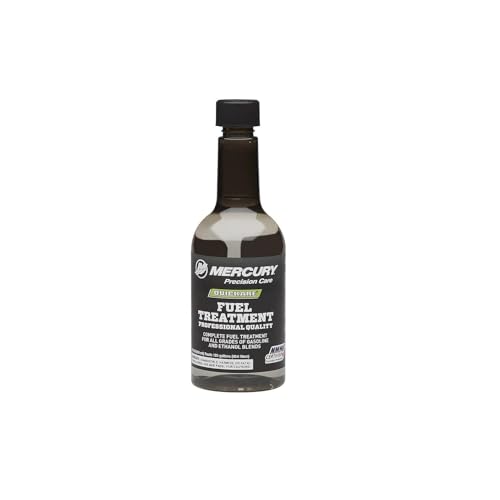
Best for maintaining fuel freshness between fill-ups and cleaning varnish and gum deposits. Quickare helps control corrosion, gum, varnish buildup, and phase separation associated with ethanol-blended gasoline. It is suitable for boats integrating longer trips between refuels.
Who it’s best for: boaters seeking a compact solution that supports fuel cleanliness and storage stability. Caution: ensure compatibility with your specific engine model and ethanol blend.
Ethanol Shield Marine Fuel Stabilizer & Preservative 24 Oz (2 Pack)
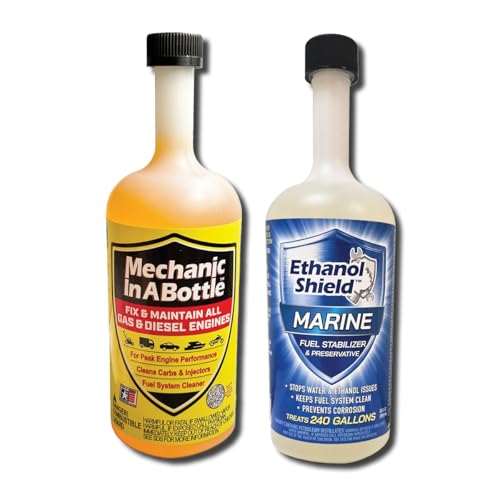
Best for year-round protection in smaller, more portable bottles, this two-pack provides ongoing protection for all gasoline engines. It preserves fuel, slows aging, and uses a Top Tier P.E.A.-based detergent to keep carburetors and injectors clean and free from varnish buildup.
Who it’s best for: boaters who prefer compact, repeatable dosing across seasonal use or where storage space is limited. Caution: verify total gallons treated if you have a larger fuel system.
Buying Guide: Key Considerations For Ethanol-Containing Marine Fuels
- If you store a boat for long periods, choose products that claim multi-year or multi-month stabilization and water removal to prevent phase separation.
- Look for detergents based on polyetheramine (PEA) or enzyme technology to keep carburetors and injectors clean and prevent varnish buildup.
- Corrosion inhibitors protect metal components exposed to ethanol blends and water in the fuel tank and lines.
- Verify compatibility with your engine type, fuel grade, and ethanol percentage to avoid adverse interactions with certain seal materials or fuel systems.
- Calculate gallons treated per bottle or per pack to match your vessel’s tank capacity and refueling frequency.
- Store in a cool, dry place away from direct sun. Some products require shaking or mixing before use.
FAQ
- Do ethanol-based fuels require special stabilizers? Yes, ethanol blends can attract water and cause varnish buildup; stabilizers help prevent corrosion and keep the fuel fresh.
- Can I mix multiple fuel additives? It is generally not recommended to mix products unless the manufacturer specifically allows it. Use one product at a time as directed.
- How often should I add fuel stabilizer? Follow the product instructions; some are for every fill-up, others for seasonal storage or when long storage is expected.
- Will these additives fix damaged fuel systems? They primarily prevent issues and clean minor deposits; severe varnish, clogged injectors, or damaged components may require service.
- Are marine additives safe for older engines? Most products are designed to be compatible with a wide range of engines, but check your engine’s manual and test in a small amount if unsure.
- What is the best choice for large fuel tanks? For large reserves, a gallon-size stabilizer and a cleaner that covers 1000+ gallons is often cost-effective and practical.