Answering the top question for boat owners: use a ready-to-use, propylene glycol-based antifreeze designed for marine engines and water systems. This guide highlights five trusted options, each best for different vessel types and needs. If you store a saltwater boat, a compact deck boat, or a RV trailer that doubles as a marine setup, you’ll find a clear pick for preserving cooling systems, preventing burst pipes, and avoiding corrosion during cold months. The quick-reference table below helps you compare core traits at a glance.
| Product | Best For | Key Benefit |
|---|---|---|
| Pre-mixed, -50°F protection; corrosion inhibitors | ||
| Star Tron Star-Cool Premium Synthetic PG Engine Coolant | POAT tech; up to 2+ years protection | |
| ULTRA 1PLUS UltraCool Universal Premixed 50/50 | Ready-to-use; ASTM D 3306/4985 compliant | |
| Splash RV & Marine Antifreeze -50°F | Single-gallon, burst protection for multiple systems | |
| Prime Guard -50 RV & Marine Antifreeze | Industry-standard burst protection; safe for plastics |
West Marine -50°F Engine & Water System Antifreeze, Gallon
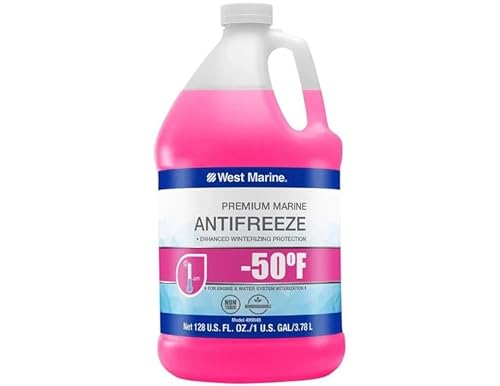
This product provides burst protection down to -50°F (-46°C) for both engine and water systems using a non-toxic propylene glycol formula. It is ready to use, requiring no dilution, so owners can pour directly into boat systems for immediate protection. Advanced inhibitors target corrosion of aluminum, brass, copper, and solder, making it a strong choice for boats with mixed metal plumbing. Best for casual boaters who want simple, reliable winterization without mixing steps. A potential limitation is that some installations may benefit from a system-specific check to confirm compatibility with all components.
Star Tron Star-Cool Premium Synthetic PG Engine Coolant + Antifreeze

Engineered with unique PCT additives to maintain optimal temperatures for peak horsepower and efficiency, Star Tron Star-Cool offers extended service life with up to 2+ years of protection. It uses a propylene glycol base to ensure compatibility across all engine types, including high-performance gas and diesel engines. This makes it suitable for a wide range of marine, motorcycle, and snowmobile applications. Choose this if you want long-term protection and better internal lubrication. A caveat is the need to verify compatibility with any older cooling systems that may have specific requirements.
ULTRA 1PLUS UltraCool Universal Premixed 50/50

This ready-to-use coolant is formulated as a universal 50/50 mix, meeting ASTM D 3306 and D 4985 standards for automotive and heavy-duty diesel engines. It provides versatile usage across major vehicle makes, making it a practical option for mixed fleets on boats, trucks, and trailers. Best for owners seeking a single solution for multiple engine types. A potential limitation is that some marine-specific formulations may offer enhanced corrosion defense for saltwater environments; confirm your boat’s needs first.
Splash RV & Marine Antifreeze -50°F Burst Protection
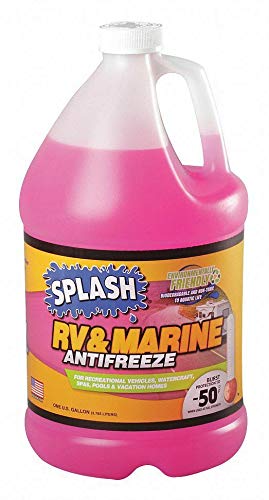
Designed for multi-system use, Splash provides burst protection down to -50°F and is suitable for RVs, boats, pools, spas, and seasonal plumbing. It supports protection for pipes, seals, and system components during winterization. This makes it a practical all-in-one option for owners who winterize several types of equipment. A limitation is that concentrated use in highly complex plumbing networks may require careful dilution per the manual to avoid over-protecting some lines.
Prime Guard -50 RV & Marine Antifreeze, 1 Gallon

Prime Guard meets industry standards for burst protection in copper pipes and is safe for copper, brass, and most plastics, except acetate. It is suitable for incidental contact with people, pets, and wildlife, making it a practical option for households near stored boats. Best for owners seeking reliable protection with broad material compatibility. A caution: verify that your plastic components are compatible, as some plastics may not be rated for all antifreezes.
Buying Guide: Key Considerations For Marine Antifreeze
- Protection Level: Look for burst or freeze protection ratings down to at least -50°F (-46°C) for winter storage in colder regions.
- Type Of Base: Propylene glycol is common and less toxic than ethylene glycol; it’s generally preferred for marine systems.
- System Compatibility: Confirm compatibility with your engine materials (aluminum, brass, copper, solder) and plastics in water systems.
- Premixed vs. Concentrate: Premixed 50/50 formulas are easiest to use; concentrates require dilution but offer flexibility for custom mixes.
- Corrosion Inhibitors: Inhibitors protect metal components; check for additives tailored to marine environments.
- Environmental And Safety Notes: Choose products with lower toxicity profiles and follow proper disposal guidelines after winterization.
- Multiple-System Use: If you winterize RVs, boats, spas, and pools, consider multi-system formulas to simplify storage procedures.
- Storage And Handling: Store in a cool, dry place away from children and pets; follow container guidelines for disposal.
FAQ
- Q: Do I need to mix antifreeze with water for marine use? A: Some products are premixed 50/50 and ready to pour; others require dilution per instructions.
- Q: Is propylene glycol safer than ethylene glycol for boats? A: Yes, propylene glycol is less toxic and commonly preferred for marine environments.
- Q: Can I use automotive coolant in a boat engine? A: Not always; marine-specific formulations or those meeting marine standards are recommended to protect systems properly.
- Q: How often should I replace marine antifreeze? A: Many products offer extended service life (over 2 years in some cases); follow manufacturer guidelines based on engine use and storage conditions.
- Q: What is burst protection? A: Burst protection means the antifreeze safeguards piping and components from pressure damage during freezing conditions.
- Q: Should I winterize water systems separately from the engine? A: If using a combined formula that covers both engine and water systems, you can treat them together; otherwise, treat per each system’s requirements.