Find the right lockable diesel deck filler to keep your tank clean and secure. This guide focuses on corrosion-resistant, marine-grade fill caps with locking options or keyless security designed for boats, yachts, and caravan use. Best for boat owners who want tamper-proof fueling and weatherproof seals, plus lasting performance in saltwater and sun.
| Product | Best For | Lock Type | ||
|---|---|---|---|---|
| CNRAQR 1-1/2″ Deck Fill | Small to mid-size boats | Key Cap | 1-1/2″ (38mm) | 316 stainless steel |
| Atibin 1-1/2″ Diesel Deck Filler | Everyday marina use | Lockable with Key | 1-1/2″ (38mm) | 316 stainless steel |
| EQUSPUR 1-1/2″ Deck Filler | All-season boats and RVs | Keyless | 1-1/2″ (38mm) | 316 stainless steel |
| RiaYer 1-1/2″ Angled Deck Fill | Tight spaces | Keyless | 1-1/2″ (38mm) | 316 stainless steel |
| ISURE MARINE 2″ Deck Fill | Larger tanks | Keyless | 2″ (50mm) | 316 stainless steel |
Notes: All options prioritize 316 marine-grade stainless steel, mirror-polished finishes, and watertight seals. The list favors lockable or keyless designs that reduce fumes, water intrusion, and cap loss, while keeping installation straightforward for standard filler neck holes.
CNRAQR Lockable Deck Fill with Key Cap
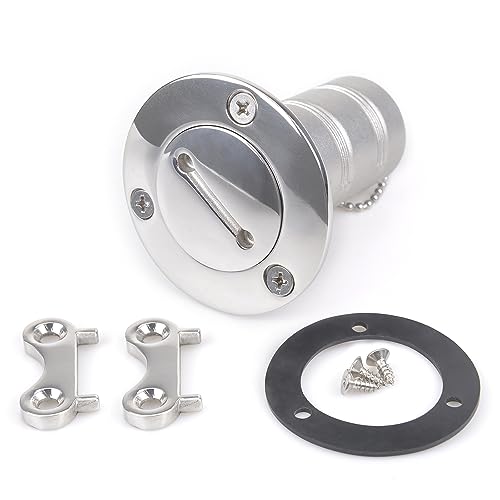
The CNRAQR unit is built from 316 stainless steel with a polished surface to resist corrosion. It includes a built-in carabiner for lid operation and a stainless steel retaining chain to prevent loss. Best for boats and yachts that require a durable, easy-to-use fill with a secure key-cap system. The product fits standard deck fill holes without extra tools. Use this when you want a traditional keyed locking mechanism and a clean, high-end finish. A potential limitation is that it relies on a physical key for access, which can be misplaced in rough seas.
Atibin Lockable Deck Filler, 1-1/2″

The Atibin deck filler uses SUS316 marine-grade stainless steel for durability and a locking key mechanism. It seals to prevent water and dust intrusion and includes a stainless steel retaining chain to prevent cap loss. Best for boat owners who want dependable corrosion resistance and a secure seal. Choose this if you prefer a classic key-operated lock and robust rust protection. A limitation: it emphasizes lockability over a built-in keyless option, which may be less convenient in hands-on fueling scenarios.
EQUSPUR 38mm Keyless Deck Filler

This EQUSPUR model uses a keyless spring-lock lid with a built-in pull-tab for quick access. It offers a high-grade 316 stainless steel build with a rubber gasket for a tight waterproof seal. Best for vessels where convenience matters and frequent fueling occurs, since no keys are needed. Better for smaller crews or solo operators who favor quick access. A potential drawback is the reliance on the spring mechanism, which may need maintenance over time in harsh marine climates.
RiaYer 1-1/2″ Angled Deck Fill, Keyless

The RiaYer angled fill uses premium 316 stainless steel with a keyless lift-and-turn cap and an integrated stainless steel retaining chain to prevent loss. Angled design helps with hose alignment in tight spaces. Best for diesel tanks on boats where space is constrained and easy, tool-free operation is valued. It can be less ideal in very bright sun if the finish cups heat, but remains highly resistant to salt exposure. Consider this when you need smoother fueling in cramped engine bays.
ISURE MARINE 2″ Deck Fill with Keyless Cap
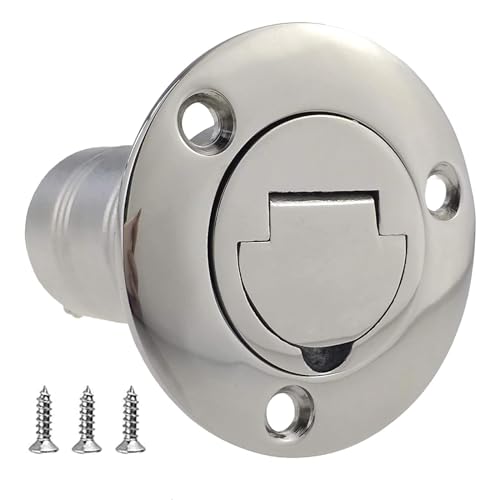
The ISURE MARINE 2″ deck filler uses 316 stainless steel with a mirror-polished surface and a keyless cap for fast fueling. A stainless steel retaining chain keeps the cap secure when open. Best for larger tanks on yachts or workboats that require straightforward, keyless access and a premium finish. A limitation is the larger diameter, which may require a bigger fill neck and seating clearance in compact storage areas.
SHENGHUISS 1-1/2″ Deck Filler with Key Cap

SHENGHUISS offers a 1-1/2″ deck filler cast from marine-grade 316 stainless steel with a hand mirror polish and a key-cap design. It ships with multiple screws and O-rings for a tight seal and corrosion resistance. Best for budget-conscious buyers who still want reliable marine-grade material and a lockable option. The package contents add flexibility for on-site customization, though it may require precise gasket fitting during installation.
Buying Guide: Key Considerations for Lockable Diesel Deck Fillers
- Material and finish: Choose 316 stainless steel for superior corrosion resistance in saltwater environments. A mirror-polished surface reduces fouling and looks premium on high-end vessels.
- Locking mechanism: Keyed locks provide security but require keeping a key secure. Keyless designs offer convenience but rely on a functioning mechanism and may need periodic maintenance.
- Seal integrity: A good rubber gasket or O-ring ensures a watertight seal to prevent fuel odors and water intrusion into the deck filler neck.
- Compatibility: Verify the outer diameter and hose size (1-1/2″ or 2″) to fit standard deck filler neck holes and hoses without adapters.
- Installation: Look for products with minimal tools for installation and a compatible retaining chain to prevent cap loss.
- Space and access: Angled or compact designs help in tight engine rooms or cramped decking areas.
Frequently Asked Questions
- What is the standard deck filler size for most boats? Most marine fillers are 1-1/2″ (38mm), with some larger applications using 2″ (50mm).
- Are lockable deck fillers weatherproof? Yes, marine-grade stainless steel fillers with rubber gaskets and polished finishes provide weatherproof sealing for deck use.
- Is a keyless deck filler safer than a keyed one? Keyless fillers offer quick access, but keyed models offer an additional layer of security against tampering, depending on your risk scenario.
- Will a deck filler fit all tank necks? Most fillers fit standard marine filler neck holes; check diameter, hose compatibility, and required adapters if needed.
- Do I need professional installation? Many fillers are designed for DIY installation, but ensure proper sealing and alignment to avoid leaks.
- What maintenance is required? Regular inspection of gaskets, o-rings, and the locking mechanism helps preserve seal integrity and operation.