When choosing a lithium ion marine battery, look for long cycle life, reliable BMS protection, and a size that fits your setup. This guide highlights five top 12V LiFePO4 options ideal for boats, trolling motors, RVs, and off-grid systems. Each choice is evaluated for who it’s best for, its standout features, and any practical limitations. The buyers most likely to benefit are boaters needing deep-cycle stamina, RV owners seeking reliable off-grid power, and DIY solar enthusiasts aiming to minimize weight while maximizing usable capacity.
Summary table of selected products
| Product | Brand | Key Benefit | Weight | Best For |
|---|---|---|---|---|
| 2 Pack 12V 100Ah LiFePO4 Batteries | GRNOE | Expandable 4S4P system with 100A BMS | ~21.9 lb each | Off-grid, RVs, marine systems needing scalable power |
| 12V 100Ah LiFePO4 Lithium Battery (Group 24) | SUPER EMPOWER | Low-temp protection and 15000 cycles at 60% DOD | ~21.6 lb | Auxiliary power for RVs, boats, solar storage |
| 12V 100Ah LiFePO4 Battery (Group 31) | SUPER EMPOWER | Long cycle life; up to 15000 cycles at 60% DOD | ~? | Deep-cycle power for larger setups |
| 12V 100Ah LiFePO4 Battery (Group 31) | Eiiev | Lightweight, 15000 cycles at 60% DOD | ~24 lb | Marine trolling motors and RVs needing lighter packs |
| ECOBOSS 12V 100Ah LiFePO4 Battery (Group 31) | ECOBOSS | Up to 15000+ cycles with 120A BMS | ~24.69 lb | Full-time off-grid or marine systems with standard Group 31 fit |
Below is a closer look at each option. Use the buying guide to compare features like cycle life, BMS protection, and physical fit when selecting the right battery for your system.
GRNOE 2-Pack 12V 100Ah LiFePO4 Batteries
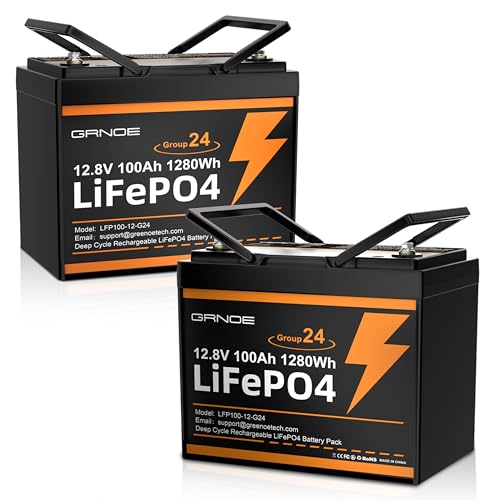
Best for expanding power gradually. These 12.8V 100Ah units come with a built-in 100A BMS and dust/moisture/salt-spray resistance, making them suitable for wet environments. The product supports 4S4P expansion to a maximum of 51.2V and 400Ah (20.48kWh), allowing upgrades as power needs grow. The two-battery configuration doubles capacity, ideal for users building out an RV or marine system over time. A potential limitation is upfront cost relative to single-battery packs, which may matter for smaller budgets.
SUPER EMPOWER 12V 100Ah LiFePO4 (Group 24)

Best for RVs and boats needing a compact, dependable house battery. With a 100A BMS and a claim of up to 15000 cycles at 60% DOD, this model offers long-term value for daily use. It’s designed as a drop-in replacement for lead-acid, AGM, or SLA batteries and fits standard Group 24 boxes without modification. A limitation to consider is its note that it’s intended for energy storage and not engine starting or cranking.
SUPER EMPOWER 12V 100Ah LiFePO4 (Group 31, Deep Cycle)
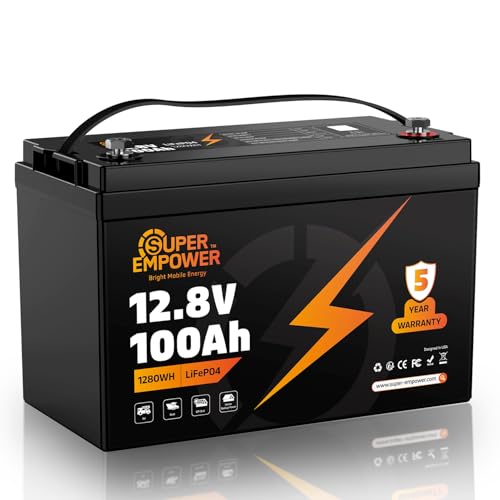
Better for larger systems needing more space-efficient deep-cycle power. This battery’s Group 31 size and high cycle life—up to 15000 cycles at 60% DOD—make it well-suited for RVs, marine electronics, and solar storage. It’s not intended for engine starting. Choose this if you require a compact, high-capacity pack that drops into standard Group 31 boxes with no major modification.
Eiiev 12V 100Ah LiFePO4 Battery

Chosen for its lightweight design and long cycle life. The Eiiev pack offers 15000 cycles at 60% DOD and around 10 years of use. It weighs about 24 lb, which is notably lighter than traditional lead-acid equivalents, aiding installation in tight spaces. It is a solid option for trolling motors and RV house banks where weight matters. A potential drawback is that precise performance can vary with temperature and charging conditions, so ensure compatible charging hardware.
ECOBOSS 12V 100Ah LiFePO4 Battery (Group 31)

Best for reliable, all-weather marine or RV storage. ECOBOSS highlights a 120A BMS and a high cycle count (up to 15000+ cycles), with low-temperature protection. The Group 31 form factor keeps installation straightforward in many standard compartments. A limitation to note is that, like other LiFePO4 packs, performance can be influenced by extreme charging strategies; use a lithium-specific charger for best results.
Buying Guide: How to Choose the Right Lithium Ion Marine Battery
- What is my power demand? Estimate daily energy use and match it to the usable capacity of the battery pack. If you run heavy systems or appliances, consider higher Ah ratings and expandable configurations.
- How important is weight? LiFePO4 is lighter than lead-acid. If you regularly transport the battery or fit it into small compartments, prioritize lightweight models like Group 31 or compact 24V packs.
- What is the cycle life and warranty? Look for 5000–15000+ cycles at varying DoD levels. A higher cycle count reduces long-term replacement costs.
- How good is the BMS? A robust BMS protects against overcharge, over-discharge, short circuits, and temperature extremes. Cold-weather protection helps in off-grid and marine environments.
- Can it fit my existing system? Check dimensions and terminal type (e.g., M8 terminals). Ensure the pack matches Group size and can be a drop-in replacement when possible.
- Charging compatibility? Use a lithium-specific charger or a DC-DC/MPPT controller configured for LiFePO4 chemistry. Avoid non-lithium chargers to prevent degraded performance or safety issues.
- Water and salt exposure? For boats and damp environments, choose models with dust/moisture/salt spray resistance and secure enclosure options.
Frequently Asked Questions
- What makes LiFePO4 better than lead-acid for marine use? It offers longer cycle life, lighter weight, and stable voltage with high efficiency, reducing replacements and improving run-time.
- Can these batteries start my engine? Most listed models are designed for energy storage and auxiliary power; verify each product’s intended use if engine starting is required.
- Do I need a special charger? Yes. Use a LiFePO4-compatible charger (14.4–14.6V CCP/CV) or a charger rated for lithium batteries to ensure safe charging and maximize lifespan.
- Is a BMS enough to protect the battery in extreme conditions? A capable BMS is essential, but proper enclosure, cooling, and charging practices also affect performance in hot or cold environments.
- Will these fit in a standard Group 31 or Group 24 box? Most Group 31 units fit standard Group 31 boxes; Group 24 options fit typical Group 24 compartments. Always check exact dimensions before purchasing.
- How many cycles will I get at 60% DOD? Many LiFePO4 packs report around 12,000–15,000 cycles at 60% DOD, offering a long service life compared with lead-acid.
For a broadband power solution, these lithium ion marine batteries provide long life, lighter weight, and scalable configurations. The best choice depends on system size, budget, and installation constraints, with options ranging from compact Group 24 to heavier Group 31 formats and expandable multi-pack configurations.