Answering your search for reliable lithium battery options for boats, these picks focus on LiFePO4 deep-cycle performance, safety, and long life. Best for trolling motors, RVs, and in-boat power systems, these models balance weight, cycle life, and safety features. This guide helps you choose the right size, capacity, and protection for your craft and conditions. The top picks include compact 50Ah options for small rigs and high-capacity 100Ah–200Ah packs for larger boats.
Summary table of selected products:
| Product | Type | Capacity | Best For |
|---|---|---|---|
| LiTime 12V 100Ah LiFePO4 Battery | LiFePO4 | 100Ah | Mid-size trolling motors and RV use |
| DJLBERMPW 12V 100Ah LiFePO4 Battery | LiFePO4 | 100Ah | All-around marine power, long life |
| LiTime 12V 100Ah LiFePO4 Battery Bluetooth | LiFePO4 | 100Ah | RV and marine with smart monitoring |
| Ionic Lithium 12V 200Ah LiFePO4 Battery | LiFePO4 | 200Ah | Heavy-duty power, extended cycles |
| LiTime 12V 50Ah LiFePO4 Battery Bluetooth | LiFePO4 | 50Ah | Lightweight, compact setups |
LiTime 12V 100Ah LiFePO4 Battery, Bluetooth
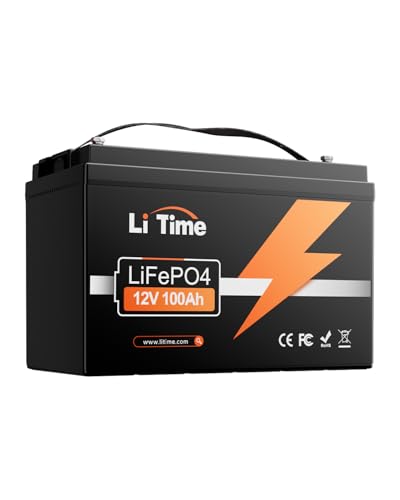
This 12V 100Ah LiFePO4 battery includes a built-in 100A BMS and Bluetooth monitoring. It offers UL 1973 safety compliance indicators and high energy density for compact power delivery. Best for boaters who want remote battery status access and reliable power in a space-saving package.
Best for: RVowners and boaters who value smart monitoring and safe use in tight compartments. It’s suitable for trolling motors and essential onboard electronics where weight and safety matter.
Why selected: Combines significant energy with a smart BMS and app visibility, aiding maintenance and planning for long trips.
Caution: Bluetooth visibility requires app compatibility and may introduce setup steps for initial pairing.
DJLBERMPW 12V 100Ah LiFePO4 Battery

This 12V LiFePO4 battery features a built-in 100A BMS and a 10-year lifespan with up to 15,000 deep cycles, depending on depth of discharge. It provides protection against overcharge, over-discharge, short circuits, and overheating, with guidance on charging voltages for optimal performance.
Best for: Boat owners needing robust cycle life and strong safety protections for extended seasons on the water.
Why selected: High cycle life and a protective BMS support longer-term reliability in demanding marine environments.
Caution: Voltage and charging recommendations should be followed to maximize lifespan and performance.
LiTime 12V 100Ah LiFePO4 Battery Bluetooth (Group 27)

This 100Ah LiFePO4 battery with Bluetooth monitoring targets RVs and marine use, specifically designed to fit Group 27 compartments. It features a 100A BMS, low-temperature protection, and multiple safeguards such as over-charge and over-discharge protection for safe operation in varying climates.
Best for: RV owners and boaters who want precise runtime awareness and a compact, fit-for-purpose profile for their power system.
Why selected: The Group 27 fit and smart monitoring make installation simpler in standard marine or RV battery bays.
Caution: Ensure compatible mounting space and connector sizing for your vessel’s battery tray.
Ionic Lithium 12V 200Ah LiFePO4 Battery

This 12V 200Ah LiFePO4 battery targets heavy-duty marine power needs with a high energy density and robust protection features under an advanced BMS. It supports longer cycles and fast charging compared to conventional batteries, making it suitable for larger boats with high electrical demands.
Best for: Larger fishing boats or yachts that require extended power reserves for trolling motors, electronics, and AC or cabin systems.
Why selected: The 200Ah capacity delivers substantial runtime, reducing the number of recharges on longer trips.
Caution: Heavier upfront weight and higher upfront cost, balanced by long-term cycle life.
LiTime 12V 50Ah LiFePO4 Battery Bluetooth

This 50Ah LiFePO4 option focuses on weight savings and compact power needs. With Bluetooth monitoring and a 50A BMS, it supports lighter trolling setups or small marine systems without sacrificing essential safety protections.
Best for: Small boats, kayaks, or secondary battery banks where weight reduction is a priority.
Why selected: The compact size and Bluetooth monitoring help keep a lightweight rig while still providing reliable LiFePO4 performance.
Caution: Lower capacity means more frequent recharges for higher power draws.
Buying Guide: Key Considerations For Lithium Boat Batteries
- Capacity versus weight: Higher Ah means more runtime but heavier packs. Match capacity to your trolling motor and onboard loads.
- Chemistry and lifecycle: LiFePO4 offers longer cycles, better safety, and thermal stability than many alternatives. Look for 2,000–15,000+ deep cycles depending on use.
- BMS protections: A robust BMS should guard against overcharge, over-discharge, short circuits, and temperature extremes; low-temp cut-off is important for cold climates.
- Charging compatibility: Check charging voltage and current limits. Fast charging capability can reduce downtime but requires compatible chargers.
- Monitoring features: Bluetooth or app-connected monitoring helps manage state of charge and health, reducing unexpected power loss.
- Fit and form factor: Ensure the battery fits your boat’s compartments and tray sizes. Group size compatibility matters for RV and marine installations.
- Safety and certifications: UL1973 and other safety certifications give confidence about safety in marine environments.
FAQ
- What is LiFePO4, and why is it popular for boats?
LiFePO4 offers high safe operating voltage, long cycle life, and lightweight performance, ideal for boats with space and weight constraints. - Do lithium boat batteries require special chargers?
Chargers should be compatible with LiFePO4 chemistry and respect target voltages (often around 14.4–14.6V for charging). - Can I mix LiFePO4 with lead-acid batteries?
It’s not recommended to mix chemistries in a single bank due to different charging characteristics; use separate banks or compatible systems. - How many cycles can I expect from LiFePO4 batteries?
Depending on depth of discharge and usage, 2,000–15,000 cycles is common, often far surpassing lead-acid variants. - Is Bluetooth monitoring worth it for boating?
It provides real-time status and health checks, which helps with maintenance planning and avoiding outages. - What should I consider for cold-weather boating?
Look for low-temperature protection and a BMS with safe-start behavior to prevent damage in cold climates.