Answering the question, these lithium-based options are ideal for boaters seeking lighter weight, longer cycle life, and safer handling than traditional lead-acid. The top picks below cover deep-cycle power for trolling motors, live imaging equipment, and onboard electronics. Best for anglers, weekend warriors, and RVers who need dependable marine power without the bulk of lead-acid batteries.
The table below compares five strong choices for lithium-based marine power, highlighting where each shines and where to be cautious. Use this as a quick reference to match your boat’s power needs with a compatible LiFePO4 battery system.
| Product | Battery Type | Best For | Key Benefit |
|---|---|---|---|
| Ionic Lithium 12V 200Ah LiFePO4 | LiFePO4 | Long trolling sessions, power-hungry electronics | High energy, robust BMS, light weight |
| LiTime 12V 100Ah RV Lithium Battery | LiFePO4 | Moderate-to-high power needs, extended use | Up to 15000 cycles, strong safety features |
| LiTime 12V 50Ah Lithium Trolling Battery | LiFePO4 | Lightweight trolling motor power | Very light, compact, decent continuous discharge |
| Norsk Lithium 14.8V 50Ah Battery | Li-ion (Lithium-Ion) | Live imaging sonar and devices | High capacity in a compact form, rugged ports |
| NERMAK 2 Pack 12V 10Ah LiFePO4 | LiFePO4 | Small electronics and backup power | Safe, long cycle life, compact for compact setups |
Interstate Batteries Marine/RV 12V 100Ah AGM Dual-Purpose

Type: Pure lead AGM with dual-purpose design for cranking and deep cycling. Best for boaters who want a single battery to start the motor and power trolling gear and onboard accessories. Provides fast recharge and extended life compared to conventional AGM batteries. Caution: heavier than lithium equivalents and may require a larger enclosure space.
Ionic Lithium 12V 200Ah LiFePO4 Deep Cycle

Best for: Boats needing long run times with lightweight power. This 200Ah LiFePO4 module delivers extended service life and reduced charging times with built-in protection features. Performance advantage: up to 2–4x longer service life and up to 5x faster charging than typical lead-acid. Caution: ensure BMS compatibility with your charging system.
LiTime 12V 100Ah RV Lithium Battery
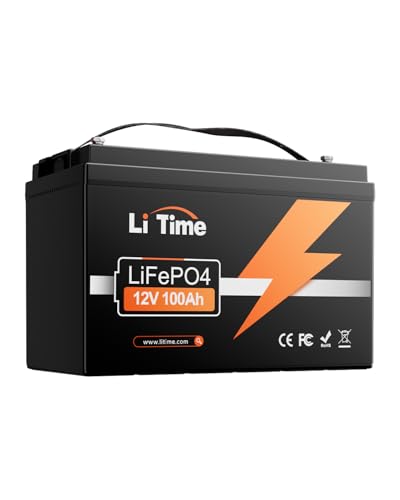
Best for: RVs and boats requiring high safety and long life. 100Ah capacity with a strong BMS, UL 1973 safety compliance, and 15000 deep-cycle potential. Advantage: compact footprint with substantial energy reserve. Caution: higher initial cost than lead-acid equivalents.
LiTime 12V 50Ah Trolling Battery

Best for: Lightweight power for smaller trolling motors and compact electronics. 50Ah capacity provides a balance of weight and runtime, with the same safety and BMS protections as larger LiFePO4 packs. Caution: may require multiple units for higher-demand setups.
Norsk Lithium 14.8V 50Ah Portable Battery

Best for: Live sonar imaging and high-demand offshore electronics. Features a robust 50Ah Li-ion pack with IPX8-rated ports for charging devices in wet or cold environments. Caution: designed for smaller form-factor applications; verify compatibility with larger power systems.
NERMAK 2 Pack 12V 10Ah LiFePO4
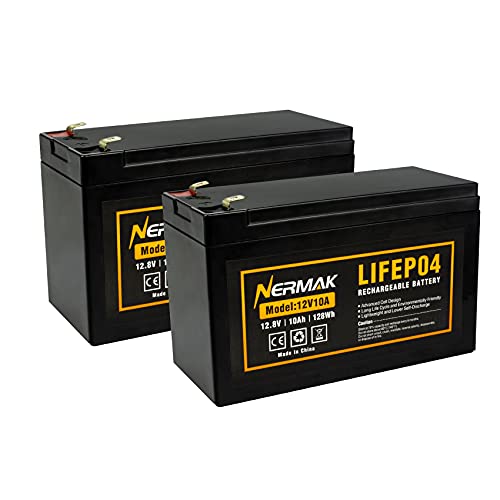
Best for: Small auxiliary power, solar or emergency backup on boats, or power wheels and lighting. Advantages include low self-discharge and good safety profile. Caution: limited capacity means use for low-power devices or as a supplemental pack.
Buying Guide
What to consider when choosing a marine lithium battery:
- Battery chemistry: LiFePO4 offers long life, thermal stability, and safety for marine use; other lithium chemistries may be lighter but require careful management.
- Capacity vs. weight: Higher amp-hour (Ah) ratings increase runtime but add weight; balance with boat size and motor needs.
- Cycle life and warranty: Look for 3,000–5,000 cycles for LiFePO4 and a solid warranty window to protect your investment.
- Battery management system (BMS): A robust BMS protects against overcharge, deep discharge, and short circuits, essential for on-water safety.
- Charging compatibility: Ensure your charger, solar controller, and alternator are compatible with LiFePO4 charging profiles.
- Physical fit and mounting: Check dimensions and enclosure requirements; verify ports, venting, and waterproofing suitability for marine environments.
- Lifecycle planning: Consider whether you want multiple smaller packs for modular expansion or a single high-capacity module for simplicity.
FAQ
- Q: Are LiFePO4 batteries safer for boats than lead-acid? A: Yes, they operate at lower risk of thermal runaway, have a longer cycle life, and are lighter, which reduces load on the hull.
- Q: Do lithium marine batteries require special charging equipment? A: Some require LiFePO4-specific charging profiles; check your charger compatibility with the BMS of the pack.
- Q: Can I mix lithium with lead-acid on a boat? A: It’s not recommended to mix technologies due to imbalanced charging and discharge characteristics.
- Q: How long do these batteries typically last in marine use? A: LiFePO4 packs commonly offer thousands of cycles under proper use, often outlasting traditional AGM in harsh conditions.
- Q: What should I plan for installation considerations? A: Ensure secure mounting, proper venting (as required), water resistance, and cable sizing to handle peak currents.
- Q: Is heavier weight a concern with lithium batteries? A: Generally no; lithium packs are lighter and can improve boat handling and efficiency, but always verify weight distribution on your craft.