The right jack plate transducer mount improves sonar clarity, protects your gear, and simplifies installation. This guide highlights five strong options designed for different boats and transducers. Best for boaters who want quick, drill-free mounting, corrosion resistance, and reliable performance beneath the hull. Below, you’ll find concise product profiles, a quick comparison table, and essential buying considerations to help you choose the right mount for your setup.
| Product | Best For | Key Benefit | Limitations |
|---|---|---|---|
| Saillong Transducer Mounting Plate Kit | DIYers seeking a screwless, adhesive solution | Easy install with adhesive and cleaning kit | Adhesive cure time required |
| Garmin 010-12106-10 Jack Plate Mount | Garmin transducers on small to mid-size boats | Matches Garmin transducers and reduces drag | Specific to Garmin ecosystem |
| Transom Transducer Mount Bracket (StructureScan) | StructureScan/ TotalScan users | Sturdy stainless-steel mount | Transducer not included |
| Transducer Mounting Plate (Marine-Grade) | Non-drill, general use | Waterproof, adhesive mounting | Not ideal for very large transducers |
| Bert’s Custom Tackle Transducer Mounting Board | Small boats and tight spaces | Compact, durable, hull-safe | Limited to small transducers |
Saillong Transducer Mounting Plate Kit

Best for boaters who want a complete, screwless installation with an adhesive bond. This kit includes a transducer mounting plate block, a scouring pad, a cleaning wipe, and three cable clips. The plate measures 4.33 x 3.54 x 0.98 inches with a 2mm adhesive backing designed to resist detachment in marine environments. The mounting surface is clean and tidy, thanks to polypropylene construction that resists corrosion.
Who this is for: anglers who prefer no-drill installations and want a simple, all-in-one mounting solution. Why selected: it offers a straightforward, adhesive-based approach with the included prep items, making it easy to install on hull surfaces without tools. Caution: allow 18 hours for the adhesive to cure before mounting the transducer to ensure maximum bond strength.
Garmin 010-12106-10 Jack Plate Mount

This jack plate mount is ideal for anglers using Garmin Echo fishfinders. It facilitates easy attachment of compatible 4, 8, or 12-pin transducers to the jack plate, aiding sonar performance at low speeds and reducing drag by protecting the transducer from underwater obstructions. It’s best for Garmin users with compatible transducers and boats where low-speed sonar clarity is paramount.
Who this is for: Garmin ecosystem enthusiasts seeking reliable, brand-aligned mounting. Why selected: designed to improve sonar returns without adding hull drag when properly installed. Caution: suitability is tied to the Garmin transducer family; confirm pin count compatibility before purchase.
Transom Transducer Mount Bracket (StructureScan)
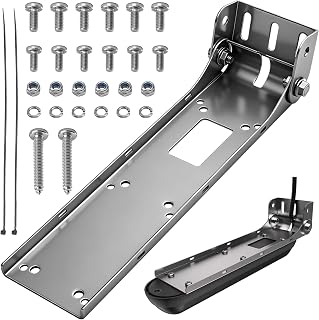
Best for StructureScan 3D/HD and TotalScan transducers, this stainless steel bracket offers durability and a galvanized finish to resist rust. It mounts securely to a transom, jack plate, or the area beneath boat steps, providing a stable platform for high-tech sonar gear. Note that the transducer is not included, so match with your StructureScan model before purchase.
Who this is for: anglers needing a rugged, corrosion-resistant bracket for StructureScan setups. Why selected: strong stainless construction and versatile mounting locations. Caution: ensure your transducer type matches the bracket’s compatibility list to avoid fit issues.
Transducer Mounting Plate, Marine-Grade

This mounting plate is designed for non-drill, adhesive-based installation on small to medium transducers. It measures 4.5 x 3.5 x 0.75 inches, with a robust marine-grade profile. The kit emphasizes easy surface preparation, adhesive application, and firm pressing for quick bonding that holds up in wet conditions.
Who this is for: boat owners seeking a simple, drill-free mounting option for modest transducers. Why selected: attractive balance of size, ease of use, and corrosion resistance. Caution: not the best choice for very large transducers or demanding mounting angles; verify your transducer’s size fits the plate footprint.
Bert’s Custom Tackle Transducer Mounting Board

This board targets smaller boats and tight mounting spaces. The compact 6-inch design protects the transom while enabling multiple mounting attempts without drilling into the hull. Made from heavy-duty marine-grade polymer, it resists cracking, warping, and UV damage for long-lasting use in harsh marine environments.
Who this is for: anglers with limited space or those who want a quick swap between transducers. Why selected: compact size and hull-safe design. Caution: best suited for smaller transducers; check your device’s footprint before buying.
Buying Guide: Jack Plate Transducer Mount Essentials
What to consider when choosing a jack plate transducer mount. The main factors include mounting method (adhesive vs. screw-in vs. bracket), material durability, compatibility with your transducer model, and installation surface. For adhesive systems, surface preparation and cure time are critical for long-term reliability. For brackets and plates, ensure proper fit, weight support, and mounting location to minimize drag and avoid hull interference.
What type of mounting do you need?
Adhesive mounting is quick and drill-free, suitable for smaller transducers on smooth hull surfaces. Brackets and mounting plates offer greater load-bearing capacity and reusability, especially for heavier transducers or rough water conditions. Your boating style and transducer weight drive this choice.
How important is corrosion resistance?
Marine environments demand materials that resist saltwater exposure. Stainless steel brackets and high-hardness polymers provide durability; polypropylene plates resist corrosion and maintain a clean appearance over time.
Compatibility and installation tips
Always verify transducer compatibility with a given mount, including pin counts, mounting footprint, and recommended torques or cure times. When using adhesive kits, follow surface cleaning steps precisely, apply even pressure, and allow the full cure period before use.
Size, weight, and drag considerations
Smaller mounts suit compact transducers and tight spaces, while larger mounts support heavier transducers and more rugged operations. A well-chosen mount reduces drag and ensures stable sonar readings at low boat speeds.
FAQ
- Can I install a transducer mount without drilling? Yes, several adhesive-based and plate options allow screwless installations, but cure times and surface prep are crucial for durability.
- Will a mount affect my sonar readings? Properly chosen mounts minimize drag and shielding effects, preserving sonar performance, especially at low speeds.
- Is it necessary to match the transducer brand? Not always, but brand-specific mounts often ensure better fit, alignment, and compatibility with the transducer’s electrical connections.
- What is the best material for marine mounts? Stainless steel brackets offer robust rust resistance; marine-grade polymers and polypropylene plates provide corrosion resistance with lighter weight.
- How do I know if a mount fits my boat? Check transom dimensions, jack plate compatibility, and the transducer’s footprint compared to the mount’s measurements.
- How long does adhesive take to cure? Cure times vary; many kits require several hours to overnight for full bond strength before exposure to water.