Looking for a reliable hydraulic steering helm pump for boats up to 300 HP? This guide highlights five top options that deliver confident steering, reduce steering effort, and fit common Seastar-compatible systems. Each product is suited for cruisers, center consoles, and offshore boats, with clear pros, limitations, and who should buy. Use the buying guide and FAQ to compare features and make an informed choice.
| Product | Suitability | Key Benefit |
|---|---|---|
| E-cowlboy HH5271-3 Hydraulic Steering Helm Pump | Up to 300 HP | Direct replacement with built-in lock valve |
| Camoo HH5271-3 Outboard Hydraulic Steering Pump | Single or twin engines | Excellent feedback-free steering |
| VEVOR HH5271-3 Front Mount | Cruisers, runabouts | Replaceable shaft seal and ORB fittings |
| Winibo HH5271-3 Outboard Hydraulic Steering Pump | Broader vessel range | Adjustable ORB fittings for hose routing |
| Yunnergo HH5272-3 Front Mount Pump | Up to 350 HP (twin counter-rotating) | Higher displacement for more torque |
E-cowlboy HH5271-3 Hydraulic Steering Helm Pump

Best for boats with engines up to 300 HP seeking a direct Seastar HH5271-3 replacement. This front-mount hydraulic pump supports speeds up to 60 MPH and offers a built-in lock valve to prevent steering load feedback. Choose this if you want straightforward installation with a reliable, power-rated unit and compatible with Seastar setups.
Who it’s best for: cruisers and center consoles requiring a sturdy single-engine or small twin-engine hydraulic helm without modifications. Limitation: only specified for up to 300 HP; verify hose routing compatibility for your vessel.
Camoo HH5271-3 Outboard Hydraulic Steering Pump
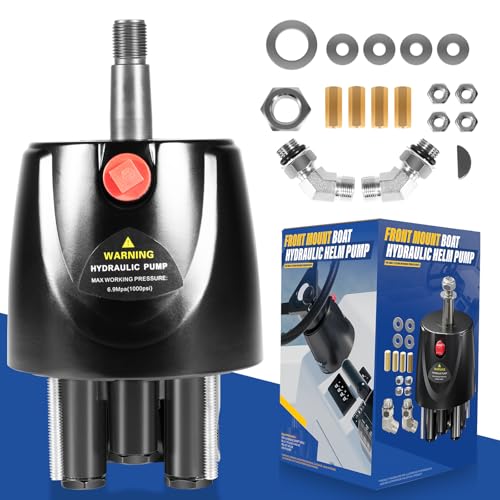
Best for boats needing broad compatibility and smooth, feedback-free steering. This 1.7 cu in, front-mount pump handles single or multiple outboard engines up to 300 HP, with a 4.9 lock-to-lock turn count. It uses a roller/ball bearing design for low friction and includes a built-in lock valve to keep steering stable when not actively turning.
Who it’s best for: speedboats, cruisers, and center consoles seeking a comfortable, predictable steering feel. Limitation: detailed hose routing depends on installation; ensure your line layout accommodates the ORB fittings.
VEVOR Outboard Hydraulic Steering Pump, 300 HP

Best for cruisers and runabouts needing reliability with easy serviceability. The 1.7‑inch displacement front mount pump is designed for engines up to 300 HP and speeds up to 60 MPH. Notable features include a replaceable shaft seal and positionable ORB fittings for straightforward hose routing.
Who it’s best for: boat owners prioritizing ease of maintenance and adaptable hose layout. Limitation: verify the shaft seal replacement process matches your service capability.
Winibo HH5271-3 Outboard Hydraulic Steering Pump

Best for a wide range of vessels including cruisers and offshore boats, with adjustable ORB fittings for easier hose routing. This pump features a built-in locking valve and a relief valve, supporting stable steering and overload protection. It is designed for engines up to 300 HP with a 1.7 cu in front-mount configuration.
Who it’s best for: boats needing flexible installation options and enhanced safety features. Limitation: installation complexity can vary with hose routing; verify fit for existing helm kit.
Yunnergo 2.4 Cubic Inches Front Mount Pump HH5272-3

Best for higher-demand applications up to 350 HP (700 HP in some twin-counter setups) with a 60 MPH top speed. This 2.4 cu in displacement provides more steering torque, making it a solid choice for faster or heavier offshore vessels. Front-mount design aligns with standard hydraulic steering kits.
Who it’s best for: owners of faster boats or those running heavier loads where extra hydraulic torque improves handling. Limitation: higher displacement can translate to stiffer steering in light-load conditions; confirm desired feel with your helm kit.
Buying Guide: Key Purchase Considerations
- Engine horsepower compatibility: Match the pump displacement and HP rating to your boat’s engines. Higher displacement offers more torque but may feel stiffer at low speeds.
- Mount type and installation: Front-mount pumps are common, but confirm space, hose routing, and compatibility with your steering kit (Seastar, etc.).
- Lock valve and safety features: A built-in lock valve helps prevent steering load from returning to the wheel, enhancing safety on rough seas.
- Hose fittings: Look for adjustable ORB fittings for easier hose routing and serviceability.
- Maintenance needs: Check for replaceable shaft seals and accessible service points to minimize downtime.
- Application range: Ensure the chosen pump is suitable for your vessel type—cruisers, center consoles, offshore boats, or runabouts.
Frequently Asked Questions
- What is the typical displacement for a 300 HP hydraulic steering pump? – Common front-mount pumps use around 1.7 cubic inches, with higher-displacement models like 2.4 cu in for heavier setups.
- What does a built-in lock valve do? – It prevents steering load from feeding back to the driver, improving stability when the helm is not actively turned.
- Can I replace a Seastar helm with these pumps? – Many listed options are designed as direct or near-direct replacements for compatible Seastar models such as HH5271-3.
- Are ORB fittings important? – Yes; adjustable ORB fittings simplify hose routing and installation, reducing the need for custom adapters.
- Is 60 MPH a typical limit for hydraulic helm pumps? – Many pumps are rated for speeds up to about 60 MPH, depending on the boat and torque requirements.
- What should I check before buying? – Verify HP rating, engine configuration (single vs. twin), mounting space, and hose routing compatibility with your helm kit.