Answering how to power a boat reliably, this guide highlights top house battery options for marine use. These picks suit boaters who need steady deep-cycle power, from fishing boats to cabin cruisers. Best for mixed loads includes dual-purpose AGM units; best for weight-conscious boats favors LiFePO4; and a sturdy battery box helps keep systems tidy. Below, five carefully chosen products cover AGM, lithium, and practical accessories for boat electrical setups.
| Product | Type | Why It’s Notable |
|---|---|---|
| Interstate Batteries Marine/RV Battery 12V 100Ah 825CCA | AGM Deep Cycle / Dual Purpose | Strong starting power plus deep-cycle capability; built for rugged marine use; long lifespan for an AGM. Best for dual-purpose needs. |
| UPLUS Group 27M Dual Purpose Marine Battery, 12V 92Ah | AGM Dual Purpose | Compact dual starter/deep-cycle unit; space-saving design; good balance of starting and runtime for mid-sized boats. |
| DC HOUSE 12V 100Ah LiFePO4 Trolling Motor Battery | LiFePO4 Deep Cycle | Up to 15,000 cycles; Bluetooth monitoring; robust low-temp protection; ideal for trolling motors and long trips. |
| DC HOUSE 12V 165Ah LiFePO4 Battery | LiFePO4 Deep Cycle | Higher capacity with built-in safety features; long service life; suited for boats with higher load or longer stays ashore. |
| NOCO Snap-Top Battery Box, Group 27 | Battery Box/Storage | Rigid, snap-top enclosure for Group 27 batteries; simplifies mounting and protects terminals; ideal for neat installations. |
Top products overview: each section explains who benefits most, why it was selected, and any practical limitations to consider when equipping a boat with house power.
Interstate Batteries Marine/RV 12V 100Ah AGM Dual Purpose

This dual-purpose AGM battery is designed to start engines and power trolling motors or cabin electronics. It’s built to handle harsh marine conditions with thick plates for repeated discharges and fast recharge capability. Best for boaters who need one battery to cover starting and moderate deep-cycle tasks.
Who it’s best for: small to mid-sized boats, anglers, and weekend cruisers who want a single, durable unit for both starting and powering accessories. Why selected: it combines reliable cranking with deep-cycle capability, reducing the need for separate batteries.
Limitations: as an AGM, it may be heavier than some lithium options and replacement cycles depend on usage, charging practices, and maintenance. Always verify fit for the battery compartment and device loads.
UPLUS 12V 92Ah Group 27M Dual Purpose AGM Battery
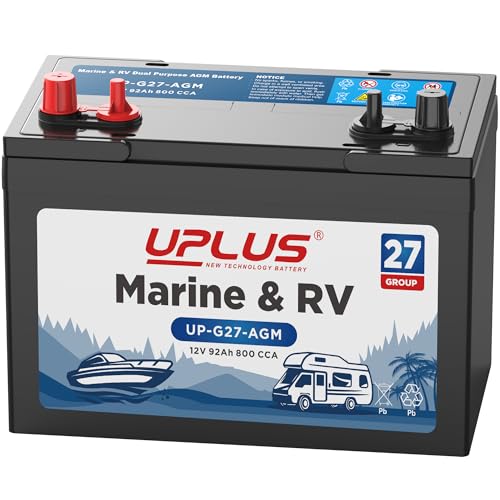
This dual-purpose AGM battery combines starting power with deep-cycle capabilities in a compact design. It’s suitable for boats that want to consolidate two roles into one battery without adding extra weight or space. Best for boats with limited battery bay space or those upgrading from older dual batteries to a single, more efficient unit.
Who it’s best for: sailors or RVers with tight engine rooms who need a single unit to cover lighting, electronics, and engine starts. Why selected: the space-saving design and dual-use functionality streamline electrical systems.
Limitations: check compatibility with your boat’s cranking requirements and ensure your charging system supports AGM charging profiles for optimal life.
DC HOUSE 12V 100Ah LiFePO4Trolling Battery with Bluetooth

This lithium iron phosphate battery emphasizes safety and longevity, offering up to 15,000 cycles and integrated Bluetooth app monitoring. It includes low-temperature cut-off and a robust BMS, making it suitable for trolling motors, cabin loads, and electronics on longer trips.
Who it’s best for: boaters who want long cycle life, clear SOC visibility, and safer LiFePO4 chemistry in marine environments. Why selected: the combination of cycle life, monitoring features, and protective low-temp controls reduces maintenance and risk.
Limitations: LiFePO4 packs require compatible charging profiles and protective housing to maximize safety and lifespan in marine applications.
DC HOUSE 12V 165Ah LiFePO4 Battery with Bluetooth
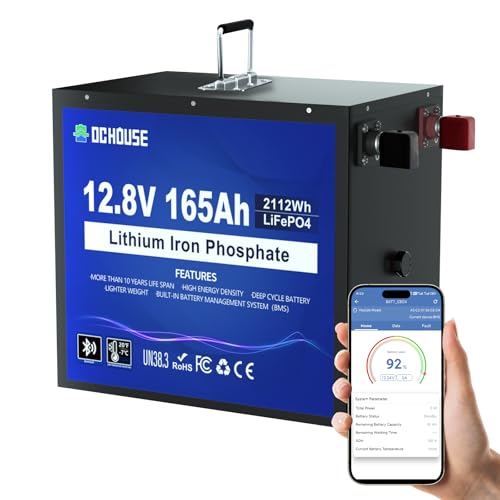
A higher-capacity LiFePO4 option with safety-forward design, a metal shell, and multi-protection features. This battery targets boats with heavier loads or longer off-shore stays where extended runtime matters more than compact size.
Who it’s best for: larger boats, live-aboards, or workboats that run multiple electronics for extended periods. Why selected: higher capacity translates to more run time between charges with a reliable BMS and Bluetooth monitoring.
Limitations: higher upfront cost and installation space requirements; ensure your charging system supports larger LiFePO4 packs and proper battery management.
DC HOUSE 36V Pro Lithium Golf Cart Battery Kit

This 36V kit provides a robust lithium solution with a 200A BMS and high discharge capacity. It’s designed for higher-power trolling or motor-assisted boating setups where 36V systems are in use.
Who it’s best for: boaters who operate higher-demand trolling configurations or need a higher-voltage alternative for specific watercraft. Why selected: strong protection and high discharge enable reliable operation under demanding loads.
Limitations: not a direct single-battery replacement for standard 12V systems; ensure compatibility with your boat’s voltage system and charging infrastructure.
Nilight 90015A Battery Switch, 12-48V

Heavy-duty battery disconnect switch for marine or RV systems. It isolates the battery when not in use, preventing parasitic draws and enhancing safety. Best used as an accessory alongside a dedicated house battery system.
Who it’s best for: boat owners seeking a simple, durable power-off solution for off-season moorings or storage. Why selected: it complements battery installs with a reliable on/off control and high current handling.
Limitations: not a battery itself; requires proper installation and compatible wiring with other power components on board.
NOCO Snap-Top Battery Box, Group 27

The SnapTop Battery Box is designed to fit Group 27 batteries, providing a rugged enclosure with simplified mounting. It’s ideal for keeping boat electrical systems organized and protected against moisture and debris.
Who it’s best for: boaters upgrading to a neat, weather-resistant battery installation or seeking safer battery housing for Group 27 cells. Why selected: improves installation aesthetics and terminal protection, reducing corrosion risk.
Limitations: it’s a box, not a battery; ensure the chosen battery fits the internal dimensions and that venting, if required, is properly managed in your installation.
Buying Guide: Key Considerations For Boat Battery Purchases
What load do you intend to power? Start with a realistic assessment of engine cranking needs and daily electronics, then choose a battery type that matches those loads. AGM batteries offer robust starter power and maintenance-free operation, while LiFePO4 cells give longer life and lighter weight at a higher initial cost.
What is your space and weight budget? For tight compartments, dual-purpose AGM units or compact LiFePO4 packs help maximize capacity without overfilling the bilge. Consider a battery box or organized mounting to protect connections and reduce corrosion.
How important is cycle life and monitoring? Lithium options excel in cycle life and smart monitoring via Bluetooth apps. If you want minimal maintenance and maximum lifespan, LiFePO4 is often worth the investment, especially for trolling motors or long trips.
What about cold weather? Some LiFePO4 designs include low-temperature protections; ensure your BMS and charger support your climate. AGM batteries generally tolerate a wide range but can lose performance in extreme cold.
Charging compatibility matters. Verify that your alternator, solar setup, or shore power charger is compatible with your battery chemistry. Incompatible charging can shorten life or reduce performance.
FAQ: Quick Answers For Boat Battery Buyers
- Q: What’s a dual-purpose marine battery good for? A: It combines starting power with deep-cycle capability, reducing the number of batteries needed on smaller boats.
- Q: Are LiFePO4 batteries worth the extra cost? A: For boats with heavy daily use or long trips, the longer life and lighter weight often justify the price.
- Q: Do I need a battery box? A: A battery box protects terminals, reduces corrosion, and simplifies mounting, especially in wet environments.
- Q: How do I know if my charger supports LiFePO4? A: Check the charger manual for compatibility with LiFePO4 chemistry and appropriate charge profile.
- Q: Can I mix battery types? A: It’s generally not recommended; different chemistries have distinct charging needs and may cause imbalances.
- Q: How do I know which battery size fits my boat? A: Verify the battery compartment dimensions and intended load, then select a capacity that provides enough reserve hours for critical systems.