When your boat won’t start or cranks slowly, a high-torque marine starter is the most effective fix. This guide highlights five top options designed to deliver more cranking power for big V6 and V8 marine engines, helping boaters choose the right unit for their setup. Each product is evaluated for fitment, torque, and practical trade-offs to help you decide who benefits most from each option.
Overview table of selected products:
| Product | Best For | Why It Stands Out |
|---|---|---|
| Marine Starter Replacement for Mercruiser & Volvo Penta 4.3-8.2L | Marine inboard/stern drive engines | Direct-fit PMGR design with high cranking torque |
| OEG Parts New Starter Compatible with SAE J1171 | Widely compatible Mercruiser/Volvo Penta setups | Broad part-number compatibility and marine-grade build |
| BUSIDN High Torque 3 HP Mini Starter | Smaller blocks and tight installations | Compact, heavy-duty 2.0 kW with 9-tooth gear |
| 3HP High Torque Mini Starter 168 Tooth for SBC BBC | Chevy small and big block builds | Versatile 153/168-tooth flywheel compatibility |
| maXpeedingrods 3HP High Torque Mini Starter | Chevy SBC/BBC marine and non-marine | Same basic specs with broad part-number support |
Marine Starter Replacement for Mercruiser & Volvo Penta 4.3-8.2L

Best for heavy-duty marine inboard and stern-drive engines that require reliable high-torque starting. This PMGR (Permanent Magnet Gear Reduction) design delivers higher cranking torque than some direct-drive starters, improving cold-weather starts and reliability after long storage. It replaces a broad range of OEM part numbers and fits Mercruiser, Volvo Penta, OMC, and Crusader engines in 4.3L to 8.2L V6/V8 configurations.
Who it’s best for: boaters with older or high-displacement marine engines needing a direct-fit upgrade to reduce slow cranks and clicking noises.
Limitations: confirm fitment on the product page for your exact engine model before purchase; some installations may require wiring or mounting adjustments in tight spaces.
OEG Parts New Starter Compatible with SAE J1171 Marine Certified Mercruiser & Volvo Penta V6/V8

Ideal for boaters seeking broad compatibility with Mercruiser and Volvo Penta engines up to V8 configurations from the mid-1990s to early-2000s. The product list includes numerous replacement part numbers, indicating wide applicability and an emphasis on reliable marine-grade construction.
Who it’s best for: owners needing a versatile replacement starter that can cover multiple OEM variants without changing the mounting or wiring layout.
Limitations: the long list of compatible part numbers can be overwhelming; verify your engine’s exact model and part number before ordering.
BUSIDN High Torque 3 HP Mini Starter

Best for smaller blocks or installation spaces where a compact starter is required but high torque remains essential. This unit is rated at 2.0 kW (3 HP) with a 9-tooth gear and a 12-volt system, designed to fit 153-tooth or 168-tooth flywheels common in many small block and big block swaps.
Who it’s best for: boaters upgrading compact marine engines or converting to PMGR where space is limited but electrical systems can support higher torque.
Limitations: ensure mounting clearance and compatibility with your flywheel tooth count; some installations may need an adapter plate.
3HP High Torque Mini Starter 168 Tooth for SBC BBC
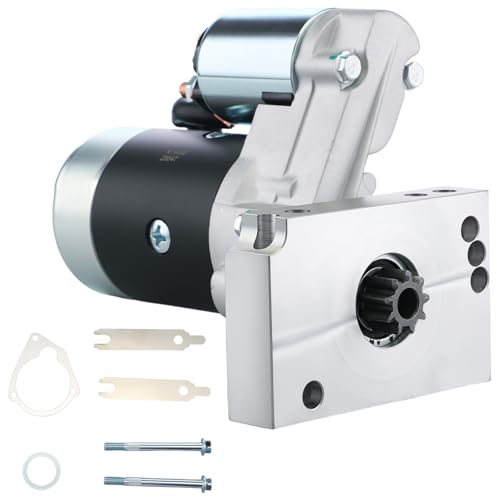
Choose this when you need broad compatibility with GM small and big blocks that use 153- or 168-tooth flywheels. This PMGR starter provides a compact, reliable torque boost for a wide range of Chevy engines in marine and non-marine applications.
Who it’s best for: DIY enthusiasts upgrading GM V6/V8s or performing repower projects where flywheel tooth compatibility is critical.
Limitations: verify the exact flywheel tooth count and mounting hardware; some models may require additional brackets or wiring adapters.
maXpeedingrods 3HP High Torque Mini Starter

Best for versatile GM applications with broad compatibility for SBC and BBC engines bearing 153/168-tooth flywheels. It features a 12-volt system with a 2.0 kW, 3 HP rating and a 9-tooth gear design, accompanied by an adjustable mounting block for flexible installations.
Who it’s best for: builders and hobbyists looking for a cost-effective, high-torque solution that fits many GM-based marine and automotive builds.
Limitations: confirm flywheel tooth compatibility and mounting clearance; some boats may require different mounting bolts or spacers.
ProForm 66268 Hi-Torque Starter

Suitable for stints where a vehicle-specific fit is indicated, with general hi-torque characteristics suitable for a range of engines. The listed dimensions and weight suggest a robust unit intended for demanding starts in marine or off-road environments.
Who it’s best for: buyers who require a starter tailored to vehicle-specific fitment guidelines and standard mounting dimensions.
Limitations: ensure precise compatibility with your engine model; some installations may demand additional hardware or brackets.
Buying Guide: High Torque Marine Starters
What torque level do I need?
Higher torque improves cold-weather starts and crank time for larger V6/V8 engines. Look for a PMGR design with sufficient wattage (2.0 kW / 3 HP is common for marine mini starters) to ensure reliable turning of your engine’s compression.
Direct-fit vs. universal fit
Direct-fit models simplify installation and reduce the risk of wiring or mounting misalignment. Universal-fit units may require adapters but offer flexibility across different engine brands and years.
Flywheel tooth compatibility
Confirm the flywheel tooth count (commonly 153 or 168 teeth) before purchasing. A mismatch can prevent proper engagement or damage to the starter.
Corrosion resistance and marine-grade build
Marine environments demand corrosion-resistant materials and seals. Look for units explicitly marketed as marine-grade and manufactured to ISO or IATF standards for reliability in saltwater conditions.
Installation considerations
Check mounting clearances and wiring harness compatibility. Some starters require longer cables, different solenoids, or mounting brackets. If in doubt, consult a marine technician or the product page’s installation notes.
Durability and testing
Manufacturers that perform load testing and seal integrity checks typically indicate higher reliability. Consider units with documented marine testing or third-party validation where available.
Summary comparison by scenario
- Best for Mercruiser/Volvo Penta engines: Marine Starter Replacement (BDELI) offers direct-fit PMGR with broad compatibility.
- Best for wide OEM coverage: OEG Parts New Starter (Parts Player) provides extensive replacement numbers and marine-grade construction.
- Best for tight spaces: BUSIDN 3 HP Mini Starter suits installations with limited room but requires fitment checks.
- Best for GM engine swaps: 3HP Mini Starters (Hex Autoparts and maXpeedingrods) cover common 153/168-tooth flywheels and offer strong torque.
- Best overall value for versatile builds: MOOSUN Heavy-Duty Mini Racing Starter combines high torque with broad compatibility for SBC/BBC swaps.
FAQ
- Q: Will a high-torque starter fit my old marine engine?
A: Check the engine’s flywheel tooth count (153 or 168) and confirm the starter’s mounting compatibility with your engine family. - Q: Are all high-torque starters suitable for saltwater use?
A: Look for marine-grade construction with corrosion-resistant seals and housings; not every aftermarket unit is equally resistant to saltwater exposure. - Q: Can I install a non-marine starter on a boat?
A: It’s possible, but it may void warranties and reduce resistance to moisture or salt buildup. Marine-grade options are preferred for reliability. - Q: Do I need a professional to install a new starter?
A: Simple installations may be DIY, but electrical and alignment issues in boats benefit from professional assistance to ensure proper wiring and mounting. - Q: How do I tell if my starter is failing besides slow cranking?
A: Frequent clicking, failure to engage, or abnormal noises are common indicators; however, diagnosing electrical or solenoid issues may require testing equipment. - Q: What maintenance helps extend starter life?
A: Keep connections clean and tight, inspect for corrosion, and ensure mounting hardware remains secure. Avoid moisture intrusion into electrical contacts.