When you need fast, reliable location sharing for marine emergencies, a dedicated GPS locator or personal locator beacon (PLB) designed for boating is essential. This guide compares the top options to help boaters, anglers, and outdoor enthusiasts choose devices that provide global coverage, clear distress signaling, and user-friendly features. The brief product table below highlights five models best suited for boats, dinghies, and coastal adventures.
| Product | Key Benefit | Best For |
|---|---|---|
| ACR ResQLink View – PLB 425 | GPS distress with buoyant form factor | Boaters needing a rugged, wearable beacon |
| ACR ResQLink 400 | No subscription, global coverage | Budget-minded boaters seeking reliable SOS with GPS |
| ACR ResQLink View RLS | Return Link Service, digital display | Boaters who want confirmation of SOS receipt |
| ACR ResQLink 410 RLS | GPS with RLS, long battery life | Extensive boating trips requiring durable signaling |
| Nautilus Lifeline Marine Rescue GPS | High-precision GPS with AIS/DSC | Divers and boaters needing rapid local alerting |
ACR ResQLink View – Buoyant PLB 425
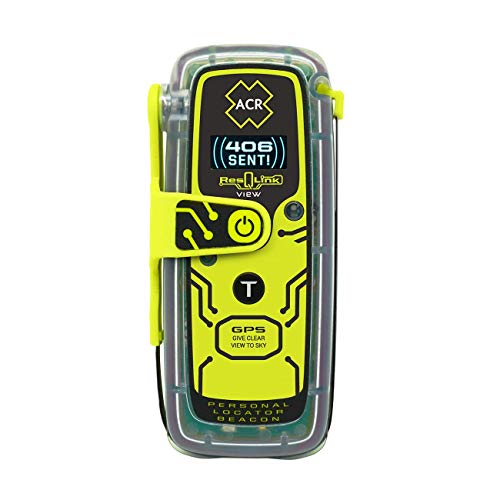
The ResQLink View 425 is a buoyant personal locator beacon with GPS that sends an SOS distress signal to search and rescue forces worldwide via the 406 MHz emergency channel, plus a 121.5 MHz homing signal. It includes attachment clips, a belt clip, and wearability options for hikers and boaters alike. It also supports sending pre-canned non-emergency self-test messages and GPS test messages to contacts via SMS or email with optional 406Link testing subscription. This model suits boaters who want a bright, self-contained beacon with wrist or belt wearability and simple test messaging.
Best for: Boaters who need a rugged, buoyant PLB that doubles as a wearable device and can reach SAR quickly with GPS data. Limitations: Requires activation to send signals; subscription features are optional but may be useful for message testing.
ACR ResQLink 400 – SOS PLB with GPS

The ResQLink 400 provides subscription-free global coverage and dependable 406 MHz distress and homing signals, with an LED strobe and infrared strobe for enhanced visibility in low-light conditions. It is designed for hiking, hunting, boating, and fishing where immediate SAR alerts are critical. The absence of ongoing fees makes it attractive for boaters seeking reliable signaling without recurring costs.
Best for: Boaters who want a straightforward, subscription-free PLB with strong visibility. Limitations: No built-in RLS or digital display, so confirmation of SAR receipt may rely on external systems.
ACR ResQLink View RLS – Digital Display

The ResQLink View RLS adds a digital display and Return Link Service to the standard GPS beacon. RLS confirms that SAR has received the distress signal, providing added assurance to the beacon owner. It runs on a long-life battery with substantial operation time and requires no ongoing subscription. This model blends GPS reliability with proof of signal delivery for boaters who want documentation of the alert.
Best for: Boaters who prefer explicit confirmation from SAR and want a visible digital readout. Limitations: Higher initial cost versus non-RLS models; requires careful interpretation of the display in emergency scenarios.
ACR ResQLink 410 RLS – GPS with Return Link

The ResQLink 410 RLS combines GPS global coverage with Return Link Service and a long operational life. It mentions Galileo GNSS and MEOSAR compatibility, offering robust positioning for international trips. RLS confirms delivery to SAR, increasing accountability during emergencies. This model is well-suited for longer boating excursions that span multiple regions and require dependable, global signaling.
Best for: Marathon boat trips or offshore activities where global coverage and SAR acknowledgment matter. Limitations: Advanced features may be more than needed for short local trips.
ACR RESQLINK AIS PLB-450

The AIS-enabled PLB-450 adds Automatic Identification System signaling to distress alerts. It includes Return Link Service and a mobile app, plus accessory clips. AIS alerts can be received by nearby vessels equipped with AIS, enabling quicker local responses in crowded waterways. This model blends functional marine signaling with vessel-aware situational awareness.
Best for: Boat operators in busy ports who want local, vessel-based awareness alongside global SAR channels. Limitations: AIS coverage depends on nearby AIS-equipped vessels; not a substitute for global satellite signaling in remote areas.
Buying Guide
What type of GPS locator do I need on a boat?
Choose a beacon designed specifically for marine use, with a rugged, buoyant build, reliable GPS, and confirmable distress signaling. PLBs that use 406 MHz with a 121.5 MHz homing signal provide global SAR reach, while models with Return Link Service (RLS) offer confirmation that your alert was received.
Should I get subscription features?
Some models offer optional testing subscriptions or mobile app access for testing and data, but many boaters succeed with subscription-free devices. If you frequently travel offshore or want enhanced testing options, consider models offering SMS/email test messaging or 406Link testing services.
What about visibility and signaling?
Look for LED or infrared strobes and durable housings. Nighttime or low-visibility conditions benefit from bright signaling and long operating life to maximize rescuers’ ability to locate you quickly.
Global coverage vs. local alerts
Global coverage is essential for offshore or international trips. Local alerts via AIS or DSC can improve response time in busy waterways, but should not replace satellite-based signaling for remote areas.
Battery life and durability considerations
Many beacons offer multi-hour operation, with some models supporting 24+ hours of use. A longer battery life reduces the need for frequent maintenance and ensures readiness during extended outings. Water resistance, rugged housing, and buoyancy are important traits for marine use.
Which features matter most for boaters?
- GPS accuracy and reliable distress signaling
- Return Link Service (RLS) for confirmation
- Buoyant, wearable design and simple activation
- Optional app integration or SMS/E-mail test messaging
- AIS or DSC compatibility for nearby vessel awareness
Quick comparison at a glance
- Best for wearability and quick signaling: ACR ResQLink View 425
- Best for no ongoing fees: ACR ResQLink 400
- Best for SAR receipt confirmation: ACR ResQLink View RLS
- Best for global coverage with RLS: ACR ResQLink 410 RLS
- Best for AIS-enabled local alerts: ACR RESQLINK AIS PLB-450
Frequently Asked Questions
- What is a GPS locator for boats? A GPS locator is a beacon that transmits distress signals with GPS location to search and rescue authorities, helping responders locate you quickly in an emergency.
- Do PLBs require a subscription? Most PLBs do not require ongoing subscriptions, though some testing or data services may be optional.
- What does Return Link Service (RLS) do? RLS confirms that SAR has received your distress signal, providing reassurance to the beacon owner.
- Can AIS improve rescue times? AIS-enabled beacons can alert nearby vessels equipped with AIS, potentially shortening local response times in congested waters.
- How long does a typical PLB battery last? Battery life varies by model; many offer several hours of continuous operation and longer standby life, with 5-year battery life cited for some models.
- Should I choose a buoyant PLB or a wearable one? Buoyant PLBs are easy to spot on water, while wearable beacons offer quick access if you are separated from a vessel or immersed.