Answering the need for reliable, easy-to-use marine navigation, these five GPS devices and fish finders stand out for boaters who want precise routes, clear sonar, and dependable charts. They’re well-suited for anglers, offshore skippers, weekend lake travelers, and coastal navigators alike. The list balances dedicated chartplotters with handheld options to fit different boats and planning styles.
| Product | Brand | Best For |
|---|---|---|
| Humminbird Helix 5 G3 GPS Fish Finder | Humminbird | Anglers seeking dual-spectrum sonar and broad lake/coast charts |
| Simrad GO9 XSE Chartplotter | Simrad | Multi-function display with advanced charts for sportboats and cruisers |
| Garmin Striker Vivid 7cv | Garmin | Ease of use with vivid CHIRP sonar and built-in GPS |
| Garmin GPSMAP 79sc | Garmin | Portable, floating handheld navigation for coastal trips |
| Garmin Striker 4 | Garmin | Entry-level CHIRP sonar in a compact package |
Humminbird Helix 5 G3 GPS Fish Finder

The Humminbird Helix 5 G3 combines Enhanced GPS navigation with Dual Spectrum CHIRP sonar. It offers Wide Mode for broad coverage and Narrow Mode for detailed scanning, plus precise 2D target separation from a Low-Q transducer. Basemap provides 10,000+ lakes and U.S. coastlines, with compatibility for LakeMaster, CoastMaster, and Navionics charts. Best for anglers who want flexible sonar views and strong inland/coastal mapping in a compact display.
Who it’s for: anglers needing versatile sonar and solid mapping in a 5-inch screen. Why selected: strong dual-spectrum scanning helps identify fish and structure, while broad chart compatibility broadens navigation options. Caution: the 5-inch display may feel cramped on complex routes or busy chart views, especially in bright sunlight.
Simrad GO9 XSE Chartplotter

The GO9 XSE is a multifunction navigation hub with GPS, sonar, and radar capacity. It includes the C-MAP DISCOVER card for vector charts and advanced coastal details, plus an HDI 83/200 kHz transducer for CHIRP sonar and Down Scan Imaging. Best for sportboats, center-consoles, and smaller cruisers that want a single, capable display for navigation and fishfinding. Caution: higher complexity can require a learning curve for new users.
Garmin Striker Vivid 7cv

The Striker Vivid 7cv adds vivid scanning sonar color palettes to easily distinguish fish and structures. It includes a GT20 transducer for traditional CHIRP and ClearVü scanning, plus high-sensitivity GPS to mark waypoints and create routes. Best for boaters who want clear sonar imagery and reliable waypoint management on a larger 7-inch display. Caution: advanced features work best with reliable power and mounting options; some users may find the interface newer to navigate initially.
Garmin GPSMAP 79sc Marine Handheld
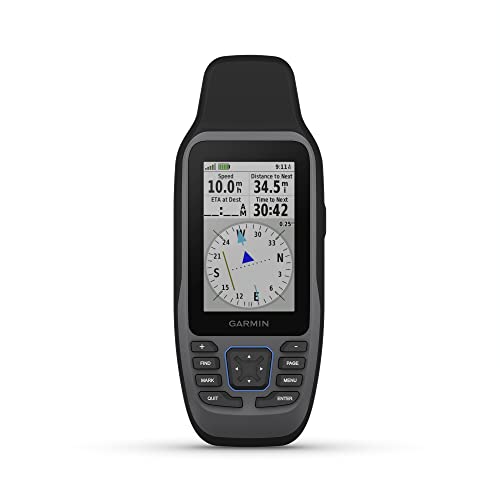
The GPSMAP 79sc is a rugged, floating handheld with a color display and BlueChart coastal charts. It’s designed for portable navigation, ideal for sailors who want a reliable backup or a primary portable option for coastal trips. Best for scouting shoreline routes and quick checks away from the main helm. Caution: handheld form factor reduces screen real estate compared to fixed chartplotters, and mapping depth may be more limited in some regions.
Garmin Striker 4 with Transducer

The Striker 4 combines CHIRP traditional sonar with a ClearVü scanning option in a compact 3.5-inch unit. It includes a built-in GPS for waypoint marking and route creation, plus a quick-installation design. Best for entry-level buyers seeking straightforward sonar and basic navigation in a small footprint. Limitation: the small display may limit chart complexity, and the unit’s capabilities are more modest than larger chartplotters.
Buying Guide
- Display size and readability: Larger screens offer easier map reading and sonar interpretation, especially on the water. Consider glare resistance and brightness for daylight use.
- Chart and map compatibility: Look for devices that support your preferred chart providers (Navionics, LakeMaster, CoastMaster, C-MAP) and that cover your typical waters.
- Sonar capabilities: CHIRP, DownScan, and SideScan options improve target separation and structure identification. Dual-spectrum sonar provides more flexible scanning modes.
- Transducer integration: Transducer type and mounting affect depth range and image clarity. Built-in transducers simplify setup, while upgrade paths may be important for future needs.
- Portability vs. fixed mounting: Handheld models are portable and float, but fixed chartplotters typically deliver richer features and larger displays.
- Power and connectivity: Ensure your boat’s power system matches device requirements and that you can integrate with other gear (radar, autopilot, networked hubs).
Frequently Asked Questions
- What should I look for in a GPS for boat navigation?
– A good GPS should offer accurate positioning, reliable maps, and compatible sonar or charting integration for your boat type. - Are handheld devices sufficient for navigation?
– They can work as backups or for small boats, but fixed-mount chartplotters generally provide richer features for main navigation. - Is CHIRP sonar worth it for beginners?
– Yes; CHIRP sonar improves target separation and bottom detail, which helps identify fish and underwater structure. - Should I prioritize screen size or chart detail?
– Both matter; prioritize readability and clarity of charts at sea, then consider how much detail you need for route planning. - Can I upgrade transducers later?
– Many models support transducer upgrades; verify compatibility and installation requirements before purchase. - Do these devices require internet during use?
– Basic GPS/nav functions do not require internet; chart updates and advanced features may rely on network or data connections.