Choosing the right GPS device for boating enhances navigation safety and fishing precision. This guide highlights top GPS options designed for marine use, including handheld navigators, speedometers, smartwatches, and specialized bait boats, all suited to American boaters seeking reliable performance on the water. Below is a summary table of selected products to help compare features quickly.
| Product | Brand | Key Feature |
|---|---|---|
| Garmin eTrex 22x Handheld GPS | Garmin | Preloaded Topo Active maps, Sunlight-readable display |
| MAIMEIMI GPS Speedometer 3-3/8″ Marine Gauge | MAIMEIMI | Waterproof speedometer with multiple speed units |
| Garmin GPSMAP 79s Marine Handheld | Garmin | Floating, multiple satellite support, 10,000 waypoints |
| Garmin GPS 73 Handheld Marine GPS | Garmin | SailAssist features, 18+ hour battery life |
| SINJEE GPS RC Bait Boat | SINJEE | GPS precision bait deployment, 550-yard remote range |
Garmin eTrex 22x Handheld GPS Navigator

The Garmin eTrex 22x is a rugged handheld GPS ideal for boating and outdoor activities. It features a 2.2-inch sunlight-readable color display with 240 x 320 pixel resolution, ensuring excellent visibility under bright conditions. Preloaded Topo Active maps include routable roads and trails for navigation by land and water. Its sturdy design withstands marine environments, making it a trustworthy companion for boaters needing reliable waypoint tracking and navigation. This device supports confident exploration with intuitive controls and accurate location data.
MAIMEIMI GPS Speedometer 85mm Boat Gauge

This MAIMEIMI GPS Speedometer is designed specifically for boats, with an 85mm diameter gauge featuring a bright TFT screen to display speed clearly. It operates on 9-32V DC power, making it suitable for a variety of marine vessels. The IP67 waterproof and anti-fog design provides durability and readability in harsh conditions. This speedometer offers units in mph, knots, and km/h, adjusting to preferred marine speed measurements. Easy installation and robust protection enhance its appeal for boaters looking to monitor speed accurately.
Garmin GPSMAP 79s Marine Handheld GPS

The Garmin GPSMAP 79s is a rugged marine handheld GPS that floats and is water-resistant with IPX6 rating at the unit level. It offers a high-resolution color display protected by scratch-resistant, fogproof glass. Boaters benefit from robust memory to track up to 10,000 waypoints, 250 routes, and 300 fit activities. It supports multiple global satellite constellations, including GPS, GLONASS, Beidou, and Galileo, ensuring precise, reliable navigation worldwide, a critical feature for extended marine voyages and offshore fishing.
Garmin GPS 73 Handheld Marine GPS
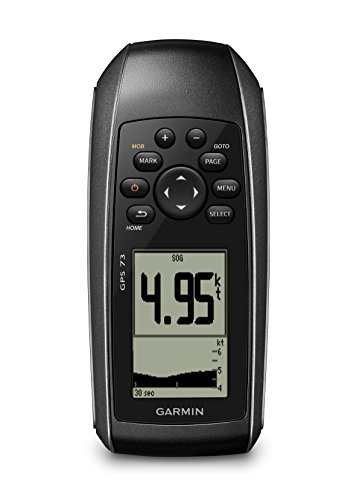
The Garmin GPS 73 is a simplified, durable marine GPS device with a 2.6-inch display, optimized for boating navigation. It includes several sailing-focused features such as virtual starting lines, countdown timers, speed history, and tack assist, which are essential for sailboat racing and cruising. The device runs on two AA batteries providing up to 18+ hours of usage, eliminating reliance on rechargeable batteries in remote areas. It also supports marine alarms like man overboard and anchor drag warnings, improving onboard safety.
SINJEE GPS RC Bait Boat for Fishing

The SINJEE GPS RC Bait Boat revolutionizes fishing by offering precise bait deployment using GPS technology. It has a 550-yard interference-proof remote control range and features a dual battery and motor system for durable performance. Boaters can lock onto fish hotspots, plot waypoints, and initiate auto-return for simplified navigation. The bait boat carries up to 4.4 pounds of bait distributed across three chambers, allowing targeted chum drops that improve fishing efficiency. It’s ideal for anglers who want to outfish competitors with intelligent, remote bait strategies.
Buying Guide for Choosing the Best Boat GPS
When selecting a GPS for your boat, several critical factors determine the best fit depending on your boating style and requirements.
1. Purpose and Navigation Features
Consider if you need a basic positioning device, advanced marine navigation, or fishing-specific features like waypoint marking or bait deployment. Sailboats benefit from specialized sailing features, whereas anglers might prioritize precision bait boats or fish hotspots.
2. Display and User Interface
Marine GPS devices should have sunlight-readable, waterproof displays with intuitive controls—either buttons or touchscreens. Ease of use in wet, bright environments is essential for safety and comfort.
3. Durability and Water Resistance
Choose devices rated for water resistance (IPX6 or higher) and shockproof housing to withstand waves, rain, and splashes. Floating devices add an extra layer of protection if dropped overboard.
4. Battery Life and Power Options
Long battery life is crucial. Handheld GPS units powered by replaceable AA batteries offer flexibility, while integrated rechargeable batteries require charging infrastructure. Marine speedometers often connect to the boat’s power supply.
5. Satellite Compatibility and Accuracy
Global satellite support (GPS, GLONASS, Galileo, BeiDou) enhances position accuracy and reliability, especially when boating internationally or in areas with limited signals.
6. Specialized Functions for Marine Use
Look for additional marine features such as anchor drag alarms, man overboard signals, virtual starting lines for races, and integration with other marine electronics like chartplotters. RC bait boats with GPS can dramatically improve fishing success by enabling precise bait placement.
7. Installation and Size
Speedometers and gauges require appropriate mounting space and may involve hole cutting. Handheld devices offer portability but lack fixed mounting convenience. Consider boat size and dashboard space before selecting.
8. Connectivity and Compatibility
Some GPS devices integrate with smartphone apps or other marine systems for remote control and data sharing. Evaluate if these features add value for your boating experience.
By carefully weighing these aspects, boaters can select a GPS device that enhances navigation, improves safety, and caters to specific marine activities such as fishing or competitive sailing.