Answering the top buyer question: these gas tanks are designed to safely store and transfer fuel for outboard motors, sailboats, and deck boats. They range from compact 3-gallon models for small boats to large 12-gallon tanks for longer trips. The best choice depends on boat size, fuel type compatibility, and how you plan to refuel away from shore. This guide highlights five reliable options and shows who each is best for, with practical notes on capacity, portability, and safety features.
Summary table of selected products
| Product | Capacity | Best For | Key Benefit |
|---|---|---|---|
| Scepter 6-Gallon Portable Marine Gas Can | 6 Gal | Moderate-length trips, under-seat storage | 2-Way vented cap, built-in gauge |
| Scepter 12-Gallon Portable Marine Gas Can | 12 Gal | Longer runs, larger boats | Large capacity, built-in gauge |
| VEVOR 6.34-Gallon Portable Tank | 6.34 Gal | Compact, versatile decks | HDPE construction, 9.8 ft hose |
| VEVOR 3.17-Gallon Tank | 3.17 Gal | Small boats, spares | 9.8 ft hose, sturdy |
| LAUCO 6.34-Gallon Portable Tank | 6.34 Gal | Dockside storage, mobile fuel | Sealed/vented cap option, durable |
Scepter 6 Gallon Portable Marine Gas Can

The Scepter 6-Gallon Portable Marine Gas Can offers a reliable mid-range capacity for boats with moderate fuel needs. It features a 2-way vented cap that allows air flow during refueling and automatically relieves pressure, reducing vapor buildup. The built-in fuel gauge helps monitor levels, and it accepts standard marine tank fittings. Best for boaters who want a balance of capacity and portability, with compatibility for diesel and ethanol-blended fuels. Caution: ensure proper venting to avoid pressure issues near heat sources.
Scepter 12 Gallon Portable Marine Gas Can

The Scepter 12-Gallon model is designed for longer outings or larger boats needing extended running time. It maintains a space-saving tall profile and includes a built-in fuel gauge with a dual-purpose pickup. This can is compatible with diesel and ethanol-blended fuels and uses a 2-way vented cap to manage vapor pressure. Best for boaters who value high capacity and quick fuel checks, with a note to manage weight and storage space on smaller vessels.
VEVOR 6.34-Gallon Portable Tank

VEVOR’s 6.34-Gallon tank is built for rugged use with a high-density polyethylene body that resists aging, impact, and corrosion. It includes a long 9.8 ft hose and a gauge to monitor fuel level easily. The compact, portable design makes it a strong pick for deck boats and small to mid-sized outboard setups. Best for users who want a durable tank with a long hose for flexible fueling; caution that exposure to direct sunlight can accelerate aging.
Portable Boat Fuel Gas Tank, 3 Gallon
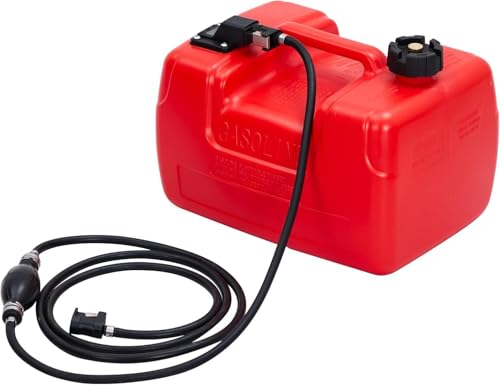
This 3-Gallon tank from LIZHOUMIL is compact and portable, ideal for small boats or as a spare fuel source. It includes a clear gauge and an integrated filter for better fuel hygiene and engine performance. Best for anglers or sailors with limited space who still want a reliable on-board fuel option. Caution: smaller capacity may require more frequent refueling on longer trips.
PeakPursuit Portable Boat Tank 3 Gal

The PeakPursuit 3-Gallon model emphasizes universal compatibility with a long 9.8 ft hose and a dual venting system—one option for sealed operation and another for vented flow. This design supports convenient top-ups and refueling on deck boats and inflatables. Best for boaters needing a compact, flexible option; limitation: smaller capacity means more frequent fueling on longer trips.
LAUCO Portable Marine Fuel Tank 6.34 Gal

The LAUCO tank combines a 6.34-gallon capacity with a no-leak cap option that can be sealed or vented, depending on refueling needs. It uses a 9.8 ft hose for reach and compatibility with common marine interfaces. Best for boaters who prioritize leak prevention and flexible venting; caution that proper venting is required to maintain smooth flow under load, and avoid prolonged sun exposure to limit aging.
Buying Guide
What capacity do you need? Choose by typical trip length, boat size, and how often you refuel away from shore. Larger boats or longer trips often benefit from 6–12 gallon tanks, while smaller vessels can rely on 3–4 gallon options.
Is venting important? Vented caps help manage pressure and vapor buildup during refueling. EPA/CARB-approved vented caps are common on larger models and are worth prioritizing for safety and compliance.
What hose length works best? Look for tanks with hoses around 9.8 feet (3 meters) so you can refuel from dockside or from a comfortable distance without moving the boat.
Material and durability matter. High-density polyethylene builds strength and resists aging and corrosion in salt spray environments. UV stabilization helps extend life, though avoid prolonged sun exposure when possible.
Gauge visibility. Built-in gauges provide quick, at-a-glance fuel level checks. If you plan quick refuels or under-seat storage, a clear gauge reduces guesswork during trips.
Compatibility. Most tanks support diesel and ethanol-blended fuels, but verify compatibility with your engine and fuel line fittings, especially if using Yamaha or other brand connectors.
FAQ
- What capacity is best for a small outboard? A 3–4 gallon tank is typically sufficient for short trips or as a spare fuel source on small boats.
- Are vented caps necessary? Venting helps prevent vapor buildup during refueling and off-gassing; EPA/CARB-approved vented caps are recommended for safety.
- Can these tanks handle diesel fuel? Several models are compatible with diesel or ethanol blends; verify each product listing for exact fuel compatibility.
- Do tanks come with hoses? Most listings include a transfer hose of about 9.8 feet; check the product details to confirm length and diameter.
- Is it safe to store these tanks under seats? Yes, many compact tanks are designed for under-seat storage, but ensure proper ventilation and avoid heat buildup.
- What maintenance is required? Inspect connections for leaks, keep gauges readable, and store away from direct sunlight when possible to extend life.