Whether you’re topping off an outboard, extending your run time, or organizing spare fuel, the right gas tank for your boat matters. This guide highlights five dependable portable marine fuel tanks that balance capacity, durability, and ease of use. It’s ideal for boaters who want longer trips between refuels, compact storage under seats, or rugged tanks for saltwater conditions. Each option includes built-in gauges and vented caps to manage vapor buildup and fuel level checks on the fly.
Summary of chosen products
| Product | Capacity | Best For |
|---|---|---|
| Scepter 12 Gallon Portable Marine Gas Can | 12 gal | Long runs on larger boats |
| Scepter 9 Gallon Portable Marine Gas Can | 9 gal | Balanced capacity for mid-sized boats |
| Attwood 6 Gallon Portable Fuel Tank | 6 gal | Compact, in-cabin or under-seat storage |
| LAUCO 6.34 Gallon Portable Tank | 6.34 gal | Leak-resistant cap, versatile transfer |
| VEVOR 14.53 Gallon Marine Tank | 14.53 gal | Higher capacity with clear gauge |
Scepter 12 Gallon Portable Marine Gas Can

The Scepter 12-gallon tank is designed for boats needing extended fuel availability. It features a 2-way vented cap to maintain airflow during refueling and automatically release pressure above 5 PSI to prevent vapor buildup. The built-in gauge and pickup allow quick checks without removing the container, and the tank accepts standard 1/4 NPT marine fittings. Best for larger boats or long days on the water, this tank aligns with EPA and CARB requirements for safer operation. A potential limitation is its larger footprint, which may require more storage space.
Scepter 6 Gallon Portable Marine Gas Can

The 6-gallon Scepter can offers a compact option with a slim profile suitable for under-seat storage or tight compartments. It includes a 2-way vented cap and built-in gauge, enabling quick checks while refueling. The container works with diesel and ethanol-blended fuels and uses a standard 1/4 NPT connection. Best for mid-sized boats or as a spare tank, this option balances capacity with portability. Limitation: smaller capacity may require more frequent refuels on extended outings.
Attwood 8806LP2 EPA Certified 6 Gallon Tank

Attwood’s 6-gallon tank emphasizes EPA and CARB compliance with a cap featuring a built-in vacuum valve, removing the need for manual venting. This makes it reliable for various marine environments and fuels. It’s best for boaters prioritizing regulatory compliance and simple operation in a compact package. A caution is that capacity is modest, so longer trips will require more frequent refueling or an additional tank.
AloneGoer 3 Gallon Portable Marine Gas Tank
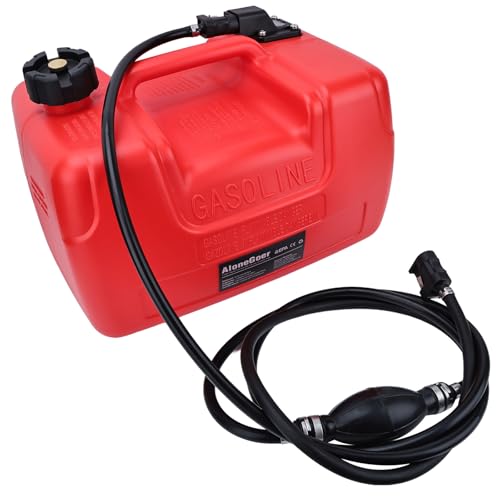
The AloneGoer 3-gallon tank targets owners of Yamaha outboard systems or smaller craft. It uses HDPE-EVOH-HDPE multi-layer co-extrusion to reduce fuel permeation and features corrosion-resistant materials for humid, salty environments. Best for spare tanks or small vessels, it’s lighter and easier to stash. Limitation: 3-gallon capacity may necessitate frequent refills on longer voyages.
LAUCO Portable Marine Fuel Tank

LAUCO’s 6.34-gallon tank emphasizes a leak-resistant cap with two configurations: sealed and vented. It comes with a 9.8 ft fuel hose and is compatible with common marine tank interfaces. Best for boaters seeking flexible venting options and a robust hose connection. Note that extended sun exposure may accelerate aging, so store out of direct sunlight when possible.
VEVOR 14.53 Gallon Marine Tank

The VEVOR 14.53-gallon tank provides substantial capacity and a clear fuel gauge, aiding quick volume checks. It features a long 9.8 ft hose and a two-way vent cap, with a design that resists aging and corrosion. Best for larger boats or users needing extended fuel range, this option may be heavier and less portable than smaller tanks.
Buying Guide: How To Choose The Right Boat Gas Tank
What capacity do you need? Consider your typical trip length, engine type, and spare fuel strategy. Larger boats or overnight trips benefit from higher gallonage, while smaller craft might prioritize compact storage.
Is venting important for you? All listed options include a vented cap or a two-way cap to manage vapor buildup. Choose venting if you refuel in high-temperature conditions or frequent throttle changes.
How critical is a built-in gauge? Tanks with an integrated gauge simplify fuel monitoring and planning. If you prefer hands-free checks, look for a tank with a visible sight gauge.
What about fuel compatibility? Most tanks support diesel and ethanol-blended fuels, but verify your specific fuel type before use. Check whether your engine requires a particular connector standard (such as 1/4 NPT).
Portability and storage: Under-seat storage or near-cabin placement benefits from a slim profile. If space is scarce, prioritize compact tanks with a minimal footprint and molded handles.
Durability and environment: UV stabilization, salt spray resistance, and corrosion protection extend life in marine settings. Consider multi-layer barrier technology for reduced permeation and aging.
Installation considerations: Ensure you have compatible hoses and fittings, and know where you’ll attach the fuel line to the engine. Some models require separate purchase of hoses or fittings.
FAQ
- What capacity is best for a small fishing boat? A 6-gallon to 9-gallon tank often balances storage and range for compact boats.
- Do these tanks handle ethanol fuels? Yes, most listed options state compatibility with diesel and ethanol-blended fuels, but always confirm for your specific model.
- Is a built-in fuel gauge worth it? Yes, it simplifies monitoring fuel levels during trips and helps prevent unexpected refueling stops.
- Can these tanks be mounted under seats? Several models are designed for under-seat storage, but check dimensions and mounting options for your boat.
- Are vented caps safer? Vented caps reduce pressure buildup and vapor release during refueling, improving safety in hot environments.
- Should I buy a larger tank for longer voyages? If your outboard runs time-between-refuel is critical, a larger capacity can reduce refueling frequency; balance weight and space constraints.