Answering the question of reliable, on-demand freshwater supply aboard a boat starts with a capable pump and a dependable tank setup. This guide highlights five well-rounded options that fit typical boaters’ needs—from compact RV-style pumps for small vessels to higher-flow units for larger boats or spray/faucet systems. Each selection is chosen for durability, ease of installation, and suitability for potable water. Best uses include small weekend boats, mid-size sailboats, and RV-to-boat conversions where a steady water supply matters most.
Summary table of chosen products:
- SEAFLO 33 Series 12V RV Water Pump — 3.0 GPM, 45 PSI, on-demand, potable-certified
- ECO-WORTHY 33-Series Industrial Water Pressure Pump — 4.0 GPM, 50 PSI, 110V AC
- MAXZONE 12V DC Fresh Water Diaphragm Pump — 4.0 GPM, 50 PSI, on-demand
- WASSERMANN RV Pump — 4.0 GPM, 45 PSI, complete kit
- 12V DC RV Fresh Washdown Pump Kit — 7.0 GPM, 70 PSI, high flow
SEAFLO 33 Series 12V On-Demand Pump
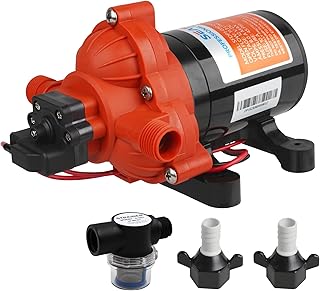
This 12V diaphragm pump delivers 3.0 GPM at 45 PSI, with self-priming capability up to 6 feet. It is NSF/UL certified for RV potable water, aligning well with boats that require drinking-water safety standards. Best for compact coastal vessels, cabins, and small to mid-size RV boats needing steady, on-demand water pressure without battery drain concerns.
Who it’s best for: boat owners seeking a compact, certified system that runs reliably on standard 12V power. Why selected: it balances flow, pressure, and safety certifications, suitable for freshwater delivery to sinks and showers. Caution: ensure proper wiring and prevent backflow to maintain certification status.
ECO-WORTHY 33-Series 110V Diaphragm Pump

This 110V AC unit provides 4.0 GPM at 50 PSI, with smart pressure switching and a wide adjustable range (45-70 PSI). It does not rely on boat batteries, making it ideal for larger boats with shore power or off-grid setups where AC power is readily available. It’s self-priming up to 9.8 feet and includes thermal protection for safety.
Who it’s best for: boaters with reliable 110V shore power or onboard AC systems needing higher flow. Why selected: higher flow and adjustable pressure offer flexibility for showers, galley sinks, and spray systems. Caution: requires access to AC power and appropriate wiring; consider dust and moisture exposure in marine environments.
MAXZONE 12V Fresh Water Diaphragm Pump

This 12V DC pump delivers 4.0 GPM at 50 PSI with on-demand operation and self-priming capability. It includes accessory parts and guards against dry-running with thermal protection. It’s geared toward RVs and boats that want reliable, mid-to-high water flow with straightforward 12V wiring. Best for: medium-sized boats and RVs where space is moderate and a quiet on-demand pump is preferred. Caution: follow supplied inlet/outlet guidance to avoid leakage and incorrect pressure settings.
WASSERMANN RV Pump Kit

Includes 12V pump, adapters, filter, and manual. Provides up to 4.0 GPM at 45 PSI with a complete kit for easy installation. Best for boaters who want a turnkey package with all necessary fittings and maintenance items. Why selected: comprehensive kit reduces additional shopping and ensures compatibility with standard marine hose sizes. Caution: verify that all fittings match your boat’s hose dimensions to prevent leaks.
12V DC Fresh Washdown Pump Kit

High-flow option delivering 7 GPM at up to 70 PSI. It features automatic pressure control and a five-chamber diaphragm design for quiet operation. Suitable for boats that require rapid water delivery to showers, spray systems, or large sinks. Best for: larger vessels or those that need a strong, consistent water supply quickly. Caution: higher flow may require more robust electrical wiring and water tank capacity planning.
Buying Guide
What pump type matches your boat’s water system?
Diaphragm pumps are common for marine fresh water due to reliability and quiet operation. Consider whether you want 12V DC (boat battery powered) or 110V AC (shore power or generator). For small boats, 12V is typically sufficient; for larger vessels or shore-power setups, 110V may offer higher flow without draining the battery.
How much flow and pressure do you need?
General guidance: 3–4 GPM at 40–50 PSI covers most sinks, showers, and galley needs. If you plan a spray washdown or high-use showers, aim for 7 GPM or higher with up to 70 PSI. Always align pump flow with your tank capacity to avoid excessive cycling.
What certifications matter for potable water?
Look for NSF/ANSI/CAN 61 and 372 for potable water safety, plus UL or CSA listings where applicable. Certifications help ensure safe drinking water and compliance with marine plumbing standards.
Installation considerations
Check priming capabilities, maximum lift, and inlet/outlet sizes. Self-priming units simplify installation. Ensure proper mounting to minimize vibration, and plan for strain relief on wiring to avoid moisture exposure.
Maintenance and longevity
Choose pumps with thermal protection and robust diaphragms designed for marine environments. Regularly inspect hoses and fittings for signs of wear or leaks, and preemptively replace strainers to maintain prime and flow.
Availability and compatibility
Ensure your chosen pump fits the boat’s existing hose sizes (commonly 1/2″ MNPT or barb fittings). If you require a complete kit, consider models that include adapters, filters, and manual to shorten installation time.
FAQ
- What is the difference between a 12V pump and a 110V pump for boats?
Answer: 12V pumps run off your boat’s battery, suitable for off-grid use; 110V pumps require shore power and can offer higher flow for larger systems. - Is a higher PSI always better?
Answer: Not always. Higher PSI helps push water further or through longer runs, but it increases pump strain and may waste energy if your fixtures don’t need it. - Do I need a complete pump kit?
Answer: A complete kit simplifies installation and reduces leaks, especially on boats where space and parts fit are critical. - Can these pumps run dry without damage?
Answer: Some models include dry-run protection or can tolerate brief dry running; always follow manufacturer guidelines to avoid motor damage. - How do certifications affect marine use?
Answer: Certifications ensure safety for potable water and compliance with marine plumbing standards, reducing risk for occupants.