Foot-operated bilge pumps offer reliable hands-free water removal when you need it most. This guide highlights five top options, detailing who each pump is best for, why it stands out, and any limitations you should consider. Ideal buyers include boaters needing quick bilge clearance, RV users seeking compact backups, and campers needing portable water transfer tools. The table below compares key attributes to help you decide at a glance.
| Product | Best For | Max Flow | Key Benefit | Limitation |
|---|---|---|---|---|
| Better Boat Manual Bilge Pump (39″ Hose) | Boats, kayaks, small water removal tasks | 20 GPM | Long hose directs water away | May require priming on initial use |
| HASSEN Manual Bilge Pump | Compact emergency pump for boats and kayaks | Unknown (compact design) | Long attachable hose, lightweight | Not specified max flow in listing |
| Stanew Foot Water Pump | Marine RVs, small water systems | 2.2 GPM | Versatile, durable construction | Lower flow than high-capacity pumps |
| Whale Gusher Galley Mk3 | Galley use, hands-free operation | Up to 4 GPM | Self-priming, multi-directional connections | Installation space considerations |
| NovelBee 720GPH Manual | General marine transfers, DIY projects | 720 GPH (12 GPM) | Self-priming, diaphragm design | Higher headroom needed for deep sinks |
Note: Each product links above open in a new tab for convenience. The information here is based on listed features and intended use cases. Consider your vessel size, typical water volume, and the space where you’ll install the pump when choosing.
Better Boat Manual Bilge Pump for Boats
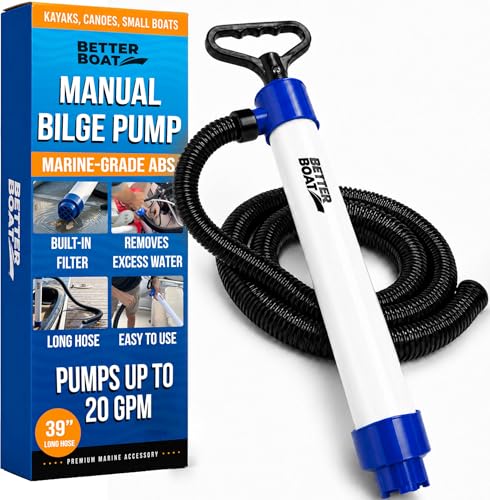
Best for: Boat owners who need fast, portable water removal with a long hose. The pump claims 20 gallons per minute with each stroke, and a 39-inch discharge hose directs water away from the source, reducing splashback. The built-in filter at the intake helps keep debris out of the pump, which is useful in dirty or debris-prone basins. Suction spacers help maintain prime when the bottom is uneven or dirty.
Why selected: This option emphasizes speed and control with a long hose and debris resistance, making it well-suited for small to mid-size boats and dinghies. Caution: priming can require initial effort, and hose placement matters to maximize efficiency.
HASSEN Manual Bilge Pump
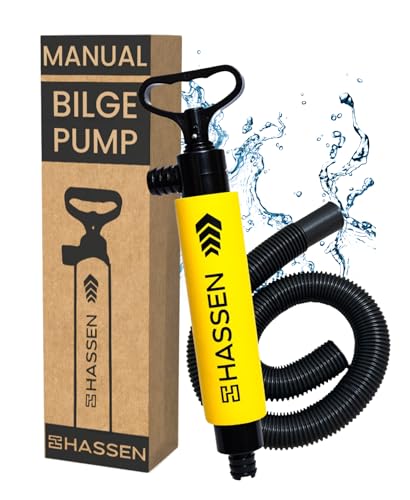
Best for: Portable, lightweight emergency water removal for kayaks, small boats, and temporary setups. The pump includes a long hose and a comfortable grip for extended pumping without fatigue. The data highlights ease of storage and readiness for emergencies.
Why selected: It provides a compact option with effective transfer, ideal when space is limited. Caution: the listing does not specify exact maximum flow, so performance may vary with stroke speed and hose length.
Stanew Foot Water Pump

Best for: Marine applications and RVs where a foot-operated system simplifies water transfer without hand strain. This pump has a maximum flow of about 2.2 GPM and is constructed from durable materials like POM, rubber, and stainless steel for longevity in varied conditions.
Why selected: It balances portability with reliable performance and compatibility with common 1/2″ hoses. Caution: flow is moderate, so larger volumes may require multiple strokes or a larger unit.
Whale Gusher Galley Mk3
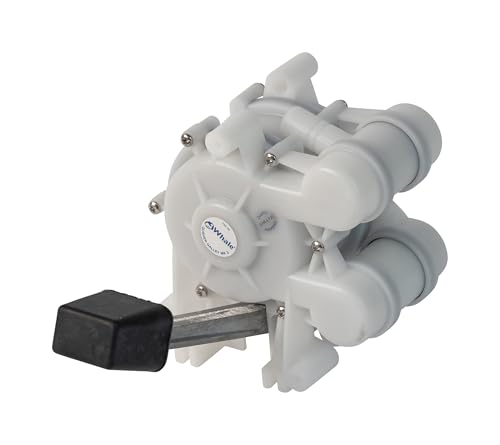
Best for: Galley installations where hands-free water control is beneficial while cooking or cleaning. The Mk3 delivers up to 4 GPM with a self-priming design and supports multi-directional inlet/outlet connections for flexible mounting.
Why selected: Higher flow and self-priming capability make it suitable for frequent small- and medium-volume transfers. Caution: installation space and mounting options should be evaluated to ensure fit in tight galley compartments.
NovelBee 720GPH Manual Diaphragm Pump

Best for: Marine transfers where a diaphragm design helps create self-priming capability with solid suction. The pump’s peak performance is 720 gallons per hour (12 GPM), suitable for sustained pumping in boats or DIY water systems.
Why selected: The diaphragm approach provides reliable self-priming and steady flow, useful in variable hull conditions. Caution: output is lower than high-capacity models, so plan for longer pumping sessions if moving large volumes.
Buying Guide
Key considerations when choosing a foot-operated bilge pump:
- Flow rate needed: Higher GPM suits larger water volumes, while 2–4 GPM models deliver steady performance for smaller boats or RV setups.
- Hose length and fittings: A longer hose helps direct water away from the source and reduces splashback; check compatible hose sizes (commonly 1/2″ to 5/8″).
- Priming and debris handling: Pumps with built-in filters and self-priming capabilities minimize clogs and maintenance in dirty bilge water.
- Portability and storage: Compact, lightweight pumps are ideal for kayaks, small boats, or emergency kits where space is at a premium.
- Durability: Materials like stainless steel, ABS, and POM provide better longevity in saltwater or outdoor environments.
- Installation flexibility: Multi-directional hose connections and mounting options help fit into cramped galley or bilge spaces.
Frequently Asked Questions
- What is a good flow rate for a bilge pump on a small boat? Answer: For small boats, 2–4 GPM is typically sufficient for regular water removal; higher flow is advantageous for rapid clearance after a spill or rain event.
- Do foot pumps require priming? Answer: Many models are self-priming, but some may require initial priming to start.
- Can these pumps handle dirty water? Answer: Some include intake filters or debris-resistant designs; check for built-in filters or spacers to maintain prime in dirty water.
- Can I use these on an RV or camper? Answer: Yes, several models are designed for RV galley and bilge use, with compatible hose connections.
- Is a higher GPM always better? Answer: Not always. Higher GPM means faster pumping but may require more effort or space for mounting; choose based on typical water volumes.
- Are these pumps suitable for seawater? Answer: Most are designed for marine use and can handle seawater, but always verify corrosion resistance and materials for salt exposure.