Finding the right floating dock for a dinghy means balancing buoyancy, durability, and ease of use. The top picks below are best for boaters who want reliable flotation, simple installation, and safe docking for small craft. Each option is suited to different needs: rigid deck platforms for frequent access, inflatable platforms for portable setups, and compact, low-profile docks for easy water access. Use the buying guide to compare buoyancy, material, and installation considerations before purchasing.
| Product | Best For | Key Benefit | Limitations |
|---|---|---|---|
| Eagle Float Dock Float | Marinas and DIY pond docks | High durability with virgin HDPE shell and EPS core | Attachment hardware not included |
| Patriot Docks Low-Profile Floating Dock | Shallow-water access and easy reach | Low-profile design for closer water access | Includes specific frame and float sets |
| SPECRAFT Inflatable Floating Dock | Circumstantial wet/dry lounging | 6.1″ thick, puncture-resistant, expands with add-ons | Inflatable—requires proper storage when not in use |
| GIRISHIP Inflatable Jet Ski Dock | Jet skis and small PWCs | Rigid drop-stitch core with non-slip EVA surface | Inflatable platform limited to buoyant surfaces |
| Taylor Made Dock Float | Versatile buoyancy for docks | UV-resistant shell with EPS foam core | Available in varying flotation ratings |
Eagle Float Dock Float

The Eagle Float Dock Float is designed for marinas or DIY projects that require robust flotation. It features a 100% virgin polyethylene shell, a solid EPS core, and a .15″ wall thickness to resist weather exposure. The flat-top design includes mounting slots for straightforward attachment to docks or piers, though attachment hardware is not included. Best for: dinghy docks that need dependable buoyancy and long lifespan. Caution: ensure hardware compatibility with your dock frame and consider extra hardware for a secure fit.
Patriot Docks Low-Profile Floating Dock Section

The Patriot Docks low-profile section sits closer to the water, providing easier access for dinghies and small boats. It uses high-density polyethylene floats for buoyancy and includes a complete kit with a frame, floats, brackets, and deck panels. Best for: shallow-water or tight-slip environments where horizontal reach is prioritized. Caution: ensure the frame dimensions align with your slip width and deck hardware compatibility.
SPECRAFT Inflatable Floating Dock
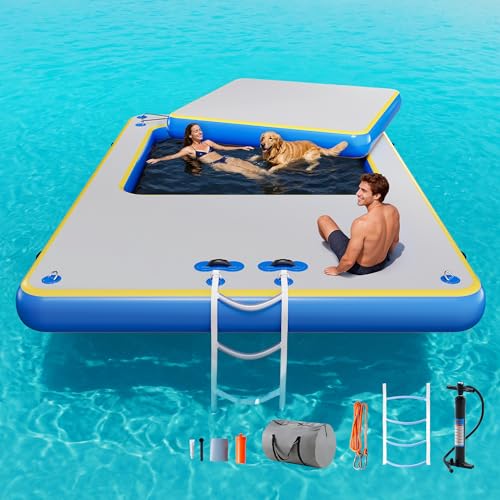
The SPECRAFT inflatable floating dock is built with brushed PVC and a reinforced drop-stitch core, delivering a thick, puncture-resistant surface. It supports 880 lb and offers a dry-wet hybrid setup by removing the center platform. Best for: flexible, portable platforms that can be expanded by adding modules. Caution: inflatable platforms require proper storage and inflation management to maintain buoyancy.
GIRISHIP Inflatable Jet Ski Dock

The GIRISHIP inflatable jet ski dock offers a rigid, rock-solid platform with a 6-inch thickness, plus a protective U-shaped jet ski docking arrangement. The non-slip EVA surface improves footing and safety when loading or lounging. Best for: PWC owners seeking stable, protective berthing with simple setup. Caution: consider wind and wave conditions, as inflatable platforms can shift more than rigid docks in rough conditions.
Taylor Made Dock Float

The Taylor Made Dock Float features a UV-resistant black polyethylene shell filled with EPS foam, providing buoyancy while resisting salt and chemical exposure. It is designed for easy attachment with built-in mounting flanges and hardware slots. Best for: durable, all-weather dinghy docks with long-term use. Caution: flotation options vary; verify the exact buoyancy rating for your dock configuration.
Buying Guide: Key Purchase Considerations
- Buoyancy and Weight Rating: Match float capacity to the dinghy size plus accessories. Look for a clear flotation rating and a stable platform to prevent tipping.
- Material and Durability: Polyethylene shells with EPS cores tend to be durable and weather-resistant. Inflatable docks offer portability but require proper storage and maintenance.
- Installation and Hardware: Check whether mounting hardware is included and whether the dock is designed for your existing pier or deck. Flat-top floats may require additional attachment components.
- Portability vs. Permanence: Inflatable docks are easier to move, while rigid floats offer long-term stability in fixed locations.
- Environmental Considerations: UV resistance and saltwater compatibility extend life in coastal environments. Consider the dock’s impact on the waterline and access for maintenance.
- Safety Features: Non-slip surfaces, protective bumper zones, and edge protection reduce damage to boats and injuries during docking and unloading.
Frequently Asked Questions
- What float size should I choose for a small dinghy? A: Select a dock float with buoyancy sufficient for your dinghy’s weight plus any gear; avoid under-sizing to reduce tipping risk.
- Are inflatable docks as durable as rigid ones? A: Inflatable docks offer portability and easy storage, but they require careful maintenance and are more sensitive to punctures and weather exposure.
- Can I mix different dock sections? A: Yes, many modular docks allow mixing sections, but ensure compatible mounting systems and load ratings across sections.
- What maintenance is required for rubber or foam cores? A: Regular inspection for cracks, UV damage, and water intrusion is recommended; replace damaged sections promptly to maintain buoyancy.
- Do these docks come with installation hardware? A: Some models include hardware; verify inclusion in the product description before purchasing.
- Which option is best for a low-water dock entry? A: A low-profile floating dock design minimizes water depth required and offers easier access for dinghies in shallow slips.