Answering the needs of jet ski owners and small-watercraft users, this guide highlights marine-focused fire extinguishers that are practical, compact, and compliant with basic safety standards. The best options are suited for personal watercraft use, boatowners, and travelers who want reliable, easy-to-access extinguishers on deck or in storage compartments. Below is a quick summary table of five top products to consider, followed by detailed sections for each item.
| Product | Best For |
|---|---|
| Kidde Fire Extinguisher for Boats, Single-Use 5BC | Boats and personal watercraft, basic marine fires |
| First Alert Fire Extinguisher | FE5R-PWCNA | Personal watercraft and small craft, Coast Guard style |
| First Alert Marine Fire Extinguisher, FE1A10GR | Marine-use fires, all-metal construction |
| Ostutry 8-IN-1 Fire Extinguisher | Versatile A,B,C,K fires, broad compatibility |
| AmzBoom 2-Pack Fire Extinguisher | Home/boat kitchens, cars, and small spaces |
Kidde Fire Extinguisher for Boats, Single-Use 5BC
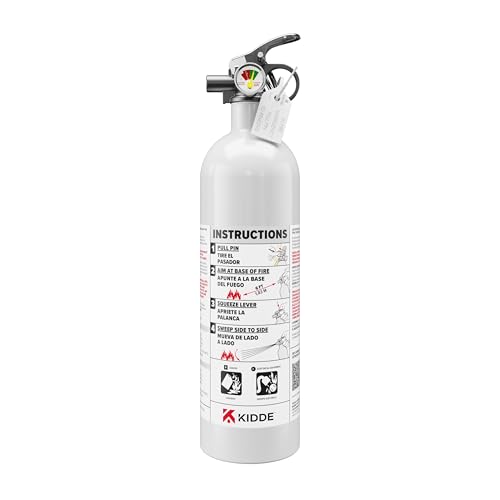
Best for: Boat owners needing a compact, corrosion-resistant option. This extinguisher targets marine-class fires (flammables and electrical) and uses an all-metal construction for durability. It is designed to withstand harsh marine environments with a stainless-steel lever and rust-resistant components. The B-C classification covers typical boat fire scenarios. Limitations include single-use status, requiring replacement after discharge.
First Alert FE5R-PWCNA Personal Watercraft Extinguisher

Best for: Personal watercraft enthusiasts needing Coast Guard-style compliance for marine use. This extinguisher is tested to meet U.S. Coast Guard guidelines and ANSI/UL711 standards, offering dry chemical action with a 5-B:C classification. It is suitable for fires involving flammable liquids and electrical equipment. Caution: the unit is typically non-rechargeable, so replacement after use is required.
First Alert Marine Fire Extinguisher FE1A10GR
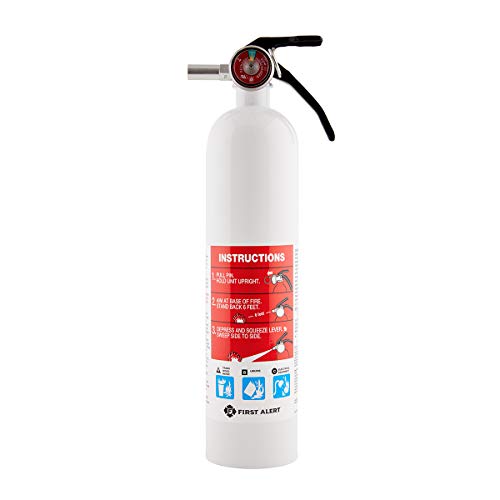
Best for: Marine-use fires on larger small crafts requiring a reliable all-metal unit. The extinguisher is UL-rated 1-A:10-B:C and uses a durable metal valve and trigger. It tackles wood, paper, plastics, gasoline, oil, and electrical fires. It is rechargeable by certified professionals after use, making it suitable for regular boating safety plans. Caution: recharge service is a separate process after a discharge.
Ostutry 8-IN-1 Fire Extinguisher

Best for: Users needing broad coverage across A, B, C, and K class fires, including cooking oils and electrical fires on boats or boats’ cabins. This model emphasizes an extended spray range and non-toxic formula. It also notes a wide storage temperature range and a focus on minimizing reignition with an enhanced extinguishing agent. Caution: check compatibility for high-voltage equipment and ensure proper disposal when empty.
AmzBoom 2-Pack Fire Extinguisher

Best for: Home, car, kitchen, and boat setups where two extinguishers are preferred for quick access and coverage. This 2-pack includes mounting brackets and offers 8-in-1 protection with a non-toxic, residue-free formula. Use it when you need redundancy in a small vessel or along a trailer-to-boat setup. Caution: verify mounting positions are accessible in rough water conditions to prevent misplacement during action.
Auto/Marine 10-B:C Fire Extinguisher

Best for: Refurbished option for budget-conscious buyers seeking marine-application readiness. This unit is noted as refurbished with testing to appear and function like new. It supports basic maritime fire needs with a 10-B:C rating. Caution: refurbishments may vary in appearance; verify labeling and warranty terms with the seller.
Buying Guide: Key Purchase Considerations
- Fire class coverage: For jet skis and small boats, aim for ABC or BC ratings to cover common fires (grease, electrical, gasoline, and solvents).
- Marine durability: Look for all-metal valves, corrosion-resistant housings, and stainless components to endure humidity and salt exposure.
- Size and mounting: Choose compact sizes that fit your storage space and have accessible mounting brackets for quick activation.
- Rechargeability vs. single-use: Consider whether you want a rechargeable unit or a single-use canister that requires replacement after discharge.
- Maintenance: Check for straightforward recharge or replacement channels and straightforward inspection intervals.
- Compliance: Ensure the extinguisher meets applicable marine standards (Coast Guard, UL, ANSI) for your locale.
- Cost vs. coverage: Balance price with the number of classes covered and the expected range of use on watercraft.
Frequently Asked Questions
- Do jet skis require a marine-rated fire extinguisher? Yes, marine-rated extinguishers are designed to handle fires common on watercraft and withstand exposure to moisture and salt.
- What is the difference between 5-B:C and 10-B:C ratings? The higher the B rating, the greater the capacity to fight flammable liquid fires; C relates to electrical fires. A 10-B:C offers more extinguishing power for flammable liquids than 5-B:C.
- Should I choose a rechargeable extinguisher for a boat? Rechargeable units can be reused after professional servicing, which can be convenient for frequent boaters. Non-rechargeable units are simpler but require replacement after use.
- Where is the best place to mount a fire extinguisher on a jet ski or small boat?
Mount in an easily reachable area, away from the helm, and ensure quick access even when seated or strapped in. Use a bracket that keeps the extinguisher secure during rough water. - What maintenance is needed for marine extinguishers? Inspect the pressure gauge, ensure the tamper seal is intact, check for corrosion, and replace if damaged or past its service life per manufacturer guidelines.
- Can multiple extinguishers be used on a single fire? Yes, if the fire is spreading or locations are hard to reach, using a second extinguisher can improve chances of control, but always prioritize personal safety and evacuate if needed.