Looking for fiberglass cloth that can handle boat repairs and reinforcement projects? This guide highlights five dependable options and explains who each product is best for, plus practical considerations for choosing the right cloth for boats. Whether you’re patching a hull, repairing a deck, or reinforcing a sailboat, these materials offer predictable behavior with resins like epoxy or polyester. Below is a quick summary table of the selected products to help you compare at a glance.
| Product | Best For | Key Benefit |
|---|---|---|
| ZXQDRE 1708 Biaxial Fiberglass Cloth | Marine repairs and complex shapes | Superior biaxial strength for curved surfaces |
| UNIFAMILY 50″ Cloth Roll | General boat repairs and light-duty reinforcement | Widely compatible, easy to cut |
| NEZUIBAN 6oz Fiberglass Cloth | Small-to-medium repairs, RC boats | Good balance of strength and flexibility |
| SIMPLYHARDWARE 50″ x 360″ Mat Cloth | Large-area resurfacing and molding | Chopped strand mat with even strength |
| Acuteye Fiberglass Cloth Roll | DIY repairs and quick patches | Long length, easy to cut, non-adhesive |
ZXQDRE 1708 Biaxial Fiberglass Cloth Mat Roll

The ZXQDRE cloth uses 1708 biaxial construction, combining biaxial fabric with chopped strand mat for enhanced strength. This roll is designed for boat, automotive, and DIY repairs where durable reinforcement is needed. It adheres well with epoxy, polyester, and vinyl ester resins and conforms to curves and complex shapes. Best for: marine repairs demanding high strength and shape conformity. Better for: curved hull sections and molded parts. Avoid this if: you need a very lightweight fabric for ultra-fine repairs.
Key considerations: Pro-grade biaxial construction provides lasting reinforcement; marine-grade durability resists rot and chemicals; excellent resin compatibility supports multiple resin systems.
UNIFAMILY 50″ x 12Ft Fiberglass Cloth
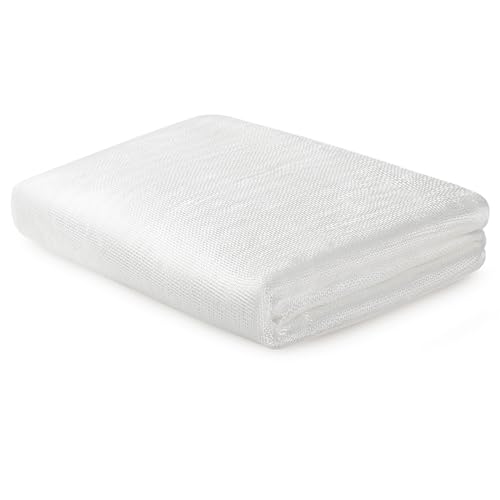
UNIFAMILY offers a wide, 50-inch width roll ideal for larger boat surfaces. The cloth is described as 0.2 mm thick, non-alkali plain fabric, with warp and weft weaving for stable reinforcement. It’s marketed as heat-resistant, corrosion-resistant, insulating, flame-retardant, lightweight, and strong. Best for: larger repairs and general boat maintenance where a broad patch is helpful. Choose this if: you need to cover sizable areas quickly. Limitation: long rolls may require careful handling to prevent creasing or edge curling during cutting.
NEZUIBAN Fiberglass Cloth, 6oz

NEZUIBAN provides a 6-ounce plain weave fiberglass cloth offering good balance of heat resistance, corrosion resistance, and insulation. It’s described as flexible, easy to cut, and suitable for small boat or RC plane repairs. Best for: smaller patch jobs, keel repairs, or interior surfaces where ease of handling matters. Choose this if: you need a soft, easy-to-manipulate fabric for tight corners. Caution: ensure edge handling to prevent fraying with repeated folds.
SIMPLYHARDWARE 50 Inch Wide Chopped Strand Mat Cloth

This cloth uses chopped strand mat (CSM), the most common reinforcement in composites. It blends well with resin or epoxy and conforms to tight curves and corners. Best for: general-purpose reinforcement across hulls, decks, and molds. Choose this if: you need a versatile mat that performs reliably in a wide range of projects. Limitation: CSM may require multiple layers for thicker repairs or high-stress regions.
Acuteye Fiberglass Cloth Roll

Acuteye offers a long fiberglass cloth roll, 4 inches wide and 99 feet long, with non-adhesive, lock-edge cloth that’s easy to cut. It is described as having good electrical insulation, fire resistance, waterproofing, aging resistance, weather resistance, and high strength. Best for: quick, long patches on pipes, boats, or automotive surfaces. Choose this if: you need a flexible, adhesive-free cloth that you can tailor to fits. Caution: non-adhesive fabric requires resin bonding help to stay in place during curing.
Buying Guide: Key Considerations For Choosing Fiberglass Cloth For Boats
- Resin compatibility: Verify whether the cloth works with epoxy, polyester, or vinyl ester resins. Some fabrics bond better with specific resins, affecting cure and strength.
- Weight and thickness: Heavier weights (e.g., 6 oz) provide more strength per area but are stiffer to handle. Lighter weights are easier for fine repairs and patches.
- Weave style: Plain weave fabrics deliver uniform strength in all directions, while biaxial or woven mats may add directional strength for curved surfaces.
- Size and coverage: Wide cloths save time on large surfaces; longer rolls support extensive repairs. Consider how easy it is to cut and maneuver in tight spaces.
- Edge handling: Some fabrics fray or curl at edges. Check whether edges are finished or require sealing before application.
- Durability in marine environments: Look for fabrics described as heat-resistant, corrosion-resistant, and water-resistant for long-term performance aboard boats.
- Ease of use: Non-adhesive cloths require resin bonding; cloths with self-adhesive properties may simplify some projects but can complicate curing times.
Frequently Asked Questions
- What fiberglass cloth is best for boat hull repairs? A biaxial or chopped strand mat cloth that pairs well with epoxy or polyester resin generally offers good all-around strength and conformity to hull contours.
- Can I use any resin with fiberglass cloth? Most common boat repairs use epoxy or polyester resin. Confirm resin compatibility with the chosen cloth to ensure proper cure and adhesion.
- Is wider cloth better for large patches? Yes, wider cloth reduces seams and speeds up large-area repairs, but may be harder to maneuver in tight spaces.
- Do I need multiple layers for structural repairs? For high-stress or load-bearing areas, multiple layers and proper saturation are often necessary to reach the required thickness and strength.
- How do I prevent cloth from fraying at edges? Pre-cut and seal edges, or choose fabrics with finished edges to minimize fraying during handling.
- Can I cut fiberglass cloth to size? Most cloths can be cut to fit, but thicker weights may require longer cure times and careful saturation to avoid dry spots.