Answering the question: epoxy boat bottom paints provide durable, low-friction protection for hulls, especially on aluminum, fiberglass, and wooden boats. This guide helps buyers pick epoxy-based coatings and barrier coats that minimize drag, prevent fouling, and extend hull life. Ideal for boaters who want long-lasting protection, easier maintenance, and better glide in salt or freshwater. The following selections cover high-build barrier coats, epoxy barrier systems, and ablative antifouling options for a range of watercraft and conditions.
Product Snapshot
| Product | Best For | Coating Type | Bottom Area |
|---|---|---|---|
| Fasco Epoxies Super Slick 2000 (Quart) | Owners needing a slick, low-drag surface for small craft | Two-part epoxy with PTFE | Hull bottoms, PWCs, jet skis |
| TotalBoat TotalProtect Epoxy Barrier Coat System (White, Gallon) | Fiberglass or metal hulls needing robust barrier protection | Two-part epoxy primer/barrier coat | Above and below waterline |
| Fasco Epoxies Super Slick 2000 (Gallon) | Boats requiring extended coverage and durability | Two-part epoxy with PTFE | Hull bottoms, aluminum, fiberglass |
| TotalBoat Underdog Marine Antifouling Bottom Paint (Black, Gallon) | Saltwater or frequent-use boats needing antifouling | A antifouling coating with biocides | Fiberglass, wood, steel bottoms |
| TotalBoat JD Select Ablative Antifouling (Black, Gallon) | Boats in mixed waters wanting self-polishing protection | Ablative antifouling | Fiberglass, wood, steel |
Fasco Epoxies Super Slick 2000 Epoxy Bottom Coating (Quart)

The quart kit is a two-part epoxy bottom coating formulated with PTFE and friction-reducing additives for a slippery finish. Best for boat bottoms that travel over grass, mud, sand, and water, reducing drag and improving glide. Durable epoxy system designed for abrasion resistance on boats with aluminum, fiberglass, PWCs, airboats, and jet skis. Field-tested performance supports long-term surface integrity in harsh conditions. Best for smaller craft or as a first-layer barrier where a slick finish matters.
Who this is for: boaters seeking a high-slip finish to cut drag on light to mid-weight hulls. Why selected: the PTFE-enhanced epoxy delivers reduced friction while offering durable protection. Caution: check compatibility with existing hull finishes and ensure proper mixing ratio per instructions.
TotalBoat TotalProtect Epoxy Barrier Coat System (White, Gallon)

This high-build two-part epoxy primer and barrier coat works above and below the waterline and is well-suited for gelcoat blister prevention and fiberglass repair. It provides strong protection for underwater metals and serves as a robust base for additional coatings. Best for boats needing a reliable barrier to prevent blistering and to protect hulls from waterborne wear. Choose this for a solid epoxy base that supports long-term underwater performance. Caution: ensure proper surface preparation for maximum adhesion.
Fasco Epoxies Super Slick 2000 Epoxy Bottom Coating (Gallon)

Gallon-size option for larger hulls or fleets needing extended coverage. The same premium two-part epoxy with PTFE delivers a slick surface designed to reduce drag and improve glide across different terrains. It reinforces abrasion resistance and protection on boat bottoms, airboats, jon boats, aluminum hulls, and PWCs. Best for larger vessels seeking durable, long-lasting slickness. Caution: follow mixing and curing times precisely to maintain performance.
TotalBoat Underdog Marine Antifouling Bottom Paint (Black, Gallon)
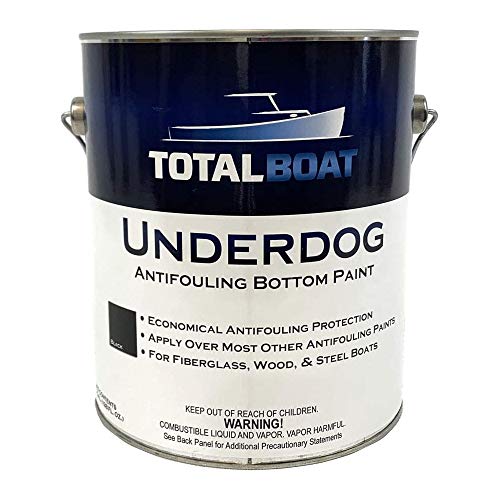
Economical antifouling coating designed for single-season protection. Copper biocide helps prevent barnacle and mussel growth on hulls, making it suitable for frequently used boats in saltwater conditions. For fiberglass, wood, steel bottoms, it wears away over the season to limit buildup. Best for boats that routinely operate in water where fouling is a concern. Caution: ablative coatings may require reapplication after a season of heavy use.
TotalBoat JD Select Ablative Antifouling Bottom Paint (Black, Gallon)

This antifouling paint uses an ablative film that slowly wears away as the boat moves, minimizing bottom paint buildup for easier maintenance next season. It is suitable for fiberglass, wood, and steel boats in both salt and fresh water. Best for boats that require self-polishing protection and easier future sanding. Caution: performance depends on water conditions and hull preparation quality.
Buying Guide
What should you consider when choosing epoxy boat bottom paint?
- Hull material compatibility: fiberglass, aluminum, wood, and steel each respond differently to coatings. Choose a product formulated for your hull type.
- Water exposure: barrier coats and antifouling coatings behave differently in saltwater vs freshwater. Select accordingly.
- Maintenance needs: ablative antifouling wears away with use and requires reapplication; barrier coats stay put longer but may need refinishing for abrasion.
- Drag reduction vs antifouling: epoxy slick surfaces reduce drag, while antifouling coatings prevent organism growth. Some products blend both goals; assess which matters most for your boating habits.
- Prep requirements: surface cleanliness, primer compatibility, and curing times affect long-term performance. Follow manufacturer guidelines precisely.
- Application convenience: quart vs gallon may affect coverage rate and cost efficiency. Consider your project size and storage.
Frequently Asked Questions
- What is the difference between a barrier coat and an antifouling paint?
Answer: Barrier coats seal the hull to prevent moisture and blistering, while antifouling paints deter or remove barnacles and organisms from the hull over time. - Can I use an epoxy barrier coat above and below the waterline?
Answer: Yes, many two-part epoxy barrier coats are designed for both regions, offering universal protection and a solid base for additional coatings. - Is ablative antifouling better than hard antifouling?
Answer: Ablative coatings gradually wear away, reducing buildup and maintenance, whereas hard antifouling stays longer but may require more removal effort later. - How important is surface preparation?
Answer: Extremely important. Proper cleaning, sanding, and priming ensure coating adhesion and long-term performance. - Which product is best for a saltwater boat with frequent use?
Answer: Antifouling options like Underdog or JD Select are common choices for saltwater, while barrier coats provide strong protection if fouling risk is lower. - Do I need both a barrier coat and antifouling paint?
Answer: Not always. A barrier coat is often combined with an antifouling topcoat for optimal protection and reduced fouling, depending on your boat and waters.