When water can threaten onboard safety, a reliable bilge pump is essential. This guide highlights five proven options suitable for different boat sizes and emergency needs. Best for quick evacuations in small crafts, best for high-output demands on larger boats, and best for portable, battery-powered scenarios. The table below helps you compare core options at a glance.
| Product | Type | Flow (GPH) | Power | Best For |
|---|---|---|---|---|
| Manual Bilge Pump for Boats with 39″ Hose | Manual | 20 GPM | No power needed | Smaller craft, emergency backups |
| SEAFLO 01 Series 4700 GPH Bilge Pump | Submersible | 4700 GPH | 12V DC | High-demand evacuations, large boats |
| Automatic Submersible 1100 GPH (MAXZONE) | Automatic with float | 1100 GPH | 12V DC | Automatic bilge monitoring on mid-size boats |
| WASSERMANN 2000 GPH Prime Bilge Pump | Submersible | 2000 GPH | 12V DC | Reliability with anti-airlock |
| Rule 2000 GPH Bilge Pump | Submersible | 2000 GPH | 12V DC | Quiet operation and durability |
Notes: All options are designed for marine environments. Consider boat size, typical water exposure, and whether you need automatic operation, portability, or maximum flow when choosing.
Manual Bilge Pump for Boats
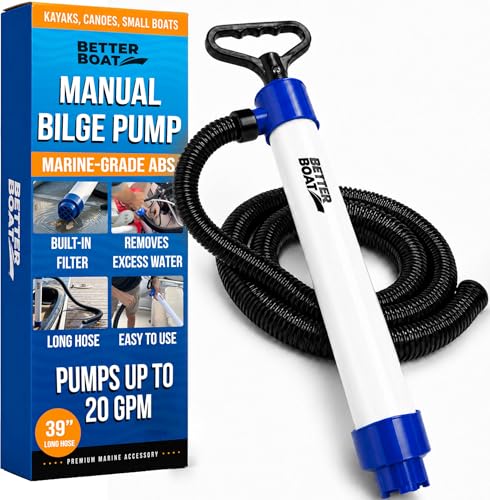
Product: Manual Bilge Pump for Boats with 39″ Hose by Better Boat. Flow: 20 GPM per stroke; 115 cubic inches per stroke. Features a flexible discharge hose that directs water away, and an intake with a built-in filter plus suction spacers to prevent loss of prime. Best for small boats, kayaks, or as a portable backup when you need immediate water removal without power. Limitation: lower flow means longer pumping in larger bilges.
SEAFLO 01 Series 4700 GPH Bilge Pump
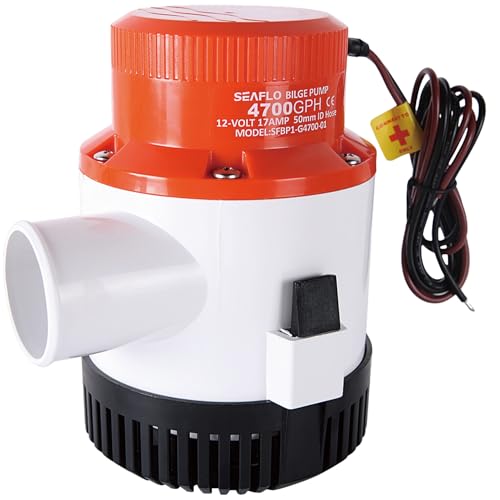
Product: SEAFLO 01 Series 4700 GPH Bilge Pump. Flow is 4700 GPH with 2″ outlet. It is a marine submersible pump with anti-airlock protection and a 4-year warranty. Best for large boats or when rapid water evacuation is required. Caution: high power draw may affect electrical capacity on smaller vessels.
MAXZONE Automatic Submersible Bilge Pump

Product: Automatic Submersible Boat Bilge Water Pump (MAXZONE) 1100 GPH. Features a built-in float switch for automatic operation. Best for mid-size boats that require monitoring without manual pumping. Limitation: lower flow compared to high-capacity models; best used as automatic backup rather than primary pump.
WASSERMANN 2000GPH Prime Bilge Pump

Product: WASSERMANN 2000GPH Prime Bilge Pump. 12V with a 4.7 ft power cord and anti-airlock protection. Durable ABS construction with corrosion-resistant components. Best for boats needing a balance of capacity and reliability. Caution: ensure power system can support continuous 22A max draw.
Attwood 4140-4 WaterBuster Portable Pump
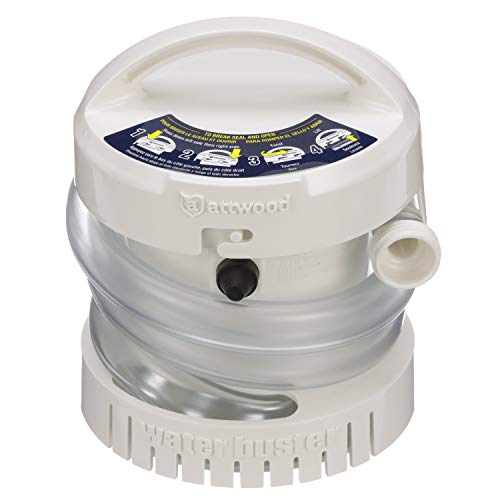
Product: Attwood 4140-4 WaterBuster Portable Pump. Battery-powered with a 42-inch hose, designed for location flexibility. Best for emergency quick-bail tasks away from power sources. Limitation: battery operation means runtime depends on battery type and availability.
Buying Guide
What pump type should you choose?
- Manual vs. automatic: Manual pumps require physical effort but never fail due to power. Automatic pumps monitor bilge depth and start automatically; choose this for unattended boats or frequent water influx.
- Flow rate needs: Small boats or kayaks can rely on 20 GPM or 1100–2000 GPH pumps. Larger vessels benefit from 2000–4700 GPH options to evacuate water quickly.
- Power considerations: 12V DC pumps are common; verify electrical capacity and fuse sizing. Battery-powered portable options are ideal for emergency kits or sailboats without a power source onboard.
- Installation and durability: Look for corrosion-resistant materials, anti-airlock features, and proper outlet sizing (commonly 1-1/8″ or 2″). Built-in strainers help keep debris from clogging the pump.
- Automatic features: Floats switches provide automatic activation; consider a model with a longer power cord for versatile mounting locations.
Practical buying questions
- How much water can the pump move per hour, and does that meet your emergency response time?
- Is there a dedicated space in your bilge for a larger-capacity pump, or is portability and ease of use a priority?
- Are you operating primarily in saltwater or freshwater, and does the pump have corrosion resistance?
- Do you need automatic operation, or is a manual backup sufficient for your boating routine?
Frequently Asked Questions
- What is the best bilge pump for a small boat with limited space?
– A compact, manual or small-capacity pump with a long discharge hose is ideal for tight bilges and emergencies where power is unavailable. - Which pump is best for automatic bilge management?
– Pumps with built-in float switches provide automatic activation as water rises, reducing the need for manual operation. - Can I use a high-flow pump on a small dinghy?
– High-flow pumps are powerful but may draw more current; ensure wiring and power supply can handle the load and that the discharge hose can manage the flow without splashing back. - Is a 12V pump sufficient for most boats?
– For many vessels, 12V pumps offer adequate performance, but larger boats may require higher-flow models (2,000–4,700 GPH) for rapid water removal. - What maintenance is needed for automatic bilge pumps?
– Regularly inspect for debris, check the auto-float operation, and ensure any intake filters remain clear to prevent loss of prime. - Are portable battery-powered pumps reliable in emergencies?
– They provide flexible, power-free operation, but runtime depends on battery quality and capacity; keep spare batteries or a charged battery pack available.