Direct answer: these electrical boat winches are designed to pull boats onto trailers with minimal effort, offering dual power modes (in and out), remote control options, and durable construction. The best options suit coastal anglers, weekend hobbyists, and small commercial operators who need reliable, compact power for boat trailers. This guide selects five strong contenders, explains who each is best for, and highlights key strengths and limits to help you compare quickly.
Below is a quick comparison to help you decide which model fits your boat size, trailer setup, and cruising plans. The table lists each product, its recommended boat weight range, control options, and notable features.
| Product | Recommended Boat Weight | Control Options | Why It Stands Out |
|---|---|---|---|
| Megaflint Trailer Winch | Up to 6000 lbs (rated) | Power-in, Power-out, Freewheel; Dyneema Rope | High power, dual-mode operation, and lightweight rope give strong performance with easy handling. |
| VEVOR Electric Boat Winch | Up to 2000 lbs | Power-in, Power-out, Freewheel; wired remote & hand crank | Solid value with balanced power and flexibility for smaller boats. |
| Bravex Trailer Winch 6000LBS | Up to 6000 lbs | Electric and manual; dual direction | Good combination of power and emergency hand-crank option. |
| Nilight Boat Trailer Winch 3500 lbs | Up to 3500 lbs | Remote control, hand crank, Freewheel | Compact, versatile for mid-sized boats with strong braking and efficiency. |
| Extreme Max 3006.8918 | Up to 11,000 rolling lbs | Electric; high pulling power | High capacity for heavier setups with robust steel cable. |
Megaflint Trailer Winch

Key features: Dual mode operation (Power-in, Power-out, Freewheel), Dyneema fiber synthetic rope, and a motor design that provides up to 30% more winching power than standard 6000-lb models. The rope is notably lighter and easier to re-use than steel while maintaining strength. Best for boaters who need reliable, high-power pulling in variable conditions.
Best for: Larger trailers or boats near the 6000-lb mark where stronger winching is beneficial, and where users want versatility in operation modes. The synthetic rope reduces recoil risk and makes handling simpler. Caution: ensure compatibility with your trailer mount and confirm rope length suits your setup.
VEVOR Electric Boat Winch
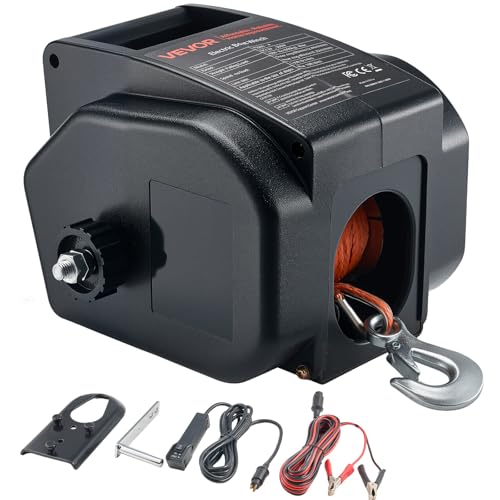
Key features: 0.4 HP copper motor delivering up to 2000 lbs, 0.2 inch polyethylene rope with 30 ft length, and 2030 kg tensile strength. It offers dual control modes (electric and manual) and a 20 ft power cable for flexible wiring. Best for: Smaller to mid-sized boats where moderate power and flexible remote control options are valued. Caution: rope length and line pull should be matched to your specific boat length and trailer setup to avoid overloading.
Bravex Trailer Winch 6000LBS
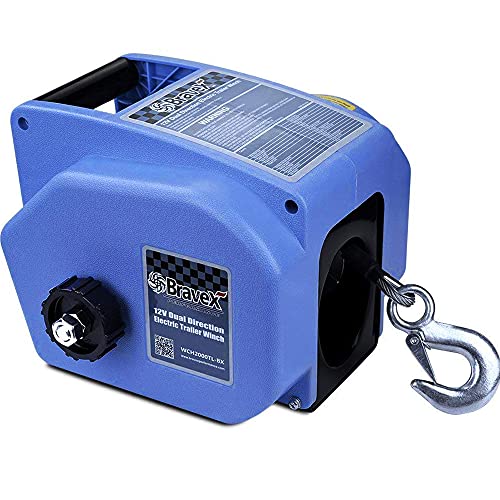
Key features: 30% higher power than similar models, dual direction electric winching, and dual operation (electric and manual hand crank). It includes an electric automatic braking system and a low-noise design (~75 dB at 12 inches). Best for: Users needing a strong, dependable winch with emergency hand-crank capability and quiet operation. Caution: ensure the boat size aligns with the 6000-lb rating, and check mounting compatibility with your trailer.
Nilight Boat Trailer Winch 3500 lbs

Key features: 12 V DC motor with 3500 lb rating, dual direction with wireless and wired remote control plus manual hand crank. The gear drive reduces load efficiently and includes automatic braking with a 265:1 gear ratio. Best for: Boats up to roughly 18 feet and around 5000 lbs in practical use, where remote control convenience matters. Caution: the marine environment demands careful waterproofing and regular maintenance to prevent corrosion over time.
Extreme Max 3006.8918 Reversible Winch

Key features: Rolling capacity up to 11,000 lbs, marine rating up to 9,900 lbs, and a 3,500 lb pulling capacity with high-power motor. Durable steel cable (5.5 mm x 11 m) resists corrosion and abrasion. Best for: heavier boats and demanding loading tasks where higher rolling capacity is beneficial. Caution: heavier units require sturdier mounting and may need larger trailers to accommodate length and weight.
Buying Guide: Key Purchase Considerations
What size winch should you choose? Match the winch rating to your boat’s weight on the trailer, not just the boat’s length. Consider both pulling capacity and rolling capacity for steep ramps or inclines.
What type of rope or cable? Synthetic ropes like Dyneema are lighter and easier to handle than steel cables but may have different wear characteristics. Check rope length to ensure you can reach the bow anchor without overextending.
Which control options matter? Dual control modes (electric and manual), wireless remotes, and freewheel operation give flexibility in power availability and fault scenarios. If you trailer in remote locations, a hand crank backup is valuable.
Power and durability: Look for a robust motor, protected circuitry, automatic braking, and a design suited for marine environments (saltwater resistance, corrosion protection). Noise level can affect your experience during loading and unloading.
Mounting and compatibility: Verify the winch mounting pattern, shaft height, and frame clearance on your trailer. A higher capacity winch may require reinforced mounting and a heavier trailer frame.
Maintenance and safety: Regularly inspect the rope or cable for wear, check remote connections, and keep electrical components clean and dry. Follow manufacturer safety instructions for emergency hand-crank use and brake engagement.
Frequently Asked Questions
What is the typical duty cycle for an electric boat winch? Most winches are designed for intermittent use with periods of rest; continuous running can overheat motors and reduce performance.
Can I install a winch on any boat trailer? Installation depends on trailer design, mounting points, and the winch’s frame size. Consult your trailer manufacturer or a professional installer if unsure.
Is a synthetic rope better than steel for boat trailers? Synthetic ropes are lighter and easier to handle, with less recoil risk, but they require careful inspection for cuts and abrasion. Steel cables are more durable in rugged use but heavier and can kink or rust.
Do I need a remote for my winch setup? A remote provides convenience, enabling control from a distance during loading. If your trailer is spacious or you load from a distance, a remote can improve safety and ease of use.
What should I do if the winch stops working on the water? First, switch to a manual crank if available, then inspect connections and fuses. If the problem persists, consult a qualified technician before attempting further use.