Answering a common buyer need: for canoes, choose electric trolling motors that are lightweight, quiet, and easy to mount, with enough thrust to move lightweight craft without draining batteries quickly. This guide highlights five suitable models and explains who each is best for. If you want a compact option for a solo canoe, or more thrust for a tandem canoe, you’ll find a clear fit below. The table offers quick comparisons to help you decide at a glance.
| Product | Thrust | Shaft Length | Best For |
|---|---|---|---|
| Minn Kota Endura C2 Transom-Mount – 30 Lb | 30 lb | 30 in. | Light, entry-level canoe setups |
| Newport NV-Series 36lb Thrust | 36 lb | 30 in. | Versatile for small canoes and kayaks |
| Minn Kota Endura C2 Transom-Mount – 40 Lb | 40 lb | 36 in. | More power for heavier loads |
| Newport Kayak Series 36lb Thrust | 36 lb | 24 in. | Compact for shallow water and portability |
| Newport Kayak Series 55lb Thrust | 55 lb | 24 in. | More torque for larger canoes or windy conditions |
Minn Kota Endura C2 Transom-Mount – 30 Lb

This 30-lb thrust model is a lightweight option ideal for single-person canoes. It features a 6-inch telescoping tiller for comfortable control during long paddling days and a push-to-test battery meter for quick power checks. The 30-inch shaft fits standard transom setups, balancing reach with manageable weight. Beneficial for anglers and recreational paddlers prioritizing ease of use and budget-friendly performance.
Best for: Solo canoeists or travelers seeking simple, reliable propulsion without excessive weight. Choose this if you want straightforward transom mounting and basic efficiency in freshwater environments.
Caution: Lower thrust means slower top speed in windy or current-heavy conditions; consider a higher-thrust option if your canoe carries more gear or faces challenging water.
Newport NV-Series 36lb – 12V/24V, 30″ Shaft

Designed for small craft like kayaks and canoes, this 36-lb thrust motor emphasizes lightweight power and reliability across saltwater and freshwater. It features a 30-inch shaft, a clear LED battery indicator, and a quiet operation profile. The motor is well-suited for compact canoes where battery efficiency and maneuverability matter most, delivering smooth propulsion with predictable performance across common paddling conditions.
Best for: Canoeists who want a balance of power and efficiency, especially in calm to moderate conditions. Better for lightweight setups where battery life and portability are priorities.
Limitation: As a mid-range option, performance can dip in strong wind or current; ensure a battery capacity that supports longer outings if needed.
Minn Kota Endura C2 – 40 Lb, 36″ Shaft
This 40-lb thrust variant offers a stronger motive force for larger canoes or windy conditions, with a 36-inch shaft for deeper mounting and longer reach. Its reinforced composite construction resists marine wear, while a Power Prop handles heavy vegetation, giving you solid torque without excessive strain on the motor. The same intuitive 6-inch telescoping tiller and 10-position lever lock provide familiar control for returning users.
Best for: Canoeists carrying gear or paddling in breezy conditions where additional thrust improves performance. Choose this if you want a higher-thrust option without sacrificing the familiar Endura C2 design.
Limitation: Heavier than 30-lb versions; assess weight limits for smaller transoms and easier handling when launching or retrieving the canoe.
Newport Kayak Series 36lb – 24″ Shaft
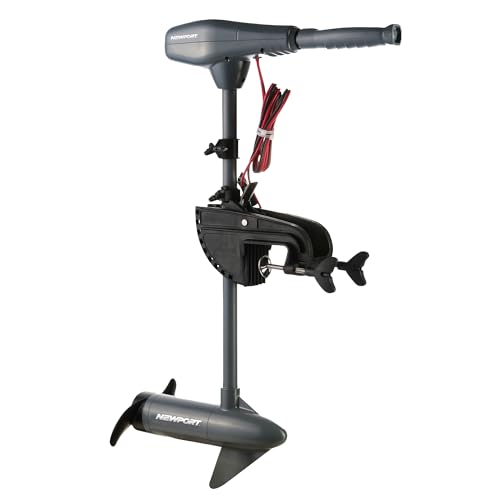
This 36-lb kayak-series trolling motor is compact with a 24-inch shaft, making it suitable for shallower water and lighter canoes. It uses corrosion-resistant all-aluminum motor hardware and offers 8 speeds (5 forward, 3 reverse) to provide precise control in tight waterways. The shorter shaft reduces weight and improves balance for smaller canoe setups, while remaining adaptable to varying depths.
Best for: Small canoes that operate in calm or shallow waters where a compact, easy-to-handle motor is beneficial. Choose this if you prioritize portability and ease of storage.
Limitation: Shorter shaft may limit depth placement in deeper water or choppier conditions; consider longer shafts for deeper mounting needs and better clearance.
Newport Kayak Series 55lb – 24″ Shaft
The 55-lb thrust model delivers strong torque suitable for larger canoes or choppier water. It offers eight speeds with a 24-inch shaft and a telescoping tiller, enabling precise control while maintaining a compact footprint. Corrosion-resistant aluminum components support saltwater use, with LED indicators to monitor battery status. This model balances power and portability for boats that require more launch speed or sustained forward motion in challenging conditions.
Best for: Heavier loads, windy days, or larger canoes that demand more thrust than mid-range motors provide. Consider this option when you need reliable performance in tougher water scenarios.
Caution: Heavier and potentially less maneuverable in very tight spaces; ensure your canoe has robust mounting and a stable transom for best results.
Buying Guide: Key Considerations For Electric Trolling Motors On Canoes
- Thrust vs. Boat Weight: Light canoes perform well with 30–36 lb thrust, while heavier loads or choppier water may require 40–55 lb thrust for adequate acceleration and control.
- Shaft Length: Shallow-water canoes benefit from shorter shafts (24–30 inches). Deeper water or larger canoes may need 36 inches to prevent propeller cavitation and protect the motor from striking the hull.
- Power Source And Battery Life: Most canoe motors run on 12V systems. Evaluate battery capacity in amp-hours (Ah) to estimate run time, especially for longer trips or remote locations.
- Mount Type: Transom-mounted motors are common for canoes. Ensure your canoe’s transom is sturdy and compatible with the motor’s mounting bracket and locking system.
- Saltwater vs Freshwater: If you canoe in brackish or saltwater, choose motors with corrosion-resistant hardware and magnesium, zinc, and stainless-steel components.
- Noise And Vibration: Look for models designed for quiet operation to avoid startling fish and to reduce fatigue during long outings.
- Propeller Design: Three-blade propellers improve low-end torque and handling in vegetation; two-blade designs can offer efficiency for calm waters.
- Control Features: Telescoping tillers and battery meters aid comfort and visibility of power status during trips.
Frequently Asked Questions
- What size trolling motor is best for a canoe? A 30–36 lb thrust motor is typically sufficient for solo canoes; 40–55 lb thrust is better for larger canoes or windier conditions.
- Do trolling motors work in saltwater? Yes, but choose models with corrosion-resistant hardware designed for saltwater use.
- Is shaft length important for canoes? Yes. Short shafts suit shallow water and low transoms, while longer shafts prevent prop strikes and improve depth placement in deeper water.
- Can you mount a transom motor on a canoe? Yes, provided the transom is sturdy and compatible with the motor’s mounting bracket and hardware.
- How long will a canoe trolling motor run on battery? Run time depends on thrust, battery capacity, and water conditions; higher thrust drains battery faster, so plan outings with reserve capacity.
- What is the advantage of a telescoping tiller? It improves comfort and control by allowing you to adjust reach to your seating position during long trips.