Answering the demand for efficient, lightweight propulsion, these electric outboard motors are ideal for canoeists seeking quiet, maintenance-friendly power. The top picks here cater to different boat sizes and water conditions, from tranquil freshwater lakes to saltwater mornings. Best for occasional anglers, youth crews, or weekend explorers, each option emphasizes portability, battery life, and corrosion resistance. Below, you’ll find a concise comparison table followed by detailed product sections to help you decide which motor fits your canoe best.
| Product | Thrust | Shshaft | Best For |
|---|---|---|---|
| Newport NV-Series 55lb | 55 lb | 30″ | Powerful coastal or larger canoes |
| Newport NV-Series 46lb | 46 lb | 30″ | Balanced power for mid-size canoes |
| Newport NV-Series 36lb (12V) | 36 lb | 30″ | Lightweight, portable setups |
| Minn Kota Endura C2 | 30 lb | 30″ | Freshwater use, easy control |
| Newport Kayak Series 36lb | 36 lb | 24″ | Kayaks and narrow canoes |
Newport NV-Series 36lb Thrust Trolling Motor

Best for lightweight canoes and smaller boats, this 36-pound thrust motor is available in 12V or 24V configurations. Its compact design emphasizes portability and battery efficiency for quiet, steady propulsion in calm or mildly choppy conditions. Suitable for buyers prioritizing easy setup and saltwater durability.
Who it’s best for: casual paddlers, weekend canoeists, and anyone who needs a saltwater-capable motor without extra bulk. Why selected: balanced power-to-weight ratio and corrosion-resistant build make it versatile for mixed water use.
Caution: performance depends on boat weight, battery type, and water conditions; plan for battery capacity when extended trips are planned.
Minn Kota Endura C2 Transom-Mount Electric Trolling Motor

Best for freshwater use and easy handling, this 30 lb thrust motor features a telescoping tiller for all-day comfort and a push-to-test battery meter for quick checks. The reinforced composite construction resists warping and UV damage, while the Power Prop aids through light vegetation. Choose this if you want a simple, dependable control setup.
Who it’s best for: anglers and recreational paddlers seeking a reliable, easy-to-control motor for calm rivers and lakes. Why selected: durable construction and user-friendly features support long outings.
Limitation: best performance is on smaller to mid-sized craft; heavier boats may require more thrust.
Newport Kayak Series 36lb Thrust Transom Motor
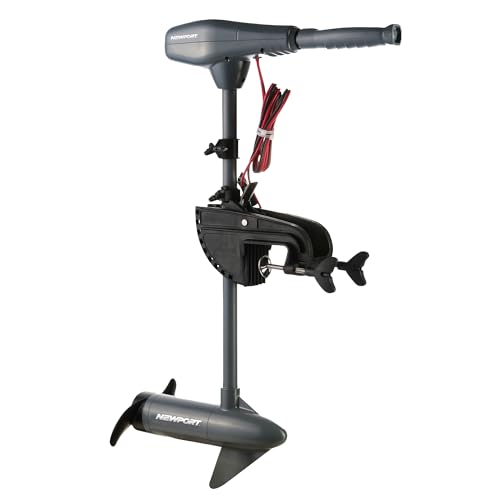
Best for kayaks and narrow canoes, this 24-inch shaft offers variable depth placement for clean mounting and control. With 8 speeds (5 forward, 3 reverse) and a 6-inch telescoping handle, this motor provides precise ride management in busy waters. Saltwater-rated aluminum construction supports marine longevity.
Who it’s best for: kayak enthusiasts and compact craft operators who want adjustable depth and quick speed changes. Why selected: compact shaft length with sturdy saltwater components.
Caution: shorter shaft may be less ideal for higher-freeboard canoes in rough seas; verify fit for your hull profile.
Newport NV-Series 46lb Thrust Motor
Best for moderate to larger canoes needing extra push, this 46-pound thrust option balances power and efficiency. Its 30-inch shaft accommodates varying hull depths, and the design supports saltwater and freshwater use. The motor includes a 3-blade propeller for improved thrust in breeze or light currents.
Who it’s best for: paddlers needing more torque without stepping up to a larger, heavier unit. Why selected: higher thrust helps maintain planing-like performance in modest chop.
Limitation: heavier than 36-pound models; battery capacity planning is essential for longer trips.
Newport NV-Series 55lb Thrust Saltwater Transom Motor
Best for larger canoes or anglers needing robust power, this 55-pound thrust motor delivers strong push while maintaining efficiency. It features a 30-inch shaft, a clear LED battery meter, a 5-LED indicator, and a 3-blade prop for reliable low-end torque. Suitable for saltwater and freshwater use with adjustable mounting options.
Who it’s best for: paddlers with bigger hulls or those fishing in windier conditions. Why selected: high thrust improves maneuverability and speed on bigger canoes.
Limitation: more weight requires careful mounting and battery planning for extended trips.
Buying Guide
- What size canoe or small boat will you power? Choose thrust aligned with boat weight and typical water conditions to avoid battery strain.
- Is the water environment saltwater or freshwater? Look for corrosion-resistant materials and magnesium/zinc hardware for longevity in saltwater.
- shaft length matters. A 24″ to 30″ shaft suits most canoes; taller hulls may require longer shafts for clearance and performance.
- Battery configuration: 12V vs 24V. Higher voltage improves thrust and efficiency but adds weight and wiring considerations. Plan your battery capacity for expected trip length.
- Control features: consider a telescoping tiller, tilt/trim options, and a digital battery gauge to simplify setup and monitoring on the water.
- Propeller design: 2-blade vs 3-blade. A 3-blade prop offers smoother push and better performance in light chop or vegetation; 2-blade tends to be lighter and simpler.
- Maintenance and mounting: ensure brackets and hardware resist corrosion, and verify mounting compatibility with your canoe transom or stern design.
FAQ
- What is the best electric outboard motor for a small canoe?
– A motor around 30–46 lb thrust with a 30″ shaft is typically ideal for stability and efficiency on most small canoes. - Do I need a saltwater-rated motor for freshwater use?
– Saltwater-rated builds resist corrosion and can be used in freshwater, but they may be more expensive than freshwater-specific models. - How does thrust affect battery life?
– Higher thrust draws more current; plan battery capacity accordingly for the expected runtime. - Is a longer shaft better for canoes?
– A longer shaft increases clearance and reduces cavitation risk on higher sterns, but may add weight and reduce mounting options on very small crafts. - What maintenance is required for electric outboards?
– Rinse after saltwater use, inspect propeller and brackets, and check electrical connections for corrosion regularly. - Can I install any trolling motor on a canoe?
– Most transom-mount motors fit canoes with a standard transom, but verify the stern design and mounting hardware compatibility before purchase.