Answering the common buyer question: which electric boat motor is best for saltwater use? For coastal trolling, small craft, kayaks, and larger boats, the right 12V or 24V trolling motor can greatly improve efficiency, reduce noise, and extend battery life. This guide highlights five strong saltwater options and explains who benefits most from each. The selections cover transom-mounted and kayak-specific models, with attention to thrust, shaft length, corrosion resistance, and ease of use.
| Product | Best For | Key Benefit |
|---|---|---|
| Newport NV-Series 55lb (23M1000203) | Mid-sized saltwater boats | Balanced power and maneuverability |
| Newport NV-Series 36lb (Kayak/Canoe) | Kayaks and small crafts | Lightweight, compact |
| Newport NV-Series 62lb (B00VYP3KNO) | Heavier boats and tougher conditions | High thrust for wind and current |
| PEXMOR 46lb (B0F2B3BVD4) | Saltwater kayaks and small boats | Affordably efficient with adjustable depth |
| Newport Kayak Series 55lb (24″ Shaft) | Saltwater kayaks in shallow waters | 24″ fiberglass kayak shaft for flexible depth |
Newport NV-Series 55lb Saltwater Transom Motor

This 55-pound thrust trolling motor is designed for saltwater use with a 30-inch shaft, making it suitable for mid-sized boats. Features include an LED battery meter, a 6-inch telescoping tiller handle, and a 3-blade propeller to provide strong low-end torque. Eight speeds (five forward, three reverse) help you manage speed in varying conditions. Best for boaters needing reliable power without overloading the system, while maintaining quiet operation to avoid spooking fish.
Who it’s best for: boats that require robust thrust without excessive weight. This motor works well for anglers who fish in moderate to windy conditions and want steady, predictable performance. A potential limitation is that real-world top speed depends on boat type and water conditions, so plan accordingly.
Newport NV-Series 36lb Saltwater Trolling Motor
This lighter 36-pound thrust version is ideal for kayaks, canoes, inflatables, and other small boats where battery efficiency and portability matter most. The motor is built for saltwater and freshwater use, with a two-blade propeller optimized for longer runtime. Best for smaller vessels that prioritize ease of handling and quiet operation. Limitation: not designed for larger craft or heavy loads where more thrust is required.
Newport NV-Series 62lb Saltwater Trolling Motor
This high-thrust 62-pound motor is built for bigger boats and heavier loads. It provides stronger thrust for challenging conditions, with a corrosion-resistant construction suitable for saltwater. Features include a 36-inch shaft and a three-blade propeller for improved push and handling. Best for anglers who need reliable control in wind and current. Caution: heavier weight may impact mounting and battery needs on smaller craft.
PEXMOR 46lb Saltwater Trolling Motor

This 46-pound thrust motor offers an efficient power balance for saltwater use on kayaks and small boats. It features a six-inch adjustable handle, five forward speeds, and three reverse speeds. The shaft angle is adjustable to suit different sailing conditions, with straightforward depth adjustment. Best for those who want a versatile, mid-range option. Limitation: data notes emphasize efficiency; actual top speed will vary by vessel and water conditions.
Newport Kayak Series 55lb Saltwater Motor
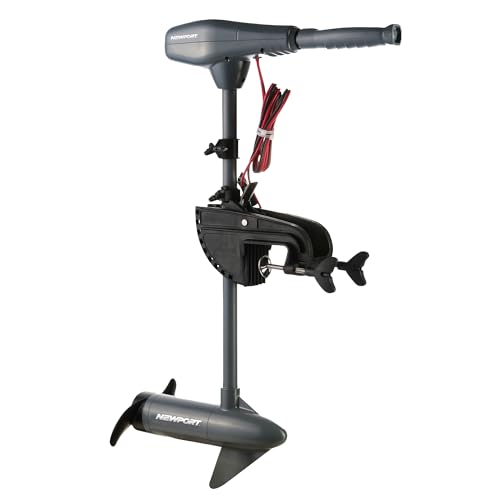
Designed for kayaks, this 55-pound thrust model offers a 24-inch shaft to fit varying deck heights. It uses a corrosion-resistant all-aluminum motor head and magnesium, zinc, and stainless-steel hardware for robust saltwater performance. With the same eight-speed range (five forward, three reverse) and a six-inch telescoping handle, it provides reliable control on smaller craft. Best for paddlers needing solid mid-range thrust and a dependable saltwater build. Caution: shaft length is optimized for kayak setups; larger vessels may require more thrust.
Buying Guide: How To Choose A Saltwater Electric Trolling Motor
- Vessel type and size: Choose higher thrust for larger boats or heavier loads. Smaller vessels benefit from lighter models to maximize battery life.
- Shafl length and mounting: Ensure the shaft length matches your boat’s transom height or cockpit depth. Kayak-specific shafts are shorter and designed for low decks.
- Power source and efficiency: Match motor voltage to your battery bank (12V vs 24V). More thrust often requires more battery capacity; consider endurance for all-day trips.
- Corrosion resistance: Saltwater environments demand rust-resistant hardware and housings. Look for all-aluminum or corrosion-resistant components.
- Propeller design: A three-blade propeller generally offers strong pushing power, while a two-blade propeller can be lighter and more efficient on smaller craft.
- Control and ergonomics: Telescoping tiller handles improve comfort. Check for battery indicators to monitor remaining runtime.
- Installation and maintenance: Transom mounts are common and easier to install; consider weight distribution and mounting hardware compatibility with your boat.
- User needs and scenario: If you fish in choppy seas or strong currents, prioritize higher thrust and a longer shaft for better immersion and control.
FAQ: Saltwater Trolling Motors
- What throttle range is typical for saltwater trolling motors? Most models offer 5 forward and 3 reverse speeds, with top speeds varying by boat type and conditions.
- Is a longer shaft always better for saltwater boats? Not always. Shaft length should match transom height; overly long shafts can cause drag and wiring stress on small boats.
- Can I use a freshwater trolling motor in saltwater? Some models are designed for both freshwater and saltwater, but always verify corrosion resistance and maintenance requirements for saltwater use.
- How important is a battery indicator? Battery indicators help prevent stalling mid-journey by signaling remaining runtime. This is especially helpful for longer trips in saltwater environments.
- What maintenance is needed for saltwater motors? Rinse with fresh water after use, inspect fittings for corrosion, and replace sacrificial anodes if applicable to prolong life.
- Which product is best for a kayak? The kayak-specific models with shorter shafts and lighter thrust are typically the best balance of weight, control, and efficiency for kayaks.