Answering the core buyer question: which battery type and model suit an electric boat motor best? This guide covers five top options, each suited to different boating needs—from lightweight AGM solutions for trolling motors to high‑cycle LiFePO4 packs with smart monitoring. Best for lightweight setups and straightforward trolling motors, best for integrated power centers, and best for deep-cycle lithium performance in marine environments. Use this overview to compare form factors, cycle life, and features before choosing.
| Product | Best For | Key Benefit |
|---|---|---|
| Newport 12V50Ah AGM | Lightweight boats; budget-conscious setups | Sealed, trolling motor compatible |
| Newport Trolling Motor Smart Battery Box | Integrated power accessories; quick hookup | External ports and dual breakers |
| DC HOUSE 12V 100Ah LiFePO4 | Cold climates; long life; Bluetooth monitoring | Low temp cut-off; up to 15000 cycles |
| MARSENERGY 12V 100Ah LiFePO4 | Lightweight lithium option; simple upgrade | Bluetooth, 4500+ cycles; Group 24 fit |
| KGIOO 12V 100Ah LiFePO4 | Scalable lithium setup; expansion possible | Built-in BMS; parallel/series flexibility |
Newport 12V 50Ah AGM Deep Cycle Battery
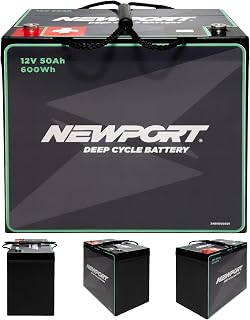
Best for lightweight trolling motor setups on smaller boats. This sealed AGM lead-acid battery weighs about 32 pounds, offering reliable power without adding excessive weight. It is designed for trolling motor compatibility, providing steady performance for day trips or coastal cruising.
Who it’s best for: boaters prioritizing ease of transport, simple maintenance, and a cost-conscious upgrade to a trolling motor system. Why selected: its combination of lightweight design, sealed construction, and trolling motor compatibility makes it a practical, no-fuss option.
Limitation: AGM chemistry has a shorter cycle life than lithium and may require more frequent replacements for high-use vessels.
Newport Trolling Motor Smart Battery Box
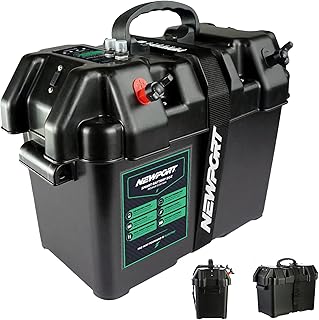
Best for boats needing a centralized power center with accessible ports. This mid-sized box provides external battery ports and dual circuit breakers, protecting trolling motors and accessories from electrical faults. A built‑in USB charger and a 12V DC port enhance onboard convenience.
Who it’s best for: anglers or small craft operators who want a streamlined power hub without separate wiring. Why selected: it consolidates power management, protective circuitry, and accessory connections in one unit.
Caution: verify compatibility with your specific trolling motor model and accessory load to ensure adequate headroom for peak currents.
DC HOUSE 12V 100Ah LiFePO4 Battery

Best for cold-weather boating and long-term lithium performance. This 100Ah LiFePO4 unit includes low-temperature cut-off to protect the pack in freezing conditions, a Bluetooth app for monitoring, and a long cycle life up to 15,000 cycles when used as designed.
Who it’s best for: boaters who value remote monitoring, safety in cold environments, and longevity. Why selected: advanced BMS features and Bluetooth connectivity support proactive maintenance and safe operation in varied conditions.
Limitation: lithium batteries require compatible charging equipment and protection against overcharge to maximize lifespan.
12V 100Ah LiFePO4 Battery with Bluetooth (Marsenergy)

Best for those seeking a lightweight lithium upgrade with mobile monitoring. The battery weighs about 21 pounds and uses a Bluetooth app for SOC, voltage, current, and temperature tracking, plus a compact size that fits Group 24 boxes.
Who it’s best for: boat owners who want easy integration with existing Group 24 housings and real-time data on the go. Why selected: strong cycle life claims and Bluetooth visibility support informed maintenance decisions.
Limitation: ensure your battery box and charger support LiFePO4 charging profiles and that the Group 24 box is a precise fit for your setup.
12V 100Ah LiFePO4 Battery with Built-in BMS (KGIOO)

Best for scalable lithium power with expansion potential. This battery includes a built-in 100A smart BMS and supports series and parallel connections—up to 4S4P for larger systems. It’s designed for trolling motors, RVs, solar energy, and home storage.
Who it’s best for: users planning future system upgrades or larger, multi-battery configurations. Why selected: high flexibility for expanding power capacity while maintaining a robust protection system.
Limitation: expanding beyond single-pack use requires careful wiring and charging strategy to keep a balanced system.
Buying Guide
What to consider when choosing an electric boat motor battery
- Battery chemistry: AGM vs LiFePO4. AGM is affordable and lightweight but generally shorter-lived. LiFePO4 offers longer cycles, better depth of discharge, and substantial weight savings for larger setups.
- Capacity and weight: match amp-hour rating to your trolling motor draw and boat size. Heavier boats may benefit from higher capacity lithium packs.
- Cycle life and longevity: lithium options advertise thousands of cycles; ensure expected service life aligns with your boating frequency.
- Cold-weather performance: look for low-temperature protection features if you operate in cool climates.
- Monitoring and safety features: Bluetooth monitoring, built-in BMS, and circuit protection help manage charge states and prevent damage.
- Compatibility: verify that the battery voltage, connector types, and charging equipment work with your trolling motor and boat electrical system.
- Size and fit: ensure the battery box or compartment size accommodates the chosen battery, especially for Group 24/31 configurations.
- Upgrade path: consider whether you want a system that scales with future needs via series/parallel expansion.
FAQ
- Q: Which battery type lasts longest on a trolling motor? A: LiFePO4 systems generally offer the longest cycle life and deepest discharge with proper charging.
- Q: Is Bluetooth monitoring essential for marine batteries? A: It helps track critical data remotely, aiding maintenance, but is optional depending on the user’s preference.
- Q: Do I need special chargers for LiFePO4? A: Yes, use chargers compatible with LiFePO4 chemistry to avoid damage and maximize lifespan.
- Q: Can I mix battery chemistries in the same system? A: It’s not recommended due to differing voltage, charging profiles, and cycle characteristics.
- Q: How do I know which capacity I need? A: Estimate daily draw from the trolling motor and reserve power for safety; higher capacity reduces recharge frequency.
- Q: Are there safety concerns with lithium on boats? A: Follow manufacturer guidelines for venting, mounting, and charging to maintain safe operation.