Answering the question for boat owners seeking effective gel coat restoration, these cutting compounds target oxidation, scratches, and dull finishes on fiberglass and gel coat surfaces. They’re best for boaters tackling aging hulls, RV users with gel coat, and DIY detailers seeking a professional-grade finish. The following picks emphasize heavy-cutting capability, speed, and compatibility with common boat finishes, with notes on ideal use cases and limitations.
| Product | Best For | Key Benefit | Limitation |
|---|---|---|---|
| 3M Perfect-It Gelcoat Heavy Cutting Compound | Pro-grade detailers and serious DIYers | Fast oxidation removal for gel coat | Industrial formulation may require careful handling |
| Meguiar’s M6732 Marine/RV One Step Compound | All-in-one restoration for fiberglass | Cleans and polishes in one step | May require follow-up polish for deep scratches |
| Meguiar’s Marine/RV Power Cut Compound M9132 | Fast-cutting, heavy oxidation | High cutting power with minimal swirling | Typically paired with proper pad selection |
| 3D Marine & RV Gel-Coat Cutting Compound | Deep scratches and oxidation | No fillers; true correction | Low-dust formula varies by pad choice |
| Meguiar’s M4965 Marine/RV Fiberglass Restoration System | Complete restoration kits | Oxidation remover plus polish and wax | Multiple steps; longer project time |
3M Perfect-It Gelcoat Heavy Cutting Compound

Selected for its industrial-strength formulation, this heavy-cutting compound targets heavy oxidation and surface imperfections on gel coats. Best for professional detailers or ambitious DIYers working on older hulls where deep correction is needed. Best for bulky oxidation removal before finishing with a lighter polish or wax. Caution: product labeling indicates specialized use; follow safety guidelines and ensure proper ventilation during application.
Meguiar’s M6732 Marine/RV One Step Compound
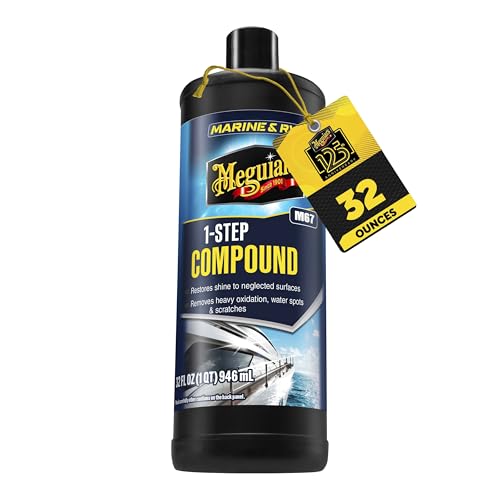
Designed to clean and restore fiberglass and gel coat in a single step, this compound is ideal for boaters who want a straightforward solution with high-gloss payoff. Best for weekend boaters and RV owners who prefer fewer steps without sacrificing finish quality. It effectively removes moderate oxidation, stains, and water spots. Limitation: for deep scratches, follow-up with a dedicated polish may be necessary.
Meguiar’s Marine/RV Power Cut Compound M9132
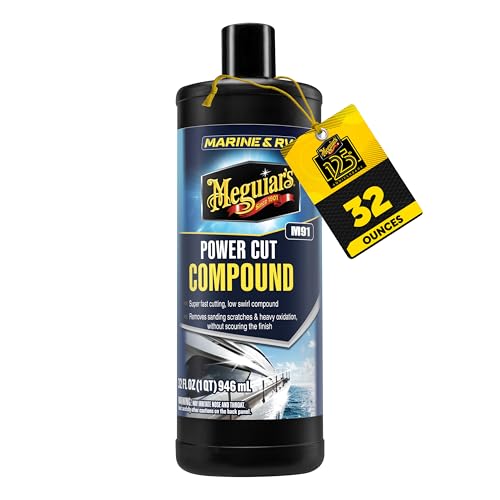
Best for fast-cutting correction on fiberglass and gel coat surfaces, this compound removes heavy oxidation and scratches with minimal swirling. It suits professional detailers and DIYers who need efficient results in less time. Choose this if you want aggressive correction without extensive rework. Limitation: work time and pad selection influence results; avoid using on extremely delicate finishes without testing first.
3D Marine & RV Gel-Coat Cutting Compound
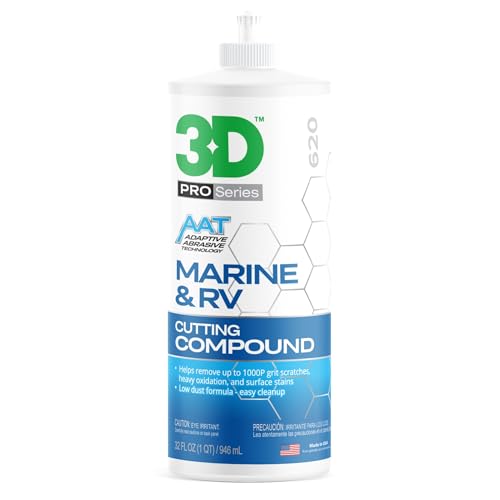
Best for removing up to P1000 grit scratches and oxidation, this heavy-cut formula emphasizes true correction with adaptive abrasive technology. It works well with wool or foam pads for tough gel coat imperfections while delivering a refined finish. Choose this if you need substantial defect removal without masking. Limitation: may require a follow-up polish to maximize gloss on older finishes.
Meguiar’s M4965 Marine/RV Fiberglass Restoration System

This 3-piece kit combines oxidation remover, polish, and wax to restore color and gloss on gel coat and fiberglass surfaces. Best for boaters seeking an all-in-one restoration workflow with a final protective layer. Not ideal for quick fixes; it’s better suited for planned restoration projects. Limitation: multi-step process can take more time but yields a cohesive finish.
Meguiar’s M4916 Marine/RV Heavy Duty Oxidation Remover

Best for specialized boat finishes, this oxidation remover clears surface degradation on gel coat and fiberglass. It uses a powerful abrasive formula with feeder oils to restore color and shine. Choose this if older gel coats show major oxidation; beware it may require subsequent polishing to optimize gloss.
3M Perfect-It Gelcoat Medium Cutting Compound + Wax
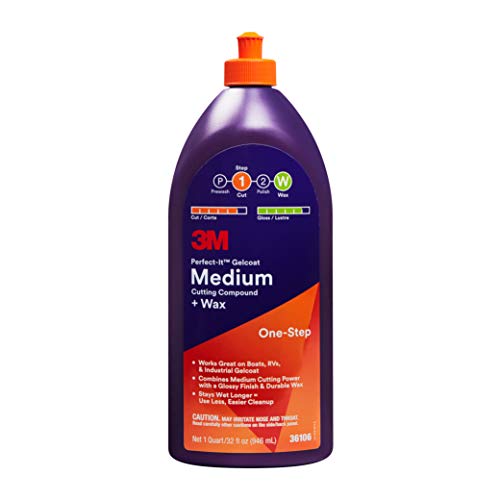
Best for finishing after heavy cutting, this one-step gel coat compound and wax smooths medium scratches and oxidation. It’s well-suited for boaters who want a streamlined process with protective wax in a single step. Limitation: not a substitute for deeper correction on very rough gel coats; consider a multi-step plan for severe damage.
Buying Guide: Key Considerations For Selecting Boat Gel Coat Compounds
What finish are you starting with? For heavily oxidized or scratched gel coats, a heavy-cut or fast-cut compound is often needed before polishing. For newer surfaces with light wear, lighter cut compounds or one-step formulas can suffice.
What surface material is involved? Gel coat, fiberglass, and painted finishes react differently to abrasives. Always verify compatibility with gel coats and fiberglass as described by the manufacturer.
What pad and technique work best? Haying the right pad type (foam vs wool) and correct application pressure matters to avoid new scratches or swirl marks. Test a small area first.
Do you want a one-step solution or a multi-step plan? One-step products are convenient, but a multi-step system often yields longer-lasting gloss and better protection when finishing with polish and wax.
Safety and handling: Many cutting compounds generate dust or fumes. Use in a well-ventilated area and wear appropriate PPE as recommended on the product label.
Frequently Asked Questions
- What’s the difference between heavy-cut and medium-cut compounds?
Heavy-cut compounds remove deeper oxidation and scratches, while medium-cut compounds correct less severe defects and prepare the surface for finishing. - Do I need to wax after using a cutting compound?
Yes, applying a wax or sealant after polishing protects the corrected surface and enhances gloss. - Can I use these products on painted hulls?
Some are formulated specifically for gel coat and fiberglass; check label compatibility before use on painted surfaces. - Is one-step better for beginners?
One-step products are convenient for quick results, but a multi-step approach often yields superior long-term protection and gloss. - How should I choose between a professional-grade and DIY product?
Consider the project scope, surface condition, and how much time you want to invest; professional-grade formulas often offer faster, deeper results but require care in application.