Answering the question “which copper bottom paint is right for my boat?” this guide highlights copper-based and copper-free options with practical buyer guidance. The top picks cover fiberglass, wood, steel, and aluminum hulls, in salt, freshwater, and brackish conditions. Use this to decide who benefits most from copper biocide versus copper-free formulations, and to compare single-season protection, self-polishing behavior, and environmental considerations. The buyer profiles below help you identify the best fit for casual weekend sailors, commercial vessels, and pontoon or aluminum boats.
Summary of selected products:
| Product | Best For | Key Benefit | Notes |
|---|---|---|---|
| TotalBoat Underdog Marine Antifouling Bottom Paint | Sailboats and powerboats in frequent use | Copper biocide with single-season protection | Economical, durable under trailering |
| TotalBoat JD Select Ablative Antifouling | Salt and fresh water use, multi-material hulls | Ablative, burnishes for smoothness | Low odor, low VOCs, easy cleanup |
| Rust-Oleum Marine Flat Boat Bottom Antifouling Paint | Fiberglass, wood, steel | Slow copper release for antifouling | Recoat in 4 hours, launch in 16 hours |
| TotalBoat Alumipaint AF Copper Free | Pontoons and aluminum hulls | Copper-free formula for aluminum protection | Ablative, specifically for aluminum |
| TotalBoat Krypton Copper Free Antifouling | Fiberglass, wood, aluminum, steel | Copper-free, bright color | Benfits hulls that need copper-free performance |
TotalBoat Underdog Marine Antifouling Bottom Paint
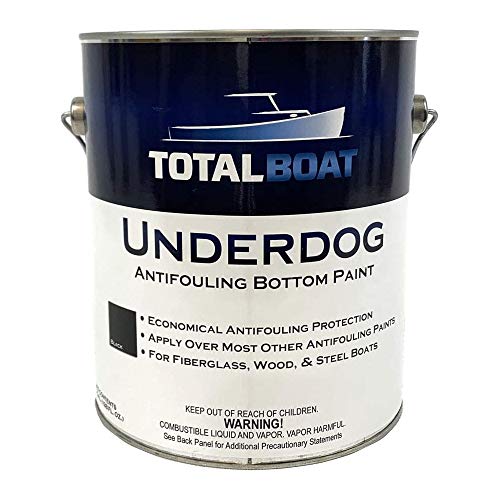
This copper-based antifouling paint provides single-season protection with copper biocide to deter barnacles and mussels. Best for boats used frequently in saltwater conditions, including sailboats and powerboats. The coating is designed to release fresh biocide as water moves under the hull, helping prevent fouling without excessive buildup. Best for fiberglass, wood, steel, and iron bottom surfaces with proper prep. A practical choice for owners who want economical, durable protection that can handle trailering and beaching better than traditional ablatives.
Who it’s best for: Frequent users and boaters who want a cost-effective, quick-turnaround antifouling solution for diverse hull materials. Caution: Ablative wear means ongoing annual maintenance is typical, and copper-based biocide may affect sensitive coastal environments in marinas with strict regulations.
Key features:
- Economical single-season antifouling
- Copper biocide to resist barnacles and mussels
- Suitable for fiberglass, wood, steel, and iron
- Durable finish for trailering and beaching
TotalBoat JD Select Ablative Antifouling Paint

This ablative antifouling paint uses a self-polishing film that wears away with use, continually exposing fresh biocide. It’s designed for fiberglass, wood, and steel boats in both salt and fresh water. The formulation minimizes bottom paint buildup, reducing sanding next season, and can be burnished for a smoother finish to improve speed and fuel efficiency. Low odor and low VOCs facilitate marina and boatyard use with environmental restrictions. No maximum dry time before launch.
Who it’s best for: Boat owners seeking a long-season antifouling effect with easier maintenance and environmentally mindful attributes. Caution: May be less effective in extremely stagnant water or long-term stays in one location where biofouling accelerates.
Key features:
- Ablative, self-polishing coating
- Single-season protection for multiple hull types
- Low odor and low VOCs; easy soap-and-water cleanup
- No maximum dry time before launch
Rust-Oleum 396967 Marine Bottom Antifouling Paint

The Rust-Oleum marine antifouling paint is formulated to slowly release copper to prevent fouling on fiberglass, wood, or steel surfaces. It’s suitable for a range of hull materials and offers a straightforward recoat option with practical launch timing—about 16 hours after application. The coating is designed to be durable and to minimize fouling build-up while remaining manageable for DIY painters. Best for moderate-use boats in mixed water conditions.
Who it’s best for: Boaters who want a reliable, widely compatible copper-based option with a simple recoat schedule. Caution: Copper release rate may vary with water temperature and movement; plan touch-ups before heavy use periods.
Key features:
- Copper-releasing formula for antifouling
- Suitable for fiberglass, wood, and steel
- Recoat in 4 hours; launch in 16 hours
- Coverage up to 110 sq ft
TotalBoat Alumipaint AF Copper Free
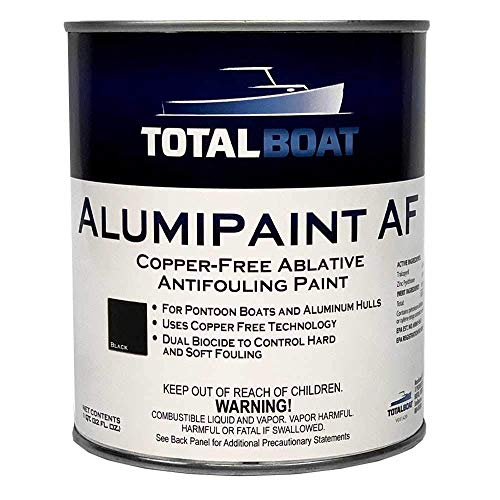
This copper-free antifouling paint targets aluminum and pontoon hulls. The ablative formulation wears away to continuously expose fresh biocide, providing protection without copper-based biocide. It’s specifically designed for aluminum and pontoon boats, which helps minimize galvanic concerns in mixed-metal hull configurations. Best for aluminum and pontoon boats where copper-based antifouling is undesirable.
Who it’s best for: Pontoon and aluminum hull owners seeking copper-free protection that reduces galvanic interaction. Caution: Copper-free paints may require more frequent reapplication depending on water conditions and use level.
Key features:
- Copper-free antifouling
- Ablative coating for ongoing biocide exposure
- Specifically formulated for pontoon and aluminum boats
TotalBoat Krypton Copper Free Antifouling

TotalBoat Krypton Copper Free Antifouling provides robust protection without copper biocide. It targets a wide range of hull materials—including fiberglass, wood, aluminum, steel, outdrives, and trim tabs—across fresh, salt, and brackish water. The copper-free formula avoids galvanic corrosion on aluminum components and results in brighter color options. Best for hulls where copper-based antifouling is not desired or allowed.
Who it’s best for: Boat owners needing copper-free antifouling across multiple materials, particularly aluminum and outdrives. Caution: Copper-free options may require different maintenance schedules and might not provide the same immediate biocide effect in heavily fouled waters.
Key features:
- Copper-free, high-performance protection
- Suitable for fiberglass, wood, steel, aluminum
- Bright color options; compatible with haul-and-relauch cycles
Buying Guide: Copper Bottom Paintes For Boats
What to consider when choosing copper bottom paint:
- Hull material compatibility: Ensure the paint lists fiberglass, wood, steel, aluminum, or pontoon surfaces matching your boat.
- Water environment: Salt, fresh, and brackish water affect biocide performance. Ablative paints wear away with movement; non-copper formulas may suit aluminum hulls better to avoid galvanic corrosion.
- Application and cure times: Review recoat windows and launch times to fit your marina schedule and weather windows.
- Environmental and marina restrictions: Low VOCs and low odor options are preferred in restricted marinas; copper-based biocides may have local limitations.
- Maintenance plan: Ablative versus hard-west coatings require different maintenance cycles and sanding regimes.
- Best-for profiles: Choose based on usage frequency, water type, and hull construction to maximize protection and minimize maintenance.
Frequently Asked Questions
- What is the difference between ablative and non-ablative antifouling paint?
Ablative coatings wear away to expose fresh biocide, reducing buildup. Non-ablative coatings maintain a film longer but may require more sanding over time. - Can I use copper-based antifouling on aluminum hulls?
Some copper-based paints are compatible, but copper-free formulas are often preferred for aluminum to avoid galvanic corrosion. - How soon can I launch after painting?
Typical launch times vary; many products allow launch within 16 hours, but always follow the product’s label directions. - Are low-VOC paints less effective?
Not necessarily. Many low-VOC formulations provide comparable protection with environmental benefits, though application conditions may differ. - Is copper-free paint better for marinas with environmental restrictions?
Yes, copper-free options typically have fewer regulatory constraints in sensitive waterways and marinas. - How do I choose based on hull material?
For aluminum and pontoon boats, copper-free or copperless is often recommended; for mixed materials, confirm compatibility with all hull surfaces.