Answering the buyer’s search for reliable boat clear coats, these selections deliver marine-grade clarity, UV resistance, and durable protection. Each option is best for specific boat projects—from hulls and gel coats to engine covers and interior surfaces. This guide highlights five clear coats that balance performance with practical application, helping boaters choose what’s right for their vessel and climate. The summary below compares core strengths to aid quick decisions.
| Product | Best For | Key Benefit |
|---|---|---|
| KBS Coatings 8404 DiamondFinish Watercolor Clear Coat | Saltwater boats, outdoor installs | Single-part formula; weatherproof and highly scratch resistant |
| KBS Coatings 8304 DiamondFinish Watercolor Clear Coat | Direct-to-metal and painted surfaces | Direct-to-metal application; very tough single-part formula |
| Quicksilver 802878Q53 Clear Coat Enamel Spray | Engine cowls and Mercury/Mariner finishes | OEM-spec spray for engine finishes |
| Marine Coat One ISO/NPG Gel Coat Clear With Wax | Final top layer on boats and gel coat repairs | High gloss, UV protection, wax-enhanced finish |
| Rust-Oleum Marine Spar Varnish | Exterior wood above waterline | Oil-based, weather-flexible varnish for trim and rails |
KBS Coatings 8404 DiamondFinish Watercolor Clear Coat
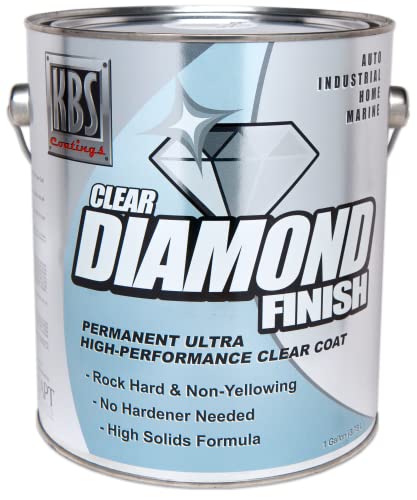
This 1-quart single-part clear coat offers high scratch and impact resistance, making it a strong choice for boats exposed to saltwater and high humidity. It remains water-clear under UV exposure, reducing yellowing or clouding over time. Best for owners who want a straightforward, no-haste application that doesn’t require a hardener or complicated mixing.
Who it’s best for: Boat owners seeking a durable, easy-to-use clear coat for exterior surfaces, lures, or indoor installations where moisture resistance matters. Also suitable for bathroom tiles and other non-boat surfaces that benefit from marine-grade protection.
Why selected: Combines weatherproof protection with a diamond-hard finish without measuring ratios or pot-life concerns.
Caution: Ensure ample ventilation and surface prep; single-part coatings can still trap moisture if applied over poorly prepped surfaces.
KBS Coatings 8304 DiamondFinish Watercolor Clear Coat
This pint-sized option covers up to 50 sq ft and is designed for direct-to-metal application, eliminating the need for additional additives. The single-part formula is marketed as tougher and harder than many two-part clear coats, which can simplify maintenance on painted or metal surfaces.
Who it’s best for: Boat owners upgrading painted surfaces or direct-to-metal areas where a robust, fast-curing clear coat is desired. Great for outdoor components that endure sunlight and moisture.
Why selected: Direct-to-metal capability reduces prep steps and accelerates project timelines.
Caution: For very large projects, verify coverage and curing times to ensure a uniform finish across all surfaces.
Quicksilver 802878Q53 Clear Coat Enamel Spray

This spray-applied enamel is positioned for Mercury and Mariner engine finishes, with a formulation designed to meet OEM specifications. The 12-ounce can is convenient for spot repairs or finishing engine covers and cowlings, offering a high-gloss protective layer.
Who it’s best for: Boat owners maintaining outboard engine finishes or sterndrive components that require an OEM-aligned coating.
Why selected: Aligns with Mercury Marine specifications to maximize aesthetic and protective outcomes on compatible engines.
Caution: Sprays can overspray or run if applied in high humidity or extreme temperatures; use in a well-ventilated area with proper masking.
Marine Coat One ISO/NPG Gel Coat Clear With Wax

This gel coat is tailored for boats needing a high-gloss top layer with UV and blister resistance. The product includes wax for a lasting finish and protection against marine elements, plus an MEKP catalyst for hard cure. It’s suitable for final top coats on gel-coated hulls or repairs that require a durable, glossy surface.
Who it’s best for: Builders and refurbishers performing gel coat finishes or upgrades on hulls and metal-composite parts.
Why selected: UV protection and blister resistance improve longevity of exterior surfaces in saltwater environments.
Caution: MEKP catalyst requires careful handling and precise mixing per instructions to avoid improper cure.
Rust-Oleum Marine Spar Varnish, Quart

This oil-based spar varnish is ideal for exterior wood surfaces above the waterline, such as trim and railings. It expands and contracts with changing weather, helping maintain a flexible, protective coating. It dries to the touch in about 2 hours and covers up to 150 sq ft, making it a practical choice for wooden boat components exposed to sun and moisture.
Who it’s best for: Wooden decks, trim, or railings that need a resilient, outdoor-friendly varnish finish.
Why selected: Practical for marine woodwork, offering a traditional, flexible finish that tolerates seasonal movement.
Caution: Oil-based finishes can require longer cure times in cool or humid environments and may yellow with extended sun exposure if not reapplied.
Buying Guide: Clear Coat Considerations For Boats
- Surface compatibility: Determine whether your project involves gel coat, painted surfaces, metal, or wood above the waterline. Some products are designed specifically for direct-to-metal or gel coat use, while others are better suited for wood and painted components.
- Single-part vs. multi-part: Single-part coatings are simpler and faster to apply but may offer different durability profiles compared to two-part systems. Consider your tolerance for mixing and pot life when choosing.
- UV and moisture resistance: Marine environments demand UV stability and moisture resistance. Look for clear coats that advertise water-clear properties and blister or saltwater resistance for longevity.
- Gloss and clarity: A high-gloss finish can enhance appearance but may show surface imperfections more readily. Choose a product with the gloss level you prefer and plan for surface prep accordingly.
- Application and curing: Temperature, humidity, and ventilation affect application. Sprays are convenient for small areas; brushes or rollers may be better for larger surfaces. Follow curing times to avoid soft finishes.
- Safety and handling: Some products use MEKP catalysts or solvent-based formulas. Adhere to safety guidelines, ventilation, and disposal requirements when handling.
Frequently Asked Questions
- What is the difference between a clear coat and a gel coat for boats? A clear coat provides a protective layer on top of a painted or gel-coated surface, while gel coat itself is the primary protective layer on fiberglass hulls. Gel coats can be pigmented or clear, often used as a base for further coatings.
- Can I apply clear coat over waxed surfaces? In general, waxing should be avoided before applying a clear coat intended for adhesion. Prepare the surface properly, removing wax to ensure good bonding.
- Is it better to use a single-part or two-part clear coat for boats? Single-part coatings are simpler and faster to apply, while two-part systems can offer superior durability. The best choice depends on project scope and environmental conditions.
- How should I prep a hull or deck before applying clear coat? Clean thoroughly, remove contaminants, lightly sand to create a profile, and wipe down with a compatible solvent. Degreasing and dry surfaces improve adhesion and finish.
- How long does it take for a clear coat to cure on a boat? Cure times vary by product and conditions. Always follow manufacturer guidelines for temperature, humidity, and recoat windows to achieve full hardness and clarity.
- Are there safety concerns with marine varnishes and gel coats? Yes. Use protective gear, work in well-ventilated areas, and follow disposal regulations for chemical coatings and catalysts.