Answering the common question, clamp-on boat wheels are a practical upgrade for small boats and inflatables that need easy, low-effort moves from shore to water. These wheels attach to the transom or mounting points to reduce lifting and improve maneuverability on various surfaces. The top options below are ideal for solo handling, frequent launches, or boats up to a few hundred pounds. The buyers who benefit most are solo boaters, weekend anglers, and anyone who launches from beaches or docks without extra help. The summary table highlights key specs for quick comparison.
| Product | Load Capacity | Wheel Size | ||
|---|---|---|---|---|
| VEVOR Boat Launching Wheels (300 lbs) | 300 lbs | 15″ | Aluminium Alloy, Rubber | Medium boats up to 14.7 ft; grass or sand launches |
| XinKunmarine Boat Launching Wheels (10″) | 600 lbs | 10″ | Stainless Steel Brackets, Pneumatic Tires | Heavy-duty, versatile terrains; solo use |
| XinKunmarine 10″ Rubber Transom Wheels | 600 lbs | 10″ | Stainless Steel, Rubber | Durable, corrosion-resistant; inflatable/rigid options |
| VEVOR Boat Launching Wheels (12″) | 500 lbs | 12″ | Aluminium Alloy | Medium-to-large inflatables; quick-release adjustable |
| Bestauto Boat Launching Wheels | 300 lbs | Not stated | Stainless Steel, Polyurethane | Corrosion resistance; dual-position mounting |
VEVOR Boat Launching Wheels, 300 lbs
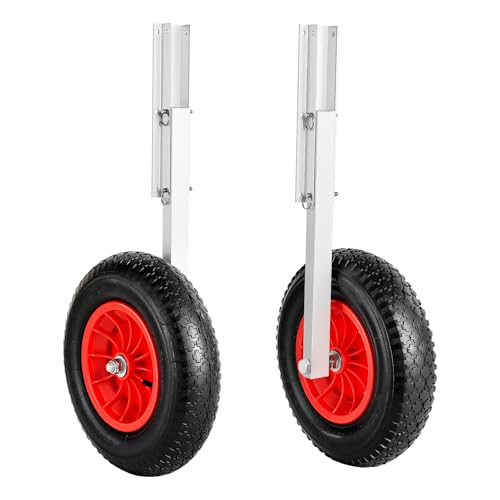
The 15-inch inflatable rubber-tired launch wheels are designed for boats up to 300 lbs and 14.7 ft. The aluminum arms accept quick-release pins for fast disassembly and can rotate to retract on water. Best for smaller, lighter craft that require smoother rolling on varied surfaces such as grass, sand, or gravel.
Who it’s best for: solo operators or small boats that need reliable, portable wheels. Why selected: strong load capacity for its size and easy folding mechanism.
Limitation: Inflate tires to proper pressure for optimal rolling; overloading beyond 300 lbs reduces maneuverability.
XinKunmarine Boat Launching Wheels, 10″ Removable

This kit uses stainless steel brackets with pneumatic 10-inch tires, offering rust resistance and strong durability for heavy-duty launches. With a 600 lb max load, it supports dinghies and small inflatable boats on sand, gravel, concrete, and rough terrain.
Who it’s best for: users needing higher load tolerance and versatile terrain handling. Why selected: robust materials and larger capacity at a compact wheel size.
Limitation: Heavier setup than smaller wheels; best used when you have adequate mounting points and space for assembly.
XinKunmarine 10″ Rubber Transom Wheels

Featuring stainless steel arms with an anodized coating, these 15-inch rubber wheels provide strong load capacity (600 lbs) and durable rolling that’s suitable for both inflatable and small hard boats. They’re designed to withstand demanding conditions and long service life.
Who it’s best for: boaters who want a rugged, corrosion-resistant wheel with long-term reliability. Why selected: superior durability and high load support for frequent launches.
Limitation: Rubber wheels may require more attention on very rough surfaces to avoid punctures or excessive wear.
VEVOR 12″ Boat Transom Launching Wheel

This 12-inch aluminum alloy launching wheel delivers up to 500 lbs of load capacity and uses quick-release pins to adjust the wheel arms. It’s a strong option for larger inflatables or boats that require reliable towing along varied road surfaces.
Who it’s best for: users needing a sturdy, higher-capacity option with easy arm length adjustment. Why selected: balance of durability, ease of use, and adjustable mounting.
Limitation: Slightly heavier than smaller models; consider storage space and mounting clearance on tight docks or trailers.
Bestauto Boat Launching Wheels
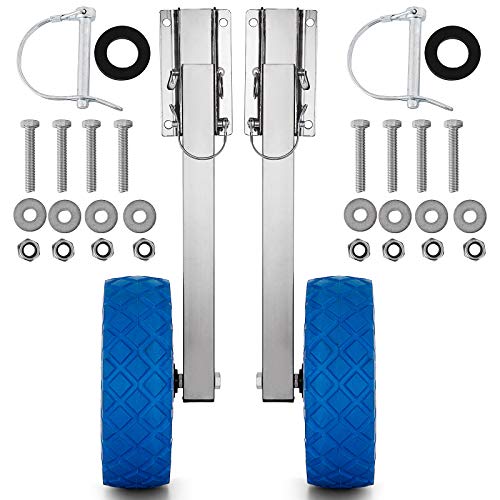
Bestauto offers stainless steel brackets with polyurethane wheels and up to 300 lbs capacity. It features dual-position mounting, enabling wheel-up or wheel-down configurations for water use. Best for boats needing corrosion resistance and flexible mounting options.
Who it’s best for: boaters who want corrosion resistance and two mounting positions. Why selected: practical dual-position feature and robust stainless steel construction.
Limitation: Capacity aligns with smaller craft; plan for heavier boats to avoid overloading.
Buying Guide
What load capacity do you need?
Match the wheel’s maximum load to your boat weight plus equipment. Overcapacity can give a smoother pull, while undercapacity risks failure on rough surfaces.
Which wheel size fits your boat?
Smaller wheels are lighter and easier to store; larger wheels offer smoother pulling and better performance on uneven terrain. Consider your dock or trail route’s terrain when selecting.
Material and durability considerations
Aluminum and stainless steel offer corrosion resistance and long life. Rubber tires provide grip on sand and grass but may require more maintenance.
Mounting flexibility and portability
Look for quick-release pins and foldable arms if you plan to remove wheels for storage or water use. Dual-position mounting adds versatility for different launch scenarios.
Installation and maintenance
Check that your transom or mounting points accommodate the wheel’s brackets. Regularly inspect pins, bolts, and tires for wear and proper inflation where applicable.
FAQ
- Are clamp-on boat wheels easy to install? Yes, many models use quick-release pins or simple clamps and can be installed with minimal tools in minutes.
- Can these wheels be used on inflatable boats? Yes, several options are designed for inflatables and dinghies, with load capacities up to 600 lbs on some models.
- Will wheels damage my boat’s hull? Proper mounting brackets are designed to avoid hull contact; ensure correct alignment and avoid overtightening.
- What terrains are these wheels best for? They work well on grass, sand, gravel, and concrete; some models handle rough terrain better than others.
- Do I need to inflate tires before use? For pneumatic tires, inflate to the recommended pressure before each launch for optimal rolling and durability.
- How do I choose between 10″ and 15″-12″ wheels? Smaller wheels are lighter and easier to store; larger wheels provide better stability and easier rolling on uneven surfaces.