Answering the common buyer question: which ceramic coating for boats offers durable UV protection, gloss, and easy maintenance? This guide highlights five proven options for fiberglass, gel coat, and painted surfaces. It helps boat owners, DIY detailers, and RV users with fiberglass exteriors choose coatings that balance protection, shine, and ease of use. Below you’ll find concise summaries, practical pros and cons, and buying guidance to compare quickly.
| Brand | Product | Best For |
|---|---|---|
| Meguiar’s | Marine & RV Hybrid Ceramic All Surface Sealant | Quick, spray-and-wipe protection on fiberglass and gel coat |
| Boat Juice | Protection Boat Ceramic Coating Spray | Long-lasting SiO2 protection and UV defense |
| Glidecoat | Marine Ceramic Coating 160ml | DIY-friendly, durable marine-grade coating |
| MAV AquaDoc | AquaDoc Boat Ceramic Coating Spray | Glossy finish with water repellence |
| Gtechniq | Marine Ceramic Top Coat | Strong dirt repellency and UV protection with durable bond |
Meguiar’s Marine & RV Hybrid Ceramic All Surface Sealant

This spray-and-wipe sealant delivers durable ceramic protection for fiberglass and gel coat. It adds gloss, water beading, and UV protection while remaining simple to use. Best for boat owners seeking fast, versatile protection without a complex process.
Best for: DIY boat owners wanting a stand-alone sealant or a quick booster after washing. Also suitable as a drying aid or surface prep layer before coatings.
Caution: While designed for multiple surfaces, avoid over-application on porous materials where buildup could occur if not wiped evenly.
Boat Juice Protection Boat Ceramic Coating Spray

Boat Juice uses SiO2 chemistry to provide durable protection, strong UV resistance, and hydrophobic properties. It helps maintain a pristine finish with a high-gloss look and easier cleaning after exposure to sun and salt spray.
Best for: Boat owners seeking long-lasting protection and a showy shine with robust UV defense. Particularly suitable for saltwater or sun-exposed vessels.
Caution: Some users may prefer a dedicated topcoat for heavy abrasion areas; reapplication intervals depend on exposure and cleaning frequency.
Glidecoat Marine Ceramic Coating 160ml

This marine-grade coating adds a protective nano-coating that enhances gloss and surface hardness while resisting UV, salt, and chemicals. It emphasizes a tested, Florida-based environment to address harsh marine conditions.
Best for: DIY enthusiasts who want a durable marine coating with proven sea-tested performance and a focus on maintaining gel coat and painted surfaces.
Caution: Proper surface prep and curing time are important; misapplication can affect adhesion or finish.
AquaDoc Boat Ceramic Coating Spray
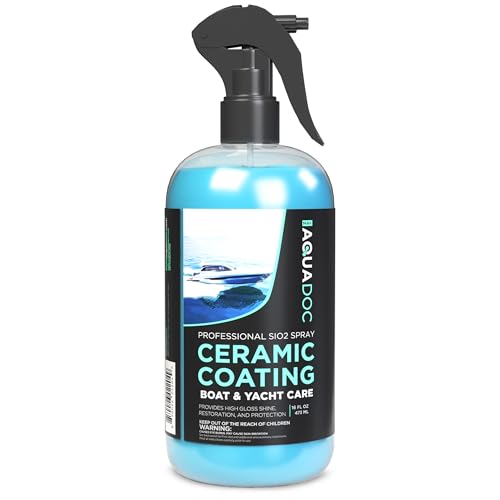
Powered by SiO2, AquaDoc provides a hydrophobic barrier, UV protection, and a showroom gloss. The spray format is aimed at convenience and ongoing maintenance after outings on water.
Best for: Boat owners who want quick application with noticeable gloss and water-repellence across fiberglass, gel coat, and painted finishes.
Caution: May require more frequent reapplication to sustain top-tier hydrophobic effects in extremely sun-soaked environments.
Gtechniq Marine Ceramic Top Coat

Gtechniq offers a top coat with durable dirt repellency, anti-static properties, and UV filtration that helps reduce fading. The coating bonds chemically to gel coat or topcoat for a long-lasting finish.
Best for: Boats that face heavy exposure to dirt, dust, and UV, or for owners seeking a permanent bond-style coating with strong gloss retention.
Caution: Requires careful surface preparation and can be more technique-driven during application and curing.
Marine Ceramic Coating For Boats (2Pcs)

This pair of marine ceramic coatings focuses on UV protection and gloss enhancement while offering an easy spray-on, wipe-off workflow for hulls and exposed surfaces.
Best for: Budget-conscious buyers who want multiple applications for larger vessels or RVs with fiberglass surfaces. Avoid over-application on textured or deeply etched surfaces.
Buying Guide: Key Purchase Considerations
What should you look for when choosing a boat ceramic coating? Start with surface compatibility (gel coat, fiberglass, painted surfaces), curing time, and the coating’s durability in saltwater and sun. Consider whether you want a spray-on, wipe-off product for speed, or a more hands-on, permanent-bond coating for long-term protection. UV protection, water beading, and ease of cleaning are practical indicators of performance.
Durability versus upkeep: Marine environments demand coatings that resist salt, oxidation, and harsh chemicals. Some products provide a hard, long-lasting bond; others emphasize user-friendly maintenance and faster reapplication. Decide between a quick maintenance option and a true long-lasting protection system based on how often you boat and how exposed your hull is to sunlight and salt.
Application and surface prep: Expect requirements such as clean, dry surfaces and possibly light surface prep. Some products require curing time and avoidance of water contact during set. Follow manufacturer instructions to maximize adhesion and gloss retention.
Safety and compatibility: Check for compatibility with fiberglass gel coat, paint, metal, vinyl, and glass surfaces. Ensure appropriate protective gear during application, especially with strong SiO2 or graphene formulations. If you have sensitive finishes or decals, test on a small area first.
Maintenance and reapplication: Most marine ceramic coatings benefit from periodic maintenance and reapplication to sustain hydrophobicity and gloss. Plan your maintenance schedule around boating frequency, climate, and cleaning routines.
FAQ
Q: Are these coatings safe for fiberglass boats?
A: Yes, most products listed are formulated for fiberglass and gel coat, with some also suitable for paint, metal, vinyl, and glass. Always verify surface compatibility on the product page.
Q: How long does a marine ceramic coating typically last?
A: Durability varies by product and environment, ranging from months to multiple seasons. Follow the manufacturer’s cure time and reapplication guidance for best results.
Q: Can I use these coatings on a newly gel-coated hull?
A: Yes, most are suitable for new gel coat, but ensure the surface is clean, dry, and properly prepped before application.
Q: Do these coatings require professional installation?
A: Many are DIY-friendly with spray-and-wipe formats, though some high-performance options may benefit from careful technique and prep. Review each product’s instructions.
Q: Will coatings affect decals or color matching?
A: Coatings generally preserve color and clarity, but test on a small area if decals or custom finishes are present to avoid tinting or uneven gloss.