Cam cleats offer fast, secure rope control for boats, dinghies, and kayaks. This guide highlights five reliable cam cleats that balance strength, ease of use, and maintainability. The top picks range from marine-grade stainless steel to lightweight aluminum designs, targeting sailors, paddlers, and small-boat crews. Read on to identify which cleat best fits your rope size, mounting, and navigation needs.
Compare At A Glance: Selected Cam Cleats
| Product | Best For | Key Benefit | Material |
|---|---|---|---|
| Cunyuer Cam Cleat with Wire Leading Ring | Rugged sailing setups | Excellent holding power, fast line entry | 316 Stainless Steel |
| VTurboWay Cam Cleats with Wire Leading Ring | Lightweight boats and easy maintenance | Flared entry, minimal wear | Plastic/Composite |
| Ymiko 316 Stainless Steel Cam Cleat | Saltwater boats, kayaks | Wide rope compatibility, high durability | 316 Stainless Steel |
| RANDDER Kayak Cam Cleat (Black, 2 Pack) | Kayaks and small dinghies | Value pack with strong hold | Aluminum |
| HARKEN Premium Micro Carbo-Cam | High-end sailing performance | Ball-bearing operation for smooth action | Delrin bearings, carbon materials |
Cunyuer Cam Cleat with Wire Leading Ring
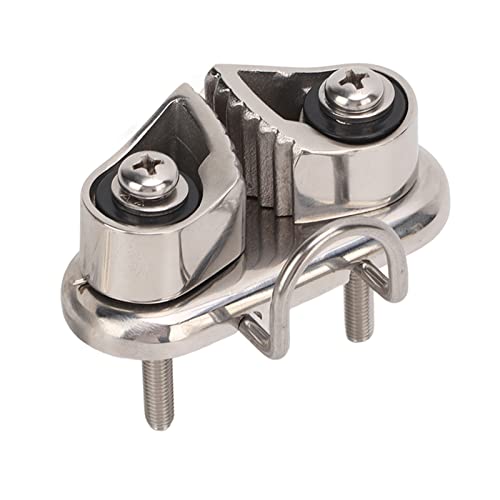
This model uses marine-grade 316 stainless steel for high strength and corrosion resistance. It employs a progressive cam tooth design to maximize rope grip while minimizing wear on both the cam and rope. The flared entry supports quick and reliable line engagement and release, even under load. Best for sturdy sailboat lines and regular use in challenging environments.
Who it’s best for: Sailors needing durable, maintenance-friendly hardware for 10 mm ropes and above, with an emphasis on long service life. Designed for boats where reliability and strong clamping are priorities.
Why selected: Its all-metal construction and strong clamping mechanism provide consistent performance in harsh conditions, making it a robust option for larger dinghies and coastal sailboats.
Limitation: Heavier than plastic alternatives, which may be a consideration for lightweight dinghy setups or minimalist rigs.
VTurboWay Cam Cleats with Wire Flared Leading Ring
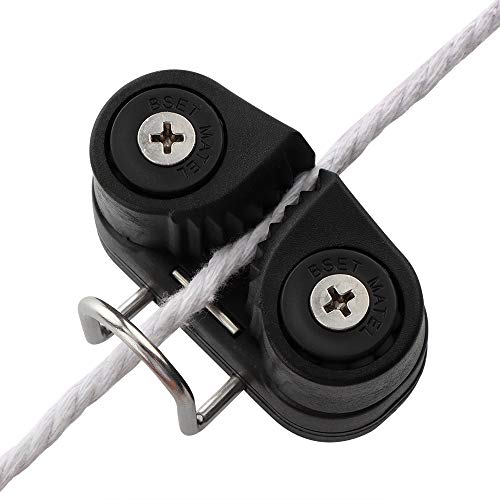
These cleats are noted for lightweight design and wear resistance. The progressive cam tooth design provides strong holding power on various rope types while minimizing wear. The flared entry supports quick line engagement and release, and the wire leading ring helps prevent rope slippage. They are suitable for smaller craft and quick maintenance routines.
Who it’s best for: Paddlers and light-boat crews seeking a cost-effective, easy-to-service cleat for up to moderate rope diameters. Ideal for boats where weight savings matter.
Why selected: The combination of easy maintenance and fast entry makes it a practical choice for casual to moderate offshore use on kayaks and small sailboats.
Caution: Plastic or composite construction means lower load capacity than metal cleats, so match to rope sizes and loads accordingly.
4 PCS Cam Cleats Marine Aluminum Anchor Rope Lock

This set provides four aluminum cam cleats, offering good corrosion resistance and strong clamping through progressive teeth. The base size is 86 x 38 mm, with rope compatibility up to 5/8 inch. The kit emphasizes easy disassembly for maintenance and low line entry force, reducing effort during sail handling. Suitable for kayak rigs and small sailboats that need multiple cleats.
Who it’s best for: Boat owners building or upgrading a small fleet or outfitting multiple lines with a budget-friendly aluminum option.
Why selected: The value-packed four-pack helps you outfit rails, hatches, or cockpit sides efficiently without sacrificing performance.
Caution: Aluminum bases can scratch surfaces; consider protective mounting options or base padding for sensitive finishes.
Ymiko 316 Stainless Steel Cam Cleat

This cam cleat uses marine-grade 316 stainless steel for weather resistance and robust performance under high load. It features a progressive cam tooth design to maximize holding power while minimizing wear on both the cam and rope. It supports ropes in the 5–15 mm range, making it versatile for sailboats, kayaks, and dinghies with mixed lines.
Who it’s best for: Boat owners seeking a strong stainless option with broad rope compatibility and long-term durability in saltwater environments.
Why selected: The wide rope range and corrosion resistance provide reliable performance across multiple rig configurations and seasons.
Caution: Stainless cleats can be heavier than plastic options; ensure mounting hardware is suitable for load expectations.
GANGUOLA Cam Cleat Ball Bearing Fast Entry

This aluminum cam cleat emphasizes fast entry with a ball-bearing pawl system for smoother operation under varying loads. The progressive tooth design provides solid hold on common rope sizes up to 5/8 inch. Base size is 86 x 38 mm, with easy maintenance through disassembly. It is a solid choice for sailing yachts, kayaks, and small boats seeking dependable performance.
Who it’s best for: Sailors requiring smooth, dependable engagement and release with a simple maintenance routine. Suitable for moderate to high-demand lines on small to mid-sized craft.
Why selected: The ball-bearing mechanism can reduce resistance during hoisting and trimming tasks, contributing to precise line control.
Caution: Heavier than plastic options; ensure mounting structure can support the added weight in tight spaces.
GANGUOLA Cam Cleat Ball Bearing Fast Entry (2 PCS)

This two-pack builds on the same reliable aluminum ball-bearing concept, delivering fast entry and strong holding power for rope up to 5/8 inch. The progressive teeth design minimizes wear on both the cleat and line, while easy disassembly supports maintenance routines. It’s a practical option for boaters who need two cleats with consistent performance.
Who it’s best for: Small crews or anglers who want a duplicate or redundant setup without sacrificing performance or ease of maintenance.
Why selected: The two-pack provides additional value and consistency for multi-line rigs on kayaks and small sailboats.
Caution: As with other aluminum cleats, protect fittings from galvanic corrosion in mixed metal installations.
Buying Guide: Cam Cleats For Boats
What rope size should you choose?
Most cam cleats accommodate a range of rope diameters. Look for models labeled to handle 3–5/8 inch (about 9–15 mm) lines or wider. Match to your typical lines used for halyards, mainsheets, or control lines to ensure secure clamping without excessive wear.
Why choose stainless steel over aluminum?
Stainless steel offers superior corrosion resistance in saltwater environments and typically longer service life under heavy loads. Aluminum is lighter and cheaper but can wear faster with repeated engagement and disengagement on certain rope types.
What about maintenance and installation?
Choose cleats with easy disassembly for maintenance and cleaning. Flared line entry improves reliability in rough seas, while a wire leading ring helps prevent rope slip. Ensure mounting hardware is appropriate for your boat’s deck material and load requirements.
Are ball-bearing cleats worth it?
Ball-bearing cleats provide smoother operation and can reduce friction during line handling under high loads. They are beneficial on larger boats or when frequent lining actions are required, but they may add cost and complexity compared with basic cleats.
What is the most versatile option?
Models offering broad rope compatibility, good corrosion resistance, and easy maintenance—such as 316 stainless steel cleats with progressive teeth—tend to perform well across a range of sailing and paddling scenarios. Consider your typical rope sizes and environmental exposure when deciding.
Installation tips
- Place cleats where you can comfortably reach them from the helm or cockpit.
- Use proper backing hardware to distribute load and prevent deck damage.
- Seal mounting holes to prevent water intrusion in exposed locations.
FAQ
- What is a cam cleat designed to do? It grips lines quickly with a cam mechanism for easy release with tension.
- Which material lasts longest in saltwater? Marine-grade stainless steel typically offers the best long-term corrosion resistance.
- Can I use cam cleats for ropes larger than specified? It’s best to stay within the manufacturer’s stated range to avoid wear or slippage.
- Do cam cleats require maintenance? Yes, periodic disassembly and cleaning help maintain smooth operation and grip.
- Are plastic cleats less durable than metal? Generally, yes, especially under high loads or harsh conditions; match choice to intended use.
- Is a two-pack worth it for a kayak setup? For redundancy and multi-line rigs, a two-pack offers convenience and consistency.