If you’re shopping for a bronze boat hook tip or a compatible boat hook head, you’re likely focusing on durability, surface protection, and ease of use. This guide highlights five relevant options that help with docking, retrieving lines, and maneuvering around pilings. Best for avid boaters, coastal mariners, and DIY dock fixers, these picks emphasize bronze or bronze-tinished tips, rugged construction, and practical design. Read on to compare each option and find the right match for your vessel and routine.
| Product | Best For | Key Benefit |
|---|---|---|
| Sea Dog Line Boat Hook, bronze boat hook | Classic boaters seeking bronze hardware | Polished cast bronze tip; solid mounting |
| 4″ Inch Bronze Pelican Hook Sea-Dog Line 189780 | Floating bronze tip accessory users | Bronze hook with eye for secure rigging |
| FancyEagle Boat Hook with Non-Slip Rubber | Everyday docking with added surface protection | Rubber-tipped head; ABS construction |
| Boat Hook for Pole, Works with Push Pole | Versatile docking with adjustable reach | Telescoping options; 3/4″ Acme thread |
| ISURE MARINE Stainless Steel Boat Hook | Rust-resistant, versatile use | 316 stainless steel; floating design |
Sea Dog Line Boat Hook, Bronze Tip

The Sea Dog Line Boat Hook features a traditional bronze tip intended for custom boat hook builds. It’s constructed from polished cast bronze and requires two #6 FH fasteners for installation (fasteners not included). This option suits buyers who prefer a classic, bronze-focused component to pair with a DIY hook handle. Best for sailors who value a traditional bronze aesthetic and compatibility with standard fasteners, rather than built-in pivot or telescoping features. Be aware that the tip is a fixed component, so total reach depends on the chosen handle.
4″ Bronze Pelican Hook Sea-Dog Line 189780

Sea-Dog Line’s 4″ Bronze Pelican Hook is designed to provide a bronze eye and hook configuration suitable for mooring and line handling. The component is compact, making it a good addition for smaller boats or backup docking setups. Best for boaters who want a bronze-focused hook for specific line configurations, or for use as a fixed eye attachment. A potential limitation is that it is a single hook piece rather than a full telescoping or adjustable system, so reach must be planned accordingly.
FancyEagle Boat Hook with Non-Slip Rubber

FancyEagle offers a boat hook head with a non-slip rubber sleeve, designed to grab dock lines, guide bows, and retrieve items without leaning over railings. The rubber tip helps protect surfaces during push-off and positioning. Best for boaters seeking a more forgiving contact surface and easier handling, especially on smooth hulls or during frequent docking maneuvers. Choose this if you want a lightweight, ready-to-use hook head without a full pole, and be mindful of the soft tip’s wear with rough pilings.
Boat Hook for Pole, Works with Push Pole
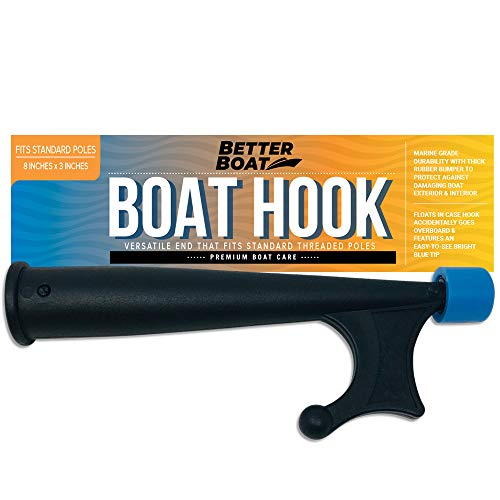
This Boat Hook for Pole offers compatibility with a 3/4″ Acme thread, enabling attachment to longer poles or push poles. It includes a thick protective rubber bumper to prevent hull damage during mooring or push-off. Best for boaters who want a modular setup or a longer reach for difficult docking spots. Limitations include the need for a compatible pole and potential extra weight for heavier duty operations. The long-reach telescoping option is available in related setups, but this listing focuses on the hook head and its outer compatibility.
ISURE MARINE Stainless Steel Boat Hook

ISURE MARINE’s Stainless Steel Boat Hook is a floating, unbreakable, rust-resistant option. Made from marine-grade 316 stainless steel, it offers high polish and versatility for docking, undocking, and line handling. Best for boaters who need a corrosion-resistant tool with a long service life in saltwater environments. A potential limitation is that stainless steel hooks can be heavier than some aluminum counterparts, so consider your pole setup and balance before pairing with lighter handles.
Buying Guide
What material should you choose? Bronze tips and bronze-mounted hooks offer classic aesthetics and good corrosion resistance, often preferred for traditional boats. Stainless steel provides excellent corrosion resistance in saltwater but may add weight. ABS and aluminum options reduce weight and are typically more affordable.
Which feature matters most? Surface protection like rubber tips helps prevent hull damage and scuffs; fixed bronze tips prioritize reliability and a proven mounting method, while telescoping designs emphasize reach and flexibility for hard-to-reach lines.
How should you match to your boat size? Larger vessels benefit from longer reaches and stronger hooks, while smaller craft can rely on compact hooks or modular setups with adjustable poles. Ensure thread compatibility when adding a hook head to an existing pole.
What are practical safety considerations? Avoid overextending reach in strong currents or winds. Test any new attachment in a safe, controlled area to verify balance and grip. Check for surface wear on rubber tips and replace as needed to maintain protection and performance.
FAQ
- Q: Are bronze tips better than stainless for boat hooks? A: Bronze tips offer traditional aesthetics and good corrosion resistance, but stainless hooks resist saltwater corrosion more broadly and can be lighter or heavier depending on design.
- Q: Can I use a bronze tip with any pole? A: Compatibility depends on thread and mounting; verify pole threading (e.g., 3/4″ Acme) and ensure secure attachment.
- Q: Is a rubber-tipped hook safer for hulls? A: Yes, rubber tips help prevent scarring and hull damage during contact and push-off.
- Q: Do I need a telescoping pole for docking? A: A telescoping pole increases reach and flexibility, which is useful for larger boats or tight docking spaces.
- Q: Should I choose a floating hook? A: Floating designs aid retrieval if dropped overboard, which can be advantageous in active docking environments.
- Q: What maintenance does a bronze tip require? A: Clean and inspect for corrosion or wear, particularly at fastener points; reapply protective coatings as necessary.