Get durable, flexible vinyl coatings that resist wear aboard boats. This guide highlights five vinyl paint products that cater to boat interiors and seating, helping you choose the right option by material, finish, and application needs. Ideal for boat owners, marine upholsterers, and DIY enthusiasts seeking a long-lasting refresh.
| Product | Best For | Why It Stands Out |
|---|---|---|
| Rust-Oleum 1911830 Specialty Vinyl Spray Paint, 12 oz, White | Boat seats, dashboards, upholstery | Flexible vinyl resin for vinyl-to-vinyl compatibility; quick-dry; coverage up to 7 sq ft |
| SEM M25203 Marine Formula Boats Grey Vinyl Coat Vinyl And Plastic Repair Coating | Marine vinyl repairs and color matching | Multifunction primer; air-dry or IR cure options; good for repairs on marine vinyl |
| Rust-Oleum 248922 Fabric & Vinyl Spray Paint, 11 oz, Gloss White | Car seats, dashboards, vinyl panels | Excellent adhesion; avoids cracking or peeling; fast-dry |
| Dupli-Color HVP109 Vinyl and Fabric Coating Spray Paint – Medium Gray – 11 oz | Boat interiors, upholstery, seating | Flexible, self-priming formula; strong adhesion; handles interior components well |
| Dupli-Color HVP106 Vinyl and Fabric Coating Spray Paint – Flat Black – 11 oz | Accent panels, black upholstery, trim | Flexible finish; self-priming; easy to apply; dries to touch in 30 minutes |
Note: The following sections detail each product’s strengths, ideal uses, and practical considerations to help you compare options side by side.
Rust-Oleum Specialty Vinyl Spray Paint White

Best for: Boat seats and dashboards needing a flexible white finish. This spray uses actual vinyl paint resins to mirror the flexibility of original vinyl, reducing cracking due to flexing aboard a vessel. Dries to the touch in about 10 minutes and covers up to 7 sq ft per can. Good choice when you want a straightforward, uniform color match on existing vinyl surfaces.
Why selected: It provides a reliable vinyl-specific formula that adheres well to vinyl surfaces common in boats, making it a staple for both restoration and refresh projects. Limitation: White can show dirt and scuffs more readily; consider a protective topcoat for heavy-use areas.
SEM Marine Gray Vinyl Coat

Best for: Repairs and color-matching on marine vinyl that requires more than a single-color spray. This product supports a multifunction primer and can air dry, be baked, or IR cured, offering flexibility for complex boat interior projects.
Why selected: The primer and curing options provide versatility for repairs and long-lasting adherence on boat interiors. Caution: This product is a repair coating, so plan color consistency across panels if multiple pieces are involved.
Rust-Oleum Fabric & Vinyl Spray Paint, Gloss White
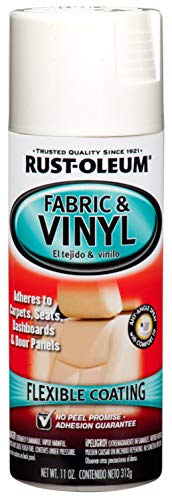
Best for: Car seats and vinyl dashboards that demand strong adhesion and a resilient finish. This gloss spray provides good coverage and resists cracking or peeling, with a quick dry time of about 10 minutes and coverage up to 12 sq ft per can.
Why selected: It offers superior adhesion for vinyl and fabric components and is well-suited for larger boat interiors. Limitation: Gloss finishes can highlight surface imperfections; surface prep is essential for the best look.
Dupli-Color HVP109 Vinyl and Fabric Coating Spray Paint – Medium Gray

Best for: Marine interiors needing a flexible and durable finish in a neutral gray. The paint features a maximum adhesion promoter for direct application to interior components and equips a self-priming formula to avoid cracking or chipping.
Why selected: It balances ease of use with durability, making it suitable for ongoing maintenance projects aboard boats. Caution: Color matching across different panels can be challenging if you blend new coats with older finishes.
Dupli-Color HVP106 Vinyl and Fabric Coating Spray Paint – Flat Black

Best for: Black interior accents and panels that require a durable matte finish. This flat black option uses a flexible self-priming formula to resist cracking and chipping and dries to the touch in about 30 minutes.
Why selected: A practical choice for touch-ups and accent work where a low-sheen look is desired. Limitation: Flat finishes can emphasize surface texture; prepare surfaces thoroughly for the smoothest result.
Buying Guide: Key Purchase Considerations
Surface compatibility: Verify that the paint is designed for vinyl and fabric, especially on marine upholstery that flexes with waves and seat movement.
Finish and appearance: Decide between gloss, satin, or flat finishes depending on aesthetics and glare considerations on deck or cockpit areas.
Adhesion and durability: Look for products with flexible binders and adhesion promoters to withstand sun, salt, and movement aboard boats.
Drying time and cure: Consider fast-drying formulas for faster project turnaround, but account for full cure time before heavy use or exposure to moisture.
Repair vs. repaint: For damaged surfaces, consider a dedicated repair kit or primer-compatible coatings to ensure color match and long-term adhesion.
Application method: Aerosol sprays are convenient for small areas, while larger surfaces may benefit from spray guns or multiple light coats for even coverage.
Frequently Asked Questions
- Is it safe to apply vinyl paint on boat seating outdoors? — Yes, but choose a product with UV resistance and allow adequate ventilation; consider a topcoat for extra durability.
- Can these paints be used on all vinyl boat surfaces? — Most are designed for vinyl and fabric; test on a small area first to check color match and adhesion.
- How long should I wait between coats? — Follow product directions, typically 15–30 minutes between coats; ensure a tack-free surface.
- Will these paints crack with flexing or sun exposure? — High-quality vinyl paints with flexible resins reduce cracking; avoid over-application in high-movement areas.
- Do I need a primer when repainting vinyl? — Some products are self-priming, but primers can improve adhesion on rough or previously painted surfaces.
- Can I fix a color mismatch with multiple products? — Yes, but aim for a single color family and test blending on a discreet area to avoid noticeable patches.