When you’re trailering a boat, protecting the transom and outboard motor is a top priority. This guide highlights five top-rated boat transom savers, each designed to hold engines steady during transport, absorb shocks, and minimize wear on your boat system. The right choice depends on engine size, mounting style, and how you trailer. The following picks target common needs: heavy-duty protectors for larger motors, adjustable savers for varying boat setups, and models with rubber or composite heads to cushion impact. Use the quick table below to compare core specs at a glance.
| Product | Best For | Key Benefit | Adjustability |
|---|---|---|---|
| Saltwater-ready steel with wide 28″–59″ range | Yes | ||
| Rubber V-block for extra protection | Yes | ||
| 2 attachment types and flexible fit | Yes | ||
| Replaceable soft rubber V-block | Yes | ||
| Composite head protects engine surface | Yes |
Hazztoll Adjustable Boat Transom Saver

The Hazztoll transom saver is built to absorb shocks and stabilize an outboard during towing. It’s designed for boats with motors up to 150 HP and a length range of 28″ to 59″, making it a strong option for mid-to-large engines. Best for boaters who frequently trailer and want confident, long-haul protection against road vibration. The unit uses saltwater-resistant steel for durability in harsh marine environments.
Why chosen: Its extended adjustment range and rugged construction help reduce transom stress on bigger engines, providing a secure fit on varied trailers. Better for saltwater use than lighter-duty options. Caution: Heavy-duty steel can add weight; ensure mounting area supports the load and install per instructions.
JY PERFORMANCE Universal Transom Saver

The JY PERFORMANCE transom saver is designed for universal fit up to 150 HP and adjusts from 28″ to 59″. It features a heavy-duty steel build with a rubber V-block to cushion shocks and prevent scratches on the engine. Best for boaters seeking broad compatibility across various outboard brands and models. The rubber V-block is a key protection feature for delicate lower units.
Why chosen: Its universal sizing reduces the need to juggle multiple savers. Caution: Ensure the V-block remains intact after handling rough road conditions; inspect for wear and replace if rubber shows cracking or deformation.
Better Boat Adjustable Transom Saver

Better Boat’s transom saver emphasizes flexible mounting with a range of 22.5″ to 32.5″ and two attachment types. It uses zinc-plated steel and a rubber V-block to resist corrosion and cushion the motor during transit. Best for trailers with varied motor heights and multiple mounting configurations. The built-in spring provides additional shock absorption for smoother towing.
Why chosen: The dual-attachment approach helps accommodate many trailer setups. Caution: If your trailer uses a non-standard mounting pattern, verify compatibility before purchasing.
JNDO Heavy Duty Transom Saver

The JNDO model offers universal compatibility for outboards up to 150 HP with a 28″ to 59″ adjustable length. It uses heavy-duty marine-grade steel and a replaceable soft rubber V-block to dampen vibrations and prevent engine scratches. Best for users who want a complete kit that can integrate with multiple trailer configurations. The included V-block replacement option is a practical longevity feature.
Why chosen: Strong protection against engine-to-transom impact is ideal for rough roads. Caution: Check that the replacement V-block is readily available if you need a future swap.
Sebnux Adjustable Transom Saver
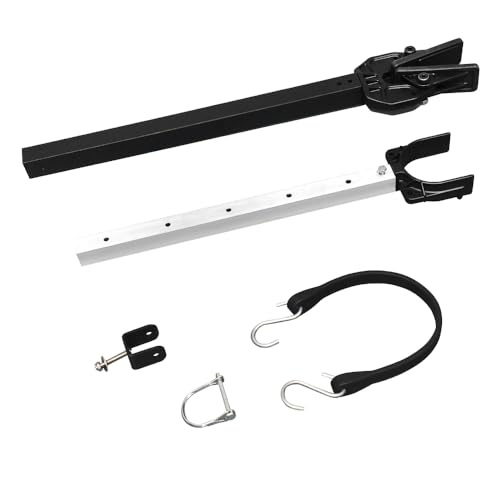
Sebnux presents a budget-friendly aluminum transom saver with a composite head. It supports motors up to 100 HP and offers adjustment within a reasonable 23″ to 35″ range. The composite head reduces engine scratching while the aluminum body adds durability. Best for cost-conscious buyers who still need effective protection on light-to-moderate trailer trips. Caution: Ensure the motor weight stays well within the 100 HP rating to maintain proper balance.
KAZINSKI Boat Transom Saver with Heavy-Duty Composite Head

The KAZINSKI transom saver uses a composite head and an adjustable 23″ to 35″ length to support engines up to 100 HP. It includes both roller and trailer mount brackets for flexible installation. Best for boaters who want a durable, secure mounting with lightweight design. The composite head helps prevent engine scratches and provides stable anchoring. Caution: For larger trailers or higher-speed towing, regularly verify bracket alignment to avoid movement.
Buying Guide: How to Choose the Right Boat Transom Saver
- Engine horsepower and size: Match the saver’s HP rating and length range to your outboard. Heavier motors benefit from sturdier materials and wider adjustability.
- Mounting versatility: Consider whether you need roller brackets, trailer mounts, or both. More mounting options translate to broader trailer compatibility.
- Head material and protection: Rubber V-blocks cushion shocks and prevent scratches. Composite heads reduce surface damage and are lighter in some models.
- Corrosion resistance: Saltwater exposure warrants steel or aluminum savers with corrosion resistance or coatings to extend life.
- Ease of installation and maintenance: Look for complete hardware kits and replaceable components like V-blocks for long-term use.
- Practical limitations: Some savers require removal before launching or are not suitable for certain trailer designs. Check your trailer’s configuration before purchase.
Frequently Asked Questions
- What is a boat transom saver used for?
A transom saver stabilizes the outboard motor during trailering, reducing stress on the motor and transom and absorbing road shocks to prevent damage.
- How do I know what size transom saver to buy?
Choose a saver that fits your motor’s horsepower rating and offers an adjustable length that covers your boat’s transom-to-axle distance within the 28″ to 59″ range commonly offered.
- Are rubber or composite heads better?
Rubber V-blocks provide strong vibration dampening and scratch protection; composite heads offer lighter weight and surface protection. Your choice depends on your priorities: durability vs. weight and surface care.
- Can I use a transom saver on any trailer?
Most savers support a range of trailer configurations, but always verify mounting compatibility with your trailer’s brackets and foundations before installation.
- Do transom savers require maintenance?
Yes. Regularly inspect for worn rubber blocks, corrosion, and loose fittings. Replace damaged components to maintain effectiveness.
- Is removing the transom saver before launching necessary?
Many models are designed for use during towing with removal recommended before launching, depending on the specific product’s instructions.