Protect a boat’s paint and the tow vehicle from road debris with durable rock guards designed for trailer use. This guide highlights top plastic rock guards and related fender guards that resist chips, scratches, and staining while offering easy peel-and-stick installation. The selections below target common buyers: casual weekend boaters needing simple protection, campers with mixed loads, and trailer owners who want a long-lasting adhesion to metal surfaces. The table summarizes five strong options to help compare sizes, coverage, and compatibility at a glance.
| Product | Coverage | Best For |
|---|---|---|
| Kay Enterprises Trailer Rock Guard 9″ x 72″ (Black) | 9″ wide, 72″ long | Light to moderate rock protection for single fenders |
| Kay Enterprises Trailer Rock Gravel Guard 18″ x 72″ | 18″ wide, 72″ long | Extended coverage for wider surfaces and smoother finish |
| Kay Enterprises Trailer Rock Guard 9″ x 192″ | 9″ wide, 192″ long | Two tandem fenders or longer rail coverage |
| Kay Enterprises Trailer Fender Rock Guard 12″ x 72″ | 12″ wide, 72″ long | Fender protection for dual-wheel setups |
| Fulton Plastic Trailer Fender | 13″ tire size compatibility | Standard trailer fender replacement for common tires |
Kay Enterprises 9″ x 72″ Black Rock Guard

Material: embossed black vinyl with a heavy-duty peel-n-stick adhesive. Dimensions: 9″ wide by 72″ long, 0.016 inches thick (16 mil). Designed to adhere to smooth metal finishes such as aluminum, steel, or stainless steel. This size targets single fenders or narrow trailer rails and provides a straightforward installation for a clean, protective layer against gravel and stones.
Best for: Small to mid-size trailers with a single pair of fenders looking for quick protection without adding bulk. Limitations: shorter length may require multiple pieces for longer runs or wide trailer sections.
Kay Enterprises 18″ x 72″ Rock Gravel Guard

Material: embossed black vinyl with a heavy-duty sticky adhesive. Dimensions: 18″ wide by 72″ long, 0.016 inches thick (16 mil). It adheres to smooth metal finishes including aluminum, steel, fiberglass, or stainless steel and covers a broader swath than the 9″ model.
Best for: Wider fender areas or trailers that require extra coverage to prevent paint damage on both the trailer and tow vehicle. Limitations: wider material may require careful alignment to avoid gaps along curved surfaces.
Kay Enterprises 9″ x 192″ Rock Guard for Tandem Fenders
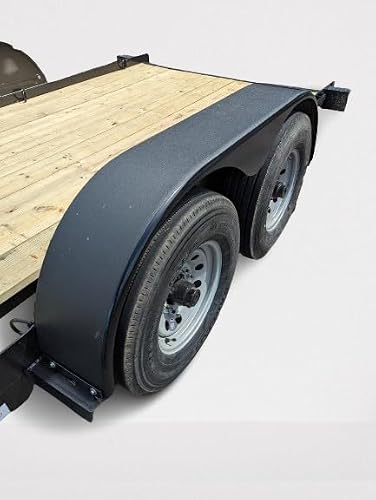
Material: embossed black vinyl with 16 mil thickness; adhesive back is designed for smooth metal finishes. Length: 192″ to cover extended tandem fenders, making it suitable for longer trailers or double-axle rigs.
Best for: Trailers with two fenders and long sides that need continuous rock protection. Limitations: longer installation may require precise measurement and trimming for a snug fit.
Kay Enterprises 12″ x 72″ Fender Guard
Material: embossed black vinyl with 16 mil adhesive backing for strong adherence to smooth metal surfaces such as aluminum, steel, or stainless steel. Dimensions: 12″ wide by 72″ long.
Best for: Taller fenders and dual-axle setups needing more coverage to avert paint damage on the tow vehicle. Limitation: wider strips may require careful alignment near curved fenders to avoid lifting edges.
Fulton 008583 Plastic Trailer Fender

Material: high-density polyethylene. This fender is a standalone replacement option for trailers with standard 13-inch tires, offering durable plastic construction for impact resistance against road debris.
Best for: Trailer owners seeking a standard, no-fruss installation fender replacement. Limitation: not a dedicated rock-guard strip; suited primarily for fender replacement rather than petal protection along the rail.
Buying Guide
Choosing the right rock guard or fender protection involves material, size, and compatibility considerations. The list below addresses common questions to help match product features to trailer needs.
What material should I choose?
All options shown are embossed vinyl with peel-and-stick backing, except the Fulton fender and Oceansouth-type guards. Vinyl provides flexibility, adhesion to metal surfaces, and resistance to chipping. If you prefer a stiffer or higher-impact option, consider a hard plastic fender like the Fulton model, which supports the fender itself rather than just rail protections.
How much coverage do I need?
Coverage depends on your trailer width and axle configuration. Narrow trailers may do well with 9″ guards, while wider trailers and tandem fenders benefit from 12″ to 18″ guards. For long rails or tandem setups, longer pieces (over 90″ or multiple pieces) reduce gaps and help protect more surface area.
Is peel-and-stick installation reliable long-term?
Yes, when applied to smooth, clean metal surfaces (aluminum, steel, or stainless steel). Proper surface preparation—degumming or solvent cleaning—improves adhesion. Avoid installing on dirty or textured finishes, which may reduce stickiness or cause peeling in high-heat conditions.
What about non-metal surfaces?
Some products claim adhesion to fiberglass or smooth composites. Test small areas first, and consider alternatives or edge-lip trim if the surface texture challenges adhesion. The 18″ and 12″ variants are versatile for mixed trailer finishes and can still perform well on smooth composite surfaces.
Do these protect beyond paint?
Yes, rock guards protect paint and sometimes lights, hardware, or tow vehicle finishes depending on placement. Wider guards cover more surface area, which helps reduce chips to both the trailer and the vehicle. Always ensure guards do not interfere with movement, wheels, or lights.
What are common installation tips?
- Measure exactly where the guard will sit before cutting or placing multiple pieces.
- Clean the surface with a mild degreaser and allow it to dry completely.
- Apply from one end to the other, smoothing out air bubbles as you go.
- Edge alignment is critical on curved surfaces; consider trimming edges for a snug fit.
Additional considerations
Consider your trailer type, wheel size, and how often you encounter gravel roads. If you tow in harsh conditions or frequently travel on rough roads, prioritize longer and wider guards to minimize risk of impact to the paint and vehicle undercarriage.
FAQ
- Q: Are these guards compatible with all trailer types? A: They fit most trailers with smooth metal finishes; verify surface compatibility and width before purchasing.
- Q: Can these be reused after removal? A: Peel-and-stick guards may lose adhesion upon removal or reuse; plan installation carefully.
- Q: Do the guards affect trailer stability or aerodynamics? A: Generally negligible; however, very wide strips can affect airflow around the edges if not aligned properly.
- Q: How should I maintain the guards? A: Clean with mild soap and water; avoid abrasive cleaners that could dull embossing.
- Q: Which option is best for tandem fenders? A: The 9″ x 192″ guard provides extended coverage suitable for long tandem rails.
- Q: Is there a risk of rust under the guard? A: The adhesive adheres to metal surfaces; ensure surfaces are clean and dry to reduce corrosion risk.