Whether you’re upgrading a boat trailer or building a new setup, choosing the right electrical connectors is essential for dependable taillights, brake lights, and signals. This guide highlights five widely compatible options ideal for marine and utility trailers. The selections emphasize durability, corrosion resistance, and straightforward installation. Best for: diy trailer owners, weekend boaters, and anyone needing reliable wiring upgrades without complex splicing.
| Product | Best For |
|---|---|
| MECMO 4 Way Flat Trailer End Connector 25 Inch | Standard 4-pin trailer lights on boat and utility trailers |
| WIUYNTLZ 32″ 4-Way Flat Trailer Connector | Harsh conditions with waterproof silicone wiring |
| Oyviny 5 Way Flat Trailer Wiring Harness | 5-pin systems for more lighting functions on boats and RVs |
| ELFFILLA 25 Inch 4-Way Flat Trailer Connector | Broad trailer compatibility with sealed cover |
| MECMO 4 Way Trailer End Connector Wire 5 Feet | Extended reach and heavy-duty replacement |
MECMO 4 Way Flat Trailer End Connector 25 Inch

This 4-pin trailer end connector fits standard 4-way flat sockets, making it suitable for marine boat trailers, horse trailers, motorcycles, ATVs, and cargo utility trailers. It uses color-coded wires to clearly identify taillights, brake lights, and turn signals, simplifying installation. The blunt-cut, ready-to-splice design helps fasten the harness to existing trailer wiring. Best for: owners replacing damaged or aging 4-pin plugs without rewiring the entire trailer harness.
Limitations: It’s a basic 4-pin system and does not add extra lighting channels. If your trailer requires more than taillight and brake/turn signals, consider a 5-pin or 7-pin setup. Use caution to ensure proper splicing and weather sealing.
WIUYNTLZ 32″ 4-Way Flat Trailer Connector
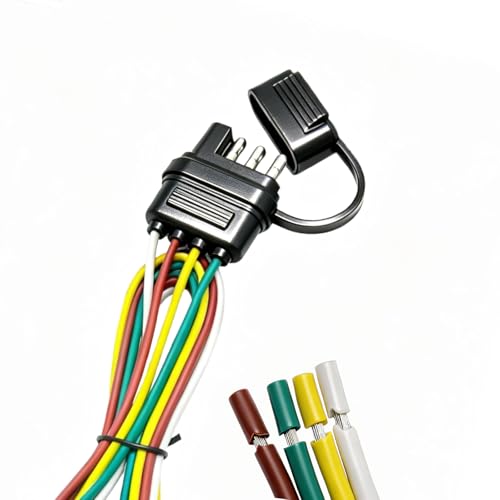
This 32-inch 4-way flat harness uses upgraded silicone wiring, offering excellent flexibility from -58°F to 392°F and 100% waterproofing. It’s designed for heavy-duty use on marine, horse, motorcycle, ATV, and cargo trailers. The 16 AWG tinned copper terminals provide strong conductivity and corrosion resistance for reliable lighting output. Best for: trailers exposed to moisture or extreme temperatures where durability matters most.
Caution: Silicone wiring is flexible and durable, but ensure seals and connections remain intact to maintain waterproof performance in rainy conditions.
Oyviny 5 Way Flat Trailer Wiring Harness

The 5-pin trailer connector provides connections for tail lights, brake lights, turn signals, reverse lights, and ground. It includes a 22-inch wire lead, color-coded wires, and a dust cover, improving water resistance and longevity. The brass and tin-plated terminals resist corrosion, helping maintain signal integrity. Best for: boat trailers with additional lighting features or hydraulic/surge brakes that require an extra lighting channel.
Limitation: The longer lead may require more space for routing on smaller trailers; plan the wiring path to avoid pinching or abrasion.
ELFFILLA 25 Inch 4-Way Flat Trailer Connector
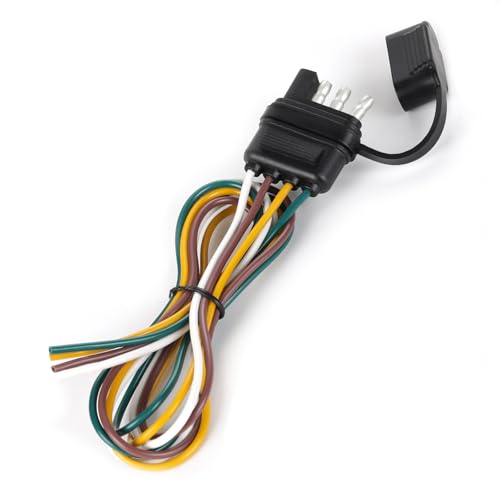
This 4-way flat harness is designed for trailer-side connectivity and fits standard four-way sockets. It uses color-coded wires for easy identification of taillights, brake lights, and turn signals, reducing wiring errors during installation. The kit arrives with blunt-cut wires and four snap locks for a straightforward splice. Best for: quick upgrades on a wide range of marine or utility trailers that use standard 4-pin plugs.
Tip: Ensure a weatherproof seal around exposed connections to protect against road spray and salt exposure in marine environments.
MECMO 4 Way Trailer End Connector Wire 5 Feet

This 4-pin plug comes with a 5-foot jacketed cable, offering a longer reach for trailer wiring. It uses heavy-duty 18 AWG wires and a color-coded layout for taillights, brake lights, and turn signals. The blunt-cut, color-coded design with four snap locks makes it a direct replacement option for existing wiring. Best for: trailers requiring extended wiring length or easier customization on longer trailers.
Limitation: The extended length may increase potential for entanglement; route and secure the cable to minimize wear and abrasion during travel.
Buying Guide
What should guide your choice?
- Connector type: Choose 4-way flat for basic lighting or 5/7-pin if you need additional functions like ground or reverse lights.
- Wiring material: Silicone-coated wires resist temperature extremes and moisture better than standard PVC in marine environments.
- Durability: Look for tinned copper terminals and reinforced housings to resist corrosion and water intrusion.
- Installed length: Match cable length to trailer size; longer leads ease installation but require neat routing to prevent snagging.
- Weatherproofing: Dust covers and sealed connectors extend life in rain, splash, and salt air conditions.
- Compatibility: Ensure the connector matches your trailer’s socket type and color-coding conventions for taillights and signals.
How to choose between 4-pin and 5-pin systems?
4-pin systems cover basic taillights, brake lights, and turn signals. 5-pin systems add a separate ground or auxiliary function, useful for trailers with more complex lighting or reverse lights. For most standard boats and utility trailers, a 4-pin flat connector is sufficient.
Installation reminders
Turn off power to avoid shorts during wiring. Use blunt-cut wires and snap locks to secure connections. Apply heat shrink or weatherproof sealant where connections are exposed to moisture to maximize longevity.
FAQ
- What is the most common trailer connector type for boats?
Answer: The 4-way flat connector is the most common for basic lighting on many boat and utility trailers. - Are silicone-wired connectors better for boats?
Answer: Yes, silicone wiring handles temperature swings and moisture better, improving durability in marine environments. - Do I need a 5-pin or 7-pin connector for a standard boat trailer?
Answer: Most standard boat trailers use 4-pin connectors; 5-pin or 7-pin is only necessary if your trailer has additional lighting or power requirements. - Can I replace just the plug without rewiring the entire trailer?
Answer: Yes, many 4-pin and 5-pin plugs are designed for straightforward splicing into existing wiring. - What should I inspect for water exposure in connectors?
Answer: Check seals, dust covers, and the integrity of insulation to prevent moisture ingress and corrosion. - Is color-coding essential for trailer wiring?
Answer: Color-coding helps prevent miswiring of taillights, brake lights, and turn signals, reducing installation errors.