Answering the common buyer question: which hydrofoil stabilizer best suits your outboard or stern-drive, small boat or large vessel? This guide compares five top options to help you pick the right one for lift, stability, and smoother handling. This overview targets boaters looking to reduce porpoising, cavitation, and rough-water impact, while maximizing planing efficiency. Best for quick plane and steady tracking are highlighted for different hull sizes and horsepower ranges.
Summary table of chosen products:
| Product | Best For | Horsepower Range | Notes |
|---|---|---|---|
| FO2001 Hydrofoil Stabilizer | Small to mid-size outboards | 5-150 hp | Dorsal fin style, PA66 construction |
| STINGRAY Classic Senior 2 | Broad range, quick lift | 40-300 hp | Low-drill design, durable |
| Hydrofoil Stabilizer (Dorsal Fin Style) | Versatile, easy install | Up to 150 hp | Wide compatibility |
| SE Sport 300 Hydrofoil | Sport cruising, precise handling | 35-300 hp | Streamlined shape |
| QuickMarine Hydrofoil Stabilizer | All-round performance | 5-150 hp | Durable PA66 plastic |
FO2001 Hydrofoil Stabilizer for Outboard Motors

Best for smaller to mid-size outboard motors and stern drives, this dorsal-fin style stabilizer is designed to offer a cleaner on-plane transition and steadier tracking. The model lists a height of about 10-1/4 inches and width of 8-1/4 inches, suitable for 5-150 hp engines. It is built to deliver a “whole new driving experience” by improving lift and stability. Best for buyers who want a single, straightforward installation with a compact footprint. A limitation is that exact fit varies with hull shape and mounting provisions, so verify compatibility before purchase.
STINGRAY HYDROFOILS Classic Senior 2
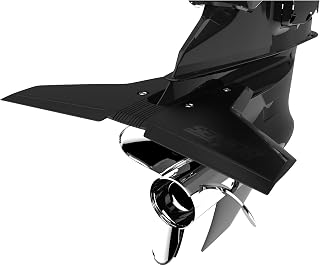
Best for boats in the 40-300 hp range, the Classic Senior 2 from StingRay is a one-piece, no-drill hydrofoil designed to lift engine weight and improve stability across a wide array of outboard and outdrive configurations. Its hydrodynamic design yields more lift than many competitors, helping boats get on plane quicker and reducing porpoising. Choose this for versatility across hulls and higher horsepower engines. A potential drawback is limited color options in some listings.
Hydrofoil Stabilizer for Outboard Motors (Dorsal Fin Style)

Best for general outboard and stern-drive use with broad compatibility, this dorsal-fin style stabilizer targets engines up to 150 hp and emphasizes stability and easy bolt-on installation. It fits common brands and emphasizes that no drilling is required. Best for boaters who want a simple upgrade without modifications. A limitation is the lack of a listed brand in the product entry, which may affect perceived support or replacement parts.
SE Sport 300 Hydrofoil

Best for performance-focused boaters seeking fast, precise control from 35 to 300 hp engines, the SE Sport 300 Hydrofoil emphasizes a narrow, streamlined shape to reduce drag while improving lift. This makes it a strong choice for anglers and sport boaters who want a balance of speed and stability. The model is widely compatible with a broad engine range, but installation should be checked for hull interference in some configurations.
QuickMarine Hydrofoil Stabilizer (White)

Best for a broad 5-150 hp range, this white Doel Fin style stabilizer is crafted from UV-resistant PA66 plastic for durability. It emphasizes easy bolt-on installation and claims fuel savings, better handling in rough water, and reduced cavitation. Choose this if you want a lightweight, affordable upgrade that improves ride quality across many small to mid-size outboards. A caution is that real-world fuel savings can depend on boat weight and operating conditions.
Buying Guide: Key Purchase Considerations
- Engine horsepower and compatibility: Match the stabilizer to your engine’s horsepower range to ensure adequate lift without excessive drag.
- Installation method: If you prefer no-drill or bolt-on installation, verify the mounting requirements and hull compatibility for your boat.
- Hull type and operating conditions: Planing hulls and rough-water conditions benefit most from hydrofoil stabilization, but some designs excel in calm water with delicate trim.
- Material and durability: PA66 plastic and fiberglass-reinforced composites offer durability; check UV resistance for long-term outdoor exposure.
- Design variety: Dorsal-fin styles are common and versatile; no-drill, single-piece designs tend to be easier to install on many boats.
Frequently Asked Questions
- What is the main benefit of a hydrofoil stabilizer?
It provides improved lift, reduces porpoising, and helps boats reach plane more quickly, enhancing stability and efficiency. - Can I install a hydrofoil stabilizer myself?
Many models offer bolt-on installation with no drilling; however, verify mounting points and clearance for your hull. - Will a hydrofoil stabilize every boat equally?
Results vary by hull design, weight, and engine placement; performance is most noticeable on boats prone to chine walking or cavitation. - Are all hydrofoils universal for outboards?
Most are designed to fit a broad horsepower range and multiple brands, but always check exact compatibility with your engine and drive configuration. - Do hydrofoils affect fuel economy?
Some designs claim fuel savings through improved planing and reduced drag, though results depend on operating conditions and boat weight. - What maintenance is required?
Regular inspection for mounting integrity, wear on fins, and cleaning to remove barnacles or debris helps maintain performance.