Find the right pulley block for marine and outdoor lifting tasks. This guide highlights five top Amazon options, clarifying who each product is best for and why it stands out. It also notes a key limitation to consider before you buy, helping you choose the best fit for your boat lift, dock, or gear hoist.
| Product | Best For | Capacity / Size |
|---|---|---|
| Zonon Yarding Block (3 Ton) | Moderate residential lifts and boat dollies | 3 Ton, 4″ sheave |
| Rocaris M100 Single Pulley | Heavy-duty indoor/outdoor rope work | 3300 lbs |
| Zonon Yarding Block (4.5 Ton) | Higher-capacity lifts for larger craft | 4.5 Ton, 5″ sheave |
| YATOINTO 4400LBS System | Home workshops and garage hoists | 4400 lbs |
| FEIMIRE 800 Lb Davit Kit | Crab pots, small boats, and dock-side lifts | 800 lbs |
Zonon Yarding Block With Shackle And Pin — 3 Ton Capacity

Best for mid-sized lifting tasks where a compact, durable block is needed. This Zonon model offers a 3-ton capacity with a shackle and pin, plus a grease nipple for easier maintenance. Its 8 x 4.9 x 3.1 inch footprint fits tighter spaces on boats or docks. The steel construction emphasizes longevity in outdoor conditions.
- Best for: Residential lifts, small boats, and rigging jobs with limited space.
- Why selected: Solid 3-ton capacity and maintenance-friendly grease port.
Limitations: The 3-ton rating may limit use for larger, heavier vessels or high-load industrial tasks. If you anticipate needs beyond 3 tons, consider higher-capacity options in this guide.
Rocaris M100 Lifting Single Pulley — 3300 Lbs

Choose this when you need a rugged, corrosion-resistant single pulley with a stainless steel build. The M100 is designed for indoor and outdoor rope applications, offering 360-degree rotation to prevent rope knotting and a 3300 lb load capacity. Its heavy-duty construction supports varied marine tasks, from dock hoists to under-deck rigging.
- Best for: Outdoor marine use and heavy rope applications.
- Why selected: Stainless steel, corrosion resistance, and 360-degree rotation.
Caution: Stainless steel components can be heavier; ensure mounting hardware is adequate for the load and that rope diameter is compatible with the wheel.
Zonon Yarding Block With Shackle — 4.5 Ton

This higher-capacity Zonon option is designed for larger lifting tasks that require a 4.5-ton rating and a 5-inch sheave. It maintains the same sturdy steel build with a shackle and pin and includes a grease nipple for straightforward maintenance.
- Best for: Medium-to-large craft lifts and more demanding rigging jobs.
- Why selected: Higher capacity with a larger sheave for smoother rope flow.
Caution: Heavier to mount; verify deck or structure can support the added load when not in use.
YATOINTO Rope Hoist Pulley System — 4400 Lbs

Best for garage, workshop, or warehouse setups where a robust 8:1 lifting system is beneficial. The combination includes a 4400 lb capacity pulley block with a metal-bearing wheel and upgraded rope fibers described as soft, strong, and lightweight. It supports a wide range of lifting tasks with relatively easy operation.
- Best for: Home workshops, garages, and small warehouse lifts.
- Why selected: High capacity paired with a dependable bearing design for smooth operation.
Limitation: The included rope and hardware are designed for versatility, but users should ensure compatible sling lengths and knot-free rope routing for safety.
FEIMIRE Crab Pot Puller Davit Kit
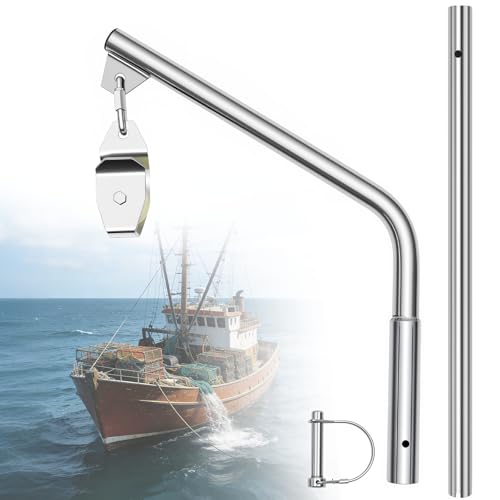
Best for vessel-side pot retrievals and dock use, this 800 lb capacity stainless steel davit kit provides corrosion resistance and reliable lifting for crab pots or similar gear. It includes a 7-inch open-face pulley block for smooth, low-friction lifting and stainless hardware.
- Best for: Dockside pot pulling and small boat lifts.
- Why selected: Stainless steel construction and practical davit-pulley combination.
Limitation: 800 lbs may be insufficient for heavier loads or larger gear; confirm typical lift weights before use.
Buying Guide: How To Choose The Right Boat Lift Pulley Or Block
What capacity do you need? Start with your heaviest expected load and add a safety margin. If you lift multiple items, consider a two-pulley system to reduce rope wear. For outdoor marine use, prioritize corrosion resistance—stainless steel components perform better in salt air.
What wheel size and rope compatibility matter? A larger sheave reduces rope friction and wear. Check rope diameter compatibility with the wheel to prevent binding or rope damage. 360-degree rotation helps prevent rope knotting over long runs.
What mounting and hardware are required? Ensure your mounting points can bear peak loads and are reinforced if needed. A shackle and pin simplify attachment but must be rated for the chosen load.
Maintenance considerations: Models with grease nipples offer easier routine lubrication, extending life in harsh environments. Regular inspection for rust, bearing wear, and frayed ropes is essential.
Versatility vs. dedicated use: If you lift many different items, a multi-rated system (like 3–4.5 ton ranges) gives you flexibility. For occasional use, a smaller, simpler block may be sufficient.
FAQ
- What is a yarding block and when should I use it? A yarding block is a pulley used to guide and reduce friction on a rope during lifting. It is suitable for docklines, small craft, and rigging tasks with moderate loads.
- Is stainless steel necessary for marine use? Stainless steel offers better corrosion resistance in saltwater environments, but it can be heavier. Choose based on exposure and load needs.
- Can I mix blocks with different capacities in a single setup? It’s possible, but ensure the system’s overall safe working load is not exceeded and that rope size and wheel fit are compatible.
- Do all pulleys come with hardware? Many include a shackle and pin, but verify what the package contains and whether additional mounting hardware is needed.
- How do I maintain a pulley system? Regularly inspect for wear, lubricate grease nipples if present, check for rust, and replace frayed ropes promptly to maintain safe operation.
- What should I avoid when selecting a pulley? Avoid exceeding the system’s rated capacity and using rope that’s too thick or too thin for the wheel size, which can cause binding or rope damage.