The top picks below are ideal for boat owners seeking reliable, corrosion-resistant deck fillers with easy keyless operation and secure caps. These options suit skippers, DIY boatowners, and RV or caravan users who need a dependable fuel fill neck. Below is a quick comparison table of the five best choices, followed by detailed sections for each product.
| Product | Brand | Size | Material |
|---|---|---|---|
| Boltigen 1-1/2″ Deck Filler | Boltigen | 1-1/2” (38mm) | Stainless Steel |
| ISURE MARINE 2″ Deck Fill | ISURE MARINE | 2” (50mm) | 316 Stainless Steel |
| Perko Polymer Vented Fill | Perko | 1-1/2” | Black Polymer |
| Perko 1318DPGBLK Angled Neck | Perko | 1-1/2” | Black Polymer |
| Boltigen Angled Deck Filler | Boltigen | 1-1/2” (38mm) | Stainless Steel |
Boltigen 1-1/2″ Deck Filler With Keyless Cap

Best for quick refueling and secure access on smaller to mid-sized boats. This 1-1/2″ filler is ideal for standard fill hoses and includes a keyless cap for easy operation. The stainless steel body provides good corrosion resistance for saltwater environments. The built-in locking-cap reduces spill risk and contamination.
Who this is for: boat owners needing fast, keyless fuel access with a reliable cap that stays attached. Why selected: combination of durable stainless steel construction and convenient keyless design.
Caution: ensure proper hose compatibility and check for any local installation requirements for deck fillers and caps.
ISURE MARINE 2″ Deck Fill With Keyless Cap

Best for larger vessels needing a bigger fill neck and reliable keyless operation with a stainless steel build. The 2″ (50mm) outer diameter accommodates larger hoses and vessels where rapid fueling is essential. The cap is kept attached with a stainless chain for handy operation and security.
Who this is for: boaters with higher fuel throughput or larger decks that require a bigger fill neck. Why selected: 50mm size offers compatibility with common 2″ fill hoses and robust stainless steel hardware.
Caution: larger fittings may require adjustments to existing fill neck recesses on some deck layouts.
Perko Polymer Vented Fill, 1-1/2”

Best for boats where a lightweight, corrosion-resistant fill cap is preferred and venting is important to manage fuel vapor. The black polymer construction and built-in venting help prevent fuel vapor buildup while keeping a compact profile.
Who this is for: users prioritizing light weight polymer components and integrated vent features. Why selected: simple, maintenance-friendly option for smaller to mid-sized craft.
Caution: polymer caps may be less impact-resistant than stainless options in rough docking conditions.
Perko 1318DPGBLK Angled Neck Fill

Best for installations where the fill neck must sit at a 35° angle, aiding deck alignment and reach in tight spaces. The 1-1/2″ size pairs with standard hoses, and the black polymer body matches many boat interiors while simplifying maintenance.
Who this is for: owners needing an angled neck for space-constrained decks. Why selected: angled design improves alignment and accessibility. Caution: ensure the neck angle matches your deck design to avoid hose kinking.
Boltigen Angled Deck Filler 1-1/2”
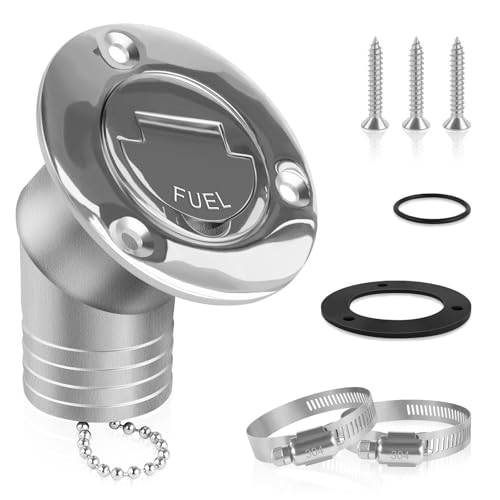
Best for boats with limited deck space requiring an angled fill neck. This stainless steel filler provides durability and a secure cap with a lift-up tab, ensuring quick operation and a stainless chain to prevent loss of the cap.
Who this is for: boats needing an angled filler with robust metal construction. Why selected: combines angle compatibility with corrosion resistance for marine use. Caution: verify hose compatibility with the angled neck before installation.
Buying Guide
What to consider when choosing a boat gas filler neck:
- Size and hose compatibility: Most marine fillers use 1-1/2″ hose fittings; some larger vessels need 2″ fittings. Verify your hose ID and neck diameter for a leak-free connection.
- Material and corrosion resistance: Stainless steel options resist saltwater and UV exposure better than polymer in harsh marine environments.
- Cap design: Keyless caps simplify access, reduce the risk of contamination, and keep the cap attached with a chain or tab.
- Angled vs straight neck: Angled fillers are helpful in tight or awkward deck layouts; straight necks work when space is generous.
- Ventilation: Some models include venting to manage fuel vapor; evaluate if venting is needed for your vessel’s safety and compliance.
- Installation considerations: Check deck thickness, mounting hardware, and gasket sealing to ensure a water-tight fit.
Frequently Asked Questions
- What size deck filler should I choose for a 1-1/2″ hose? Typically a 1-1/2″ deck filler matches standard 1-1/2″ hoses, but always confirm the inner diameter of your hose and the fill neck.
- Are keyless caps more secure than standard caps? Keyless caps reduce handling complexity and typically include a locking mechanism to minimize spills and contamination.
- Is stainless steel better than polymer for deck fillers? Stainless steel offers superior corrosion resistance in saltwater environments, but polymer can be lighter and less expensive.
- Do I need an angled neck? An angled neck is beneficial when deck space is limited or hoses have limited reach, while a straight neck is simpler for open layouts.
- Can these fillers be used for diesel or water fillers as well? Many are marketed for multiple fuels; verify the product description and compatibility with your intended fuel type before installation.
- What maintenance is required? Periodic inspection of seals, gaskets, and caps for wear helps prevent leaks and odor issues.