When you need reliable fuel or water level readings for marine, RV, car, truck, or boat tanks, a robust fuel sending unit is essential. This guide highlights five practical options that balance durability, ease of installation, and clear readings. Best for replaceable or retrofit setups, these senders suit boats with tank depths from 4 to 12 inches and beyond. The top picks are suitable for gasoline, diesel, water, and methanol mixtures, with adjustable depths and standard wiring patterns to fit common dashboards.
Summary table of selected products
| Product | Best For | Depth Range | Output | |
|---|---|---|---|---|
| CLLOMAGY Marine Fuel Sending Unit (4-12 in depth) | Small to mid-depth tanks | 6–12 inches | 33-240 ohms | Flexible, adjustable; easy to cut to tank depth |
| CLLOMAGY Marine Fuel Tank Sending Unit (4-28 in depth) | Deeper tanks, versatile | 4–28 inches | 33-240 ohms | Wide depth range, adjustable |
| RUPSE Fuel Sender Unit (6″) | Sturdy stainless steel builds | 6 inches | 33-240 ohms | IP67, backlit gauge options |
| RUPSE Fuel Sender Unit (12″) | Longer tanks, heavy use | 12 inches | 33-240 ohms | Robust stainless steel construction |
| 100TECH Fuel Sending Unit | Direct replacement and long life | 4–32 inches | 240-33 ohms | Reed switch, no moving parts |
CLLOMAGY Marine Fuel Sending Unit — 6-12 Inch Depth

The CLLOMAGY unit is designed for marine tanks with moderate depths, helping boat owners replace a broken sending unit or upgrade an aging gauge. It reads fuel, water, and gas levels and displays them on a standard gauge. Best for smaller to mid-size tanks in boats, RVs, cars, or trucks where depth sits around 6 to 12 inches. It’s flexible and adjustable, allowing cutting or rotating the component to fit the tank profile. The main limitation is depth range flexibility; for deeper tanks, consider a broader model.
Who it’s best for: Boat owners with 6–12 inch tanks seeking a straightforward replacement that aligns with common 33-240 ohm gauges. Also suitable for RVs or trucks needing a compact, adaptable sender.
Why selected: Combines adjustable depth with an easy-to-modify body, reducing installation hassles in tight spaces.
Caution: Confirm the tank depth before cutting; ensure the center screw allows safe rotation without compromising sealing.
CLLOMAGY Marine Fuel Tank Sending Unit — 4-28 Inch Depth

This model expands the depth range up to 28 inches, making it a flexible option for deeper tanks in boats, RVs, or trucks. It maintains the 33-240 ohm output and the same practical features as the 6–12 inch version—read accuracy, adjustable fit, and easy handling in tight spaces. The broader depth capability helps avoid extra hardware if your tank sits below the standard 12 inches.
Who it’s best for: Buyers with a broader tank depth in search of a single unit that covers multiple configurations.
Why selected: Depth versatility reduces the need for additional parts when tank depth varies.
Caution: Check the tank’s depth and mounting pattern to ensure compatibility with the SAE pattern.
RUPSE Fuel Sender Unit Boat Fuel Tank — 8″ (200mm)
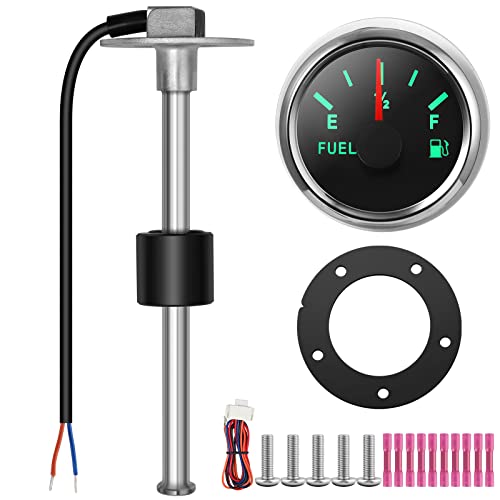
RUPSE’s 8-inch option emphasizes precision stainless steel construction, corrosion resistance, and long life. It uses high-quality reed switches for stable output and supports a range of fuels, including gasoline and diesel. With an IP67-rated housing, it’s designed for marine environments and features an easy installation with SAE 5-hole mounting and gasket seals. The unit uses 33-240 ohm output for standard gauges. Best for mid-sized boats needing reliable performance in corrosive environments.
Who it’s best for: Boat owners who prioritize durability and reliable readouts in wet marine conditions.
Why selected: Stainless steel and reed-switch reliability offer solid long-term performance in saltwater settings.
Caution: Verify the exact mounting pattern to match the dash gauge and ensure the gasket is properly seated to prevent leaks.
Fuel Tank Sending Unit 240-33 Ohms — 11″ (280mm) by Seweder

The Seweder unit uses American standard 240-33 ohms output, designed for boats, autos, trucks, buses, and marine applications. The 11-inch length makes it suitable for mid-to-deep tanks with 316 stainless steel construction and reed-switch reliability. It supports both fuel and water level gauge compatibility. Best for installations requiring a robust, all-purpose sender with straightforward wiring and durable materials.
Who it’s best for: Those needing a versatile sender that can serve multiple vehicle types and a variety of gauges.
Why selected: Wide compatibility and strong corrosion resistance provide long-term value in a marine environment.
Caution: The unit’s length should match or exceed the tank depth to avoid measurement gaps in deep tanks.
100TECH Fuel Sending Unit — 11″ (280mm)

100TECH emphasizes durability with a stainless steel body and an OKI reed switch, offering a direct replacement for arm-type senders. It uses the standard 240-33 ohm output and includes gasket, screws, and clear wiring instructions for easy installation. No moving parts reduce maintenance concerns, and its length supports larger tanks. Best for users seeking a long-lasting, straightforward retrofit that minimizes adjustment needs.
Who it’s best for: Buyers who want a durable, low-maintenance option with a straightforward install process.
Why selected: Reed-switch technology reduces moving parts and enhances reliability in marine environments.
Caution: Ensure the gauge matches 240-33 ohms for correct readings; confirm the tank depth fits the unit length.
Buying Guide: How To Choose The Right Boat Fuel Sending Unit
What depth is your tank? Depth determines the best sending unit length and mounting style. Consider units that fit within your tank’s measurement window to minimize extra hardware.
What gauge compatibility do you need? Most marine gauges use 33-240 ohms or 240-33 ohms. Match the sender’s output to your existing gauge for accurate readings.
Materials matter in saltwater environments. Stainless steel bodies resist corrosion, while gasket seals help prevent leaks. Ensure IP ratings and gasket choices align with your application.
Is installation straightforward or requires customization? Adjustable depth models simplify retrofits, but verify mounting patterns (SAE 5-hole, for example) before purchase.
Durability vs. flexibility. Some models emphasize long life and rugged construction; others prioritize adjustable depth or universal compatibility. Choose based on how often you replace parts and how flexible your tank configurations are.
Frequently Asked Questions
- What ohm range do most gauges use? Most marine gauges use 33-240 ohms or the reverse 240-33 ohms. Match the sender to your gauge’s range for accurate readings.
- Can I replace a sending unit without draining the tank? Replacements typically require at least partial access to the tank area; follow installation instructions and ensure proper safety procedures for fuel systems.
- Are stainless steel senders better for boats? Stainless steel offers superior corrosion resistance in marine environments, improving longevity and reliability.
- Do adjustable-depth senders fit all tanks? Adjustable models fit a wide range of tank depths but always confirm the maximum and minimum depth supported by the unit.
- Is quick-wiring possible for these units? Many units include quick wiring terminals and illustrated instructions to simplify installation; verify compatibility with your dashboard wiring.
- What should I consider about tank shape? Some tanks are elongated or irregular; measure depth at multiple points and choose a sender that can flex to fit with optional cutting or rotating features.