When choosing boat engine soundproofing material, look for products that reduce engine and hull noise, block radiant heat, and resist moisture in marine environments. The top picks below are suited for boaters seeking quieter cabins, less heat transfer, and easier installation. This guide highlights five options that balance material thickness, adhesive strength, and heat insulation, so you can pick the right one for your deck, engine compartment, or hull areas.
Buyer note: The following selections emphasize suitability for boat use, including resistance to moisture and high heat. The table summarizes core specs to help compare quickly.
| Product | Brand | Coverage | Thickness | |
|---|---|---|---|---|
| VOISEN Sound Deading Material | VOISEN | 31 sqft | 5 mm | Excellent heat blocking; DIY friendly |
| PRAMUME 38 sqft Car Sound Deadening Mat | PRAMUME | 38 sqft | 80 mil (2 mm) | Three-layer design; strong adhesive |
| ALLWIN Car Heat Insulation Mat (6.5 sqft) | ALLWIN | 6.5 sqft | 394 mils (≈10 mm) | High heat resistance; robust insulation |
| ALLWIN Car Heat Insulation Mat (10.8 sqft) | ALLWIN | 10.8 sqft | 394 mils (≈10 mm) | Large-area coverage; strong moisture resistance |
| FOURUB 590Mil Sound Deadening Foam | FOURUB | Not specified (targeted fit) | 590 mils (≈15 mm) | Heavy-duty heat and noise reduction |
VOISEN Sound Deading Material for Cars
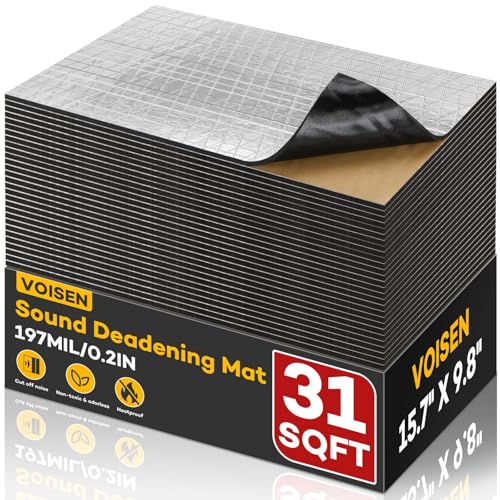
Best for boat owners seeking a flexible, moisture-resistant layer that is easy to cut and install. The VOISEN set includes 28 pieces (15.7 x 9.8 inches each) with a total of 31 square feet. The aluminum surface provides a durable moisture barrier, while the closed-cell foam core blocks heat and dampens vibration. Suitable for engine compartments or hull panels where ventilation is careful but space is limited.
- Thickness: 5 mm; Coverage: 31 sq ft; Temperature range: -40°F to 300°F
- Features waterproof aluminum surface; DIY cut and install; flexible for curved surfaces
- Heat reduction: blocks up to 98% of radiant heat transfer; can contribute to fuel savings via cooler operation
Best for: Boat owners who want a durable, moisture-resistant mat that’s relatively easy to shape around irregular areas. Consider this if you need a good balance of heat insulation and ease of handling. Caution: Ensure the mat is fully pressed against the surface to avoid air pockets that could reduce adhesion over time.
PRAMUME 38 Sqft Car Sound Deadening Mat

Best for larger boat cabins or engine bays where a thicker, multi-layer barrier is advantageous. PRAMUME offers an 80 mil (2 mm) mat with a three-layer build: a reinforced aluminum top foil for heat insulation, a butyl rubber core for sound blocking, and a strong adhesive backing. This combination yields solid vibration dampening and heat resistance, with a residue-free bond during removal or reapplication.
- Three-layer structure: foil for heat, butyl core for sound, strong adhesive
- Thicker base than typical mats; good for louder engine areas
- Better for large flat surfaces on boats; avoid if you need ultra-thin upgrades in tight spaces
Best for: Builders upgrading larger sections of a boat interior or engine compartment where a robust barrier is needed. Choose this if you prioritize strong adhesion and multi-parameter heat control. Caution: The adhesive may require thorough cleaning of surfaces before application to ensure a maximum bond.
ALLWIN Car Heat Sound Deadening Insulation Mat (6.5 Sqft)

Best for smaller boat areas where a compact, moisture-resistant solution is needed. This mat uses a 394 mil (about 10 mm) thickness and a closed-cell foam with a waterproof, odor-free profile. It blocks radiant heat effectively and can help keep the cabin cooler on hot days. It’s suitable for engine bays, doors, or trunks near moisture-prone zones.
- Thickness: 394 mils; Coverage: 6.5 sqft
- Weather and moisture resistant; no odor
- Aluminum foil finish with a self-adhesive layer
Best for: Boaters needing a compact solution with strong heat blocking in limited spaces. Limitation: Larger projects may require additional sheets to reach desired coverage.
ALLWIN Car Heat Insulation Mat (10.8 Sqft)

Best for medium-to-large boat areas with higher heat exposure. This mat provides 394 mils thickness across 10.8 square feet of coverage, with excellent thermal resistance to engine heat, exhaust, and sun, helping reduce cooling loads on boat systems. The self-adhesive, moisture-resistant design makes it practical for hull panels or engine bays.
- Thick 394 mils; Coverage: 10.8 sqft
- Blocks 98% radiant heat; moisture-resistant
- Aluminum foil finish with closed-cell foam core
Best for: Those upgrading mid-sized boat zones where heat transfer is a primary concern. Caution: Ensure flat, clean surfaces to maximize adhesion and heat performance.
ALLWIN Car Heat Insulation Mat (6.5 Sqft, 40×24 Inch)
Best for boats needing mid-sized, flexible panels with moisture resistance. Similar to the 10.8 sq ft version, this 6.5 sq ft mat maintains heat-blocking capabilities and a waterproof profile in a slightly smaller footprint. It’s suitable for compartments, doors, and trunks where access is more constrained.
- Thick 394 mils; Coverage: 6.5 sqft
- Heat insulation; moisture resistant; odor-free
- Self-adhesive aluminum-backed foam
Best for: Builders focusing on modular upgrades in boat sections with limited space. Caution: If your project area is irregular, plan cuts carefully to maintain effective seals.
FOURUB 590Mil Sound Deadening Foam Mat

Best for high-demand engine compartments or hull areas where heavy-duty attenuation is needed. FOURUB features a thick 15 mm foam core designed to absorb vibrations and reduce heat transfer. This mat is suited for larger boats or harsh operating environments where significant noise suppression is desired.
- Thickness: 15 mm; Heat resistance
- Reduces motor noise and improves ride comfort
- Waterproof and flame retardant properties
Best for: Boats requiring heavy-duty sound dampening and heat shielding. Caution: The significant thickness may require careful fitting in tight spaces and may impact clearance in some installations.
Buying Guide
Key considerations for selecting boat engine soundproofing material
- Environment compatibility: Look for moisture resistance and salt exposure tolerance to ensure long-term durability on boats.
- Thermal performance: Prioritize materials with high heat reflection or low radiant heat transfer to help keep cabins cooler.
- Thickness and coverage: Thicker mats offer stronger dampening but may be harder to fit; plan coverage based on areas you need to treat.
- Adhesive quality: A strong, residue-free adhesive simplifies installation and removal when needed.
- Installation practicality: Consider DIY-friendly options that can be cut and shaped to fit hull panels, engine bays, and curved surfaces.
- Weight considerations: Heavier mats add weight; balance noise reduction with overall vessel weight and performance.
FAQ
- What is the best thickness for boat soundproofing?
Thicker mats (such as 10–15 mm) generally provide better dampening but require more fitment planning; choose based on area size and space constraints. - Do these materials help with heat inside a boat cabin?
Yes. Many products reflect radiant heat and reduce heat transfer, contributing to cooler interiors and potentially lower cooling loads. - Are these mats waterproof?
Most options feature waterproof or moisture-resistant surfaces; always verify the adhesive and backing suitability for marine use. - Can I install soundproofing mats on curved surfaces?
Yes, several mats are flexible and can be cut to fit curves, hull contours, and engine bays with careful trimming. - Will these affect boat weight significantly?
The mats add some weight, but the improvement in ride quality and cabin comfort is often worth the trade-off; plan accordingly. - Should I hire a pro for installation?
For complex hull sections or tight engine compartments, professional installation can ensure optimal coverage and bonding.