Answering the search for reliable boat engine hatch lift actuators, this guide highlights five durable, 12V actuators suited for marine use, RVs, and other harsh environments. These selections are best for boat owners who want smooth, steady lift with corrosion resistance and straightforward mounting. Use this overview to compare force, stroke, and IP ratings to pick the right actuator for your hatch size and weight.
| Product | Stroke | Max Load | IP Rating |
|---|---|---|---|
| JQDML 18″ Actuator | 18 in | 440 lbs | IP65 |
| JQDML 12″ Actuator | 20 in | 660 lbs | IP65 |
| JQDML 40″ Actuator | 40 in | 440 lbs | IP65 |
| Progressive Automations PA-10 | 36 in | 450 lbs | IP66 |
| 12V Linear Actuator 18″ (RVMARINEPAT) | 18 in | 660 lbs | IP54 |
JQDML 18 Inch Stroke Linear Actuator

The JQDML 18 Inch Stroke Linear Actuator delivers 440 lbs of maximum thrust with a 0.31 in/s no-load speed. It uses a 12V DC motor and features IP65 waterproofing, corrosion-resistant aluminum alloy construction, and a black powder-coated finish for added protection. This model is best for hatch lifts where moderate force and a relatively compact stroke are sufficient. It’s suitable for smaller engine compartments or lighter hatch loads where mounting space is limited.
Best for: boaters with mid-sized hatches or retrofits where space is tight and 440 lbs of thrust is adequate. Choose this if you need robust rust and water resistance with straightforward mounting brackets.
Limitation: The 18″ stroke may require additional linkage or a secondary actuator for taller hatch heights. Consider the extended length when planning installation.
JQDML 12V Heavy Duty Linear Actuator, 20″ Stroke

This actuator offers a 20-inch stroke with a 660 lbs maximum load, optimized for larger hatch openings or heavier engine compartments. The IP65 waterproof rating and aluminum alloy build support marine environments, while the 5A current draw aligns with common boat electrical systems. It provides a higher thrust than the 18″ model, making it a better choice for heavier boat engines or bigger hatches.
Best for: larger boats or heavier hatches where extra stroke and higher thrust are beneficial. Better for retrofit projects needing more reach.
Limitation: Heavier and longer than smaller models; ensure mounting space accommodates a 25.6″ retracted length and 45.28″ extended length.
JQDML 40 Inch Stroke Linear Actuator
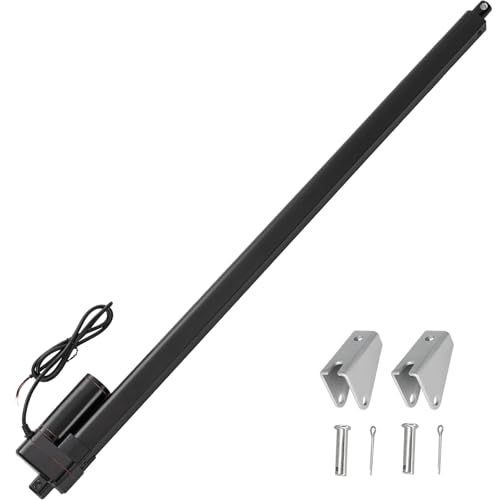
The 40-inch stroke model provides 440 lbs of thrust and a long reach, making it suitable for tall hatches and demanding lifting tasks. Its IP65 waterproofing and robust aluminum alloy construction promote durability in marine conditions. It is best for boats with high hatch clearance or when a tall opening requires extended actuator reach.
Best for: tall hatch applications or installations needing maximum stroke in a single actuator. Opt for this if you want fewer linkages and a direct, long stroke solution.
Caution: A 84.65″ extended length means you must verify clearances inside the hull and avoid interference with other components.
Progressive Automations PA-10 12V Water-Resistant Actuator

The PA-10 features a 36-inch stroke with 450 lbs of force, IP66 protection, and stainless-steel rod. It’s designed for outdoor and marine environments, making it a strong candidate for boat applications where exposure to water and dust is routine. The actuator supports easy integration with various control systems and mounting brackets.
Best for: outdoor marine projects requiring robust IP66 protection and reliable performance in harsh conditions. It is a good match for solar trackers, boat hatch lids, or gate-openers on marine vessels.
Limitation: The kit may require BRK-09 mounting brackets sold separately; plan for additional hardware if mounting to non-standard frames.
Buying Guide
What stroke length do I need for a boat hatch? Measure the hatch height and clearance to determine the required stroke length. Shorter strokes are compact but require bracket placement that achieves full lift; longer strokes reach higher hatches but require more space.
How much thrust is enough? For typical small to mid-size hatches, 440–660 lbs of thrust covers most needs. Heavier engines or larger hatches may demand higher thrust or longer strokes to ensure safe opening and closing.
What IP rating is appropriate? Marine environments demand corrosion resistance and water ingress protection. IP65 is sufficient for most boats, while IP66 or IP54 may be chosen for exposed locations or more rigorous conditions.
What mounting and installation considerations exist? Check retracted and extended lengths, mounting bracket compatibility, and available hull or compartment space. Built-in screws and rustproof hardware reduce maintenance but verify fit with your hull design.
How to compare 12V actuators? Compare stroke, maximum load, speed, current draw, and duty cycle. A higher thrust model with a longer stroke may be preferable for heavy-duty or tall hatch applications, while compact models suit tight installations.
FAQ
- What is the typical lifespan of a marine 12V actuator? The lifespan depends on usage, environment, and maintenance. Regular inspection for corrosion and lubrication of moving parts helps extend life.
- Can I use these actuators for non-mmarine applications? Yes, many are suitable for RV, automotive, or home automation uses where 12V power is available and the environment is not overly harsh.
- Do these actuators come with mounting brackets? Some models include mounting brackets, while others may require BRK-09 or similar brackets sold separately. Check product details.
- Is IP66 protection necessary for outdoor use? IP66 provides higher protection against water jets and dust, which is beneficial for outdoor installations exposed to weather.
- Will these actuators work with standard 12V control boxes? Most are designed to work with common 12V controllers, but verify compatibility with your specific control hardware.
- How do I prevent overextension? Look for actuators with built-in limit switches or limit positioning features to stop extension at the desired point.