Answering the question “which boat dock stabilizer arms should I buy?” this guide highlights practical, durable stabilizer arms that help you dock confidently and reduce sway. Best for frequent anglers, marina users, or homeowners with busy docks, these picks balance ease of use with sturdy construction. The list below summarizes five top options and explains who each is best for, plus a brief comparison table for quick decisions.
| Product | Best For | Key Benefit | Trade-off |
|---|---|---|---|
| Dockmate Mooring Arms | Active boaters at marinas | Easy docking with pivoting arms | Limited to up to 2000 lbs |
| Dock Hardware Finger Pier Stabilizer Bracket | Floating finger piers | Reinforces finger piers against rocking | Requires proper installation |
| 16 Inch Dock Rods | Pontoon and small boats | Shock absorption and simple tying | Basic system, fewer integrated features |
| Pactrade Marine Outrigger Arms | Keeps stability for kayaks and canoes | PVC floats with aluminum arms | May require room to deploy |
| Gbonklong Outrigger Arms | Compact, portable setups | Detachable and corrosion-resistant | Smaller footprint may limit capacity |
Dockmate Mooring Arms
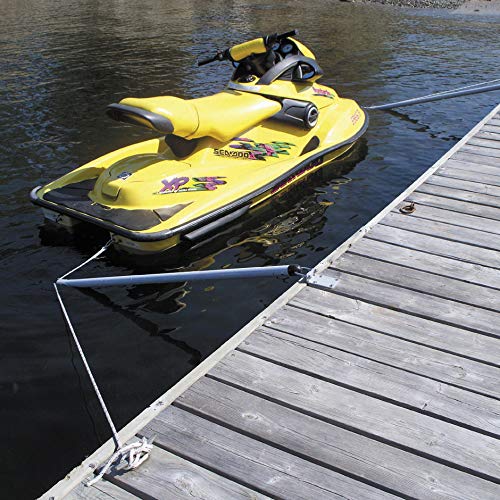
Dockmate Mooring Arms offer a practical, user-friendly solution for docking. The arms pivot onto the dock, allowing tidal action to guide the boat into place. This design reduces rope maneuvers during busy periods at marinas and keeps dock space uncluttered when not in use. Best for casual to moderate docking sessions where quick access and tidy storage matter.
- Best for: boaters who want a hands-off docking approach at protected shores or marinas.
- Why selected: simple, effective docking aid that minimizes line handling and keeps the deck clear.
Caution: Ensure compatibility with your dock configuration and weight capacity. The kit is designed to withstand typical coastal conditions but check installation requirements for your specific setup.
Dock Hardware Floating Dock Finger Pier Stabilizer Bracket

This heavy-duty stabilizer bracket reinforces finger piers, helping to prevent twisting and long-term wear. Made for saltwater, brackish, and freshwater environments, it’s designed as a durable brace for floating docks. Included hardware and sturdy plates support solid installation and reliable long-term use.
- Best for: docks with finger piers needing stabilization against side-to-side movement.
- Why selected: USA-made metal hardware brings corrosion resistance and robust support for daily docking.
Limitation: Proper installation is essential to achieve maximum stability; consult installation guidance for your pier layout.
16 Inch Dock Rods

These dock rods simplify mooring by providing a straightforward, shock-absorbent solution. The design reduces line snags and tangles while keeping the boat aligned with the bollard or cleat. Ideal for pontoon and small-boat owners who need quick, reliable docking assistance.
- Best for: docks where quick, tangible stabilization reduces docking stress.
- Why selected: straightforward operation with rubber shock-absorption helps protect the boat during approach and contact.
Limitation: Fewer adjustable features means you may need to pair with additional stabilizers for larger or heavier vessels.
Pactrade Marine Outrigger Arms

This stabilizer system uses PVC floats paired with aluminum arms to increase stability for kayaks, canoes, and small boats. The kit includes all essential hardware, making it a practical choice for anglers or hobbyists seeking a steady stand-up experience away from unintended tilts.
- Best for: paddlers who often stand on boats or require extra stability during activities.
- Why selected: robust PVC floats combined with corrosion-resistant aluminum arms suit water exposure well.
Limitation: The outriggers require space to deploy and may not be ideal for tight docking areas or crowded berths.
Gbonklong Outrigger Arms

Gbonklong offers a 2-piece marine outrigger kit designed for balance and stability, featuring corrosion-resistant materials and a detachable design for portability. It suits boaters who want a compact solution that’s easy to carry and store when not in use.
- Best for: portable, space-conscious setups or seasonal use.
- Why selected: detachable design and durable components extend lifespan and ease of use.
Limitation: The smaller footprint may mean less stability for heavier boats or rough water compared to larger stabilizers.
Buying Guide: Key Considerations For Dock Stabilizer Arms
What to evaluate when choosing dock stabilizer arms:
- Boat size and weight: Choose stabilizers with weight ratings and dimensions compatible with your craft and dock structure.
- Dock configuration: Finger piers, fixed docks, and marina berths each require different mounting approaches and hardware compatibility.
- Portability vs. permanence: Detachable and portable kits suit seasonal use, while fixed systems excel in high-traffic docks.
- Materials and corrosion resistance: Look for PVC, aluminum, and galvanized steel for longevity in saltwater and freshwater environments.
- Ease of installation: Some systems include all hardware and require basic tools; others need professional installation.
- Space and deployment: Ensure there is room to deploy outriggers or stabilize arms without interfering with other vessels.
Frequently Asked Questions
- Are dock stabilizer arms compatible with all boats? Most are designed for common sizes but verify weight capacity and mounting compatibility with your dock and vessel.
- Do outriggers affect docking speed? They can speed up controlled docking by providing steadier tracking in tidal flows or current.
- Can I install these myself? Many kits are designed for DIY installation; some require drilling or hardware mounting. Follow the included instructions.
- Will stabilizers damage docks? Properly installed stabilizers reduce dock movement but choose models suited to your dock type to avoid damage.
- Which material lasts longest in saltwater? Galvanized steel, aluminum, and high-grade PVC with protective coatings typically offer longer lifespans in saltwater.
- Do I need professional assessment? If you are unsure about weight limits or dock structure, a professional assessment helps ensure safe, effective use.