For boat owners, dock bumper pads protect hulls and docks during every docking maneuver. This guide highlights five reliable options designed for marinas and private docks alike, with clear reasons who each product suits best. Use these details to compare installation, material durability, and protection depth to choose the right bumper for your waterfront setup.
| Product | Best For | Key Benefit |
|---|---|---|
| Hull Hugr Marina Bumper (First Listing) | Commercial marinas and heavy-use docks | Heavy-duty, UV-resistant cover with high-density foam |
| JYINCPED Dock Fender Bumpers (2 Pack) | Residential docks with windier conditions | Soft, UV-resistant inflatable design for strong impact protection |
| Better Boat Dock Bumpers 48 Inch | Perimeter protection along edges | 6×4 inch closed-cell foam for constant depth |
| OCEANBROAD Dock Bumpers 2 Pack | Permanent edge protection | 5mm PVC with complete stainless hardware kit |
| Nalwort Dock Bumpers 16 Feet | Long docks needing full-edge coverage | Multiple 19.5″ sections for flexible lengths |
Hull Hugr Marina Bumper — Heavy-Duty Dock Protection

The Hull Hugr Marina Bumper is designed for commercial marinas and personal docks that require robust protection. The cover uses UV- and tear-resistant vinyl with a polyester tri-laminate, and it is filled with high-density closed-cell foam. Corrosion-proof stainless steel grommets along the bumper edge enable secure mounting to the dock edge.
Best for: Dock owners who need durable, long-lasting protection under heavy use. Better for environments with frequent boat traffic and potential impact.
Caution: The bumper’s weight and installation hardware may require a solid dock edge for secure mounting. Ensure grommets align with dock structure before installation.
JYINCPED Dock Fender Bumpers — Soft, UV-Resistant Protection

The JYINCPED fenders offer a durable, soft, and inflatable design made from marine-grade PVC. They resist UV exposure, fading, tearing, chalking, and crushing while providing strong impact resistance to protect both boat and dock. The set includes pre-drilled holes and mounting hardware for straightforward securing to the dock edge.
Best for: Docks facing windy days or rough seas where gentle but reliable absorption is needed without rigid edge exposure. Choose this if you prefer inflatable padding that conforms to minor hull contact.
Caution: Inflatable fenders require proper air pressure management to maintain shape and protective depth over time.
Hull Hugr Marina Bumper — Second Size Option

This second Hull Hugr bumper variant mirrors the first’s heavy-duty construction, with UV- and tear-resistant vinyl and a tri-laminate exterior over high-density foam. Stainless grommets run the bumper’s length for secure mounting along the dock edge.
Best for: Docks that need a second, compatible bumper length for extended edges or multiple docking points. Better when you require uniform protection across a longer dock stretch.
Caution: Verify compatibility with existing mounting gaps; some docks may need extra hardware to align grommets evenly along the edge.
Better Boat Dock Bumpers — Vertical Or Horizontal Mount

Better Boat offers 6×4 inch high-density closed-cell foam to maintain a full 4-inch depth even with repeated impacts. The thick tri-laminate vinyl construction resists sun and salt exposure, while rust-resistant grommets at every mounting point make installation quick. The bumpers can mount horizontally along dock edges or vertically on pilings, with angled ends for perimeter wrapping.
Best for: Docks needing perimeter protection that can be installed either along horizontal edges or around pilings. Choose this when you want a universal installation approach and long-lasting foam depth.
Caution: Long, straight sections may require precise measurement to avoid gaps at corners.
OCEANBROAD Dock Bumpers — Permanent Edge Protection

OCEANBROAD provides a 2-pack of dock bumpers designed for permanent edge protection. The 5mm marine-grade PVC features UV resistance and corrosion resistance, with a complete stainless steel hardware kit for secure installation to wood or metal docks. The design minimizes tangling and adjustment during docking.
Best for: Docks requiring a fixed, long-term barrier that stays in place through varied tides and currents. Better for permanent installations where frequent repositioning is not desired.
Caution: Ensure the hardware kit aligns with your dock type; incompatible edge design may require extra mounting components.
Dock Bumper Fender — 2 Pack for Edge, Side, Piling

This JYINCPED set supports multiple applications, including edge-mounted horizontal protection and vertical piling protection. The rotomolded vinyl construction offers UV resistance and tough ribs for durable protection. Stainless steel mounting hardware is included for rust protection and easy long-term installation.
Best for: Docks needing versatile mounting options with reliable corrosion resistance and simple hardware. Choose this when you want one bumper system that adapts to many dock configurations.
Caution: The unit may require a precise edge configuration for optimal rib alignment and protection.
Nalwort Dock Bumpers — Long Length Flexibility
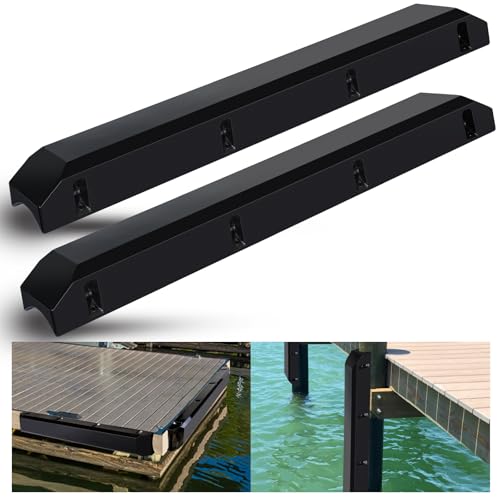
Nalwort’s 16-foot dock bumpers come in a 10-section layout, allowing flexible lengths to cover straight edges and side docks. Made from marine-grade material with corrosion resistance, these bumpers absorb energy efficiently and rebound quickly to protect both boat and dock. They’re designed for a range of dock sizes and weather conditions.
Best for: Docks that require adjustable coverage across long stretches or irregular shapes. Choose Nalwort when you need to tailor bumper length to fit irregular dock perimeters.
Caution: Pre-cut sections may require careful measurement and cutting for exact fit on very uneven docks.
Buying Guide: Key Considerations When Choosing Boat Dock Bumper Pads
- Protection depth and foam type: Higher-density closed-cell foam maintains depth and absorbs impact over time. Look for at least 4 inches of effective depth for heavy use.
- Material and UV resistance: UV-resistant vinyl or PVC with a tri-laminate outer layer prolongs lifespan in sun and saltwater.
- Mounting method: Decide between horizontal edge mounting or vertical pilings. Stainless hardware prevents rust, but ensure the dock edge has suitable mounting points.
- Length and configuration: Long docks may require 16-foot or 48-inch sections that can be joined. For fixed installations, choose permanent-edge bumpers with complete hardware kits.
- Inflatable vs rigid: Inflatable fenders offer soft impact absorption and flexibility; rigid bumpers provide stable, consistent protection. Consider wind and current conditions.
- Installation ease: Pre-drilled holes and included mounting hardware save time. Verify hardware compatibility with your dock material (wood, metal, or composite).
- Maintenance: Check for mold, moisture buildup, and seam integrity. Look for easy-to-clean surfaces and replaceable parts where available.
Frequently Asked Questions
- What is the best bumper type for windy docks? In windy conditions, choose sturdy, closed-cell foam bumpers with UV-resistant vinyl and stainless hardware for secure mounting.
- Can I install bumpers on pilings or only along the dock edge? Many bumpers support both horizontal edge and vertical piling installations; check the product’s mounting options.
- How long do dock bumpers typically last? Lifespan depends on material quality, exposure, and docking frequency. High-density foam and UV-resistant vinyl typically deliver longer service life in marine environments.
- Do bumpers require professional installation? Most bumpers include basic hardware and instructions. Simple DIY installation is common, but professional help may be needed for complex dock configurations.
- Are inflatable bumpers safer for boats? Inflatable bumpers can offer excellent absorption with flexible contact but require maintenance to maintain proper pressure and shape.
- Should I cover the entire dock edge with bumpers? For comprehensive protection, cover high-traffic sections and pilings where boats contact most often, while leaving gaps in low-use areas if needed for maintenance access.