Answering the needs of boaters, this guide highlights five top boat buoys and floats that balance visibility, durability, and ease of use. These picks are best for shorefront mooring, dock docking, and anchor marking across lakes, rivers, and coastal waters. Use them to improve anchorage visibility, protect hulls during docking, and mark positions clearly for all sea conditions.
| Product | Brand | Best For |
|---|---|---|
| TAYLOR MADE Tuff End Buoy, 18″ | TaylorMade | Heavy-duty mooring for mid-size boats |
| Round Boat Fenders Ball Buoy | AmarinePlay | Docking protection and marker buoy |
| 9 Inch Anchor Float Buoy | AmarinePlay | Anchor marking and large mooring visibility |
| Tellegloww Mooring Buoy, 12 Inch | Tellegloww | Night-visibility mooring safety |
| Lewtemi | Bulk marker and rope floats for small to medium craft |
Taylor Made Tuff End Buoy, 18″ — Orange
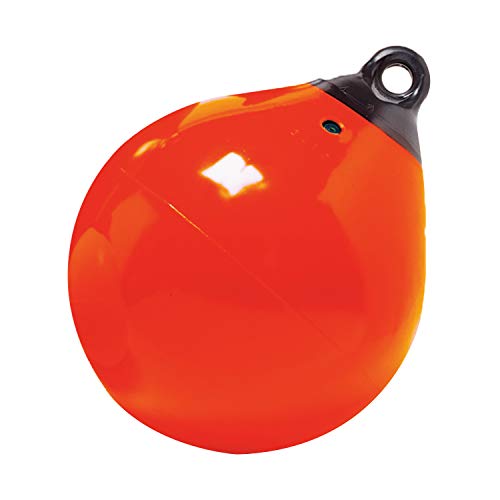
The Tuff End Buoy by TaylorMade is a marine-grade vinyl buoy designed for heavy-duty mooring on boats from 25 to 40 feet. Its 18-inch orange hull provides high visibility and ease of identification in busy marinas or open water. The buoy’s injections-m molded ends are tested to withstand up to 2000 psi tensile strength, making it resilient under strain and rough weather. Large line holes allow simple threading for ropes and shackles, streamlining mooring setup. Best for boaters seeking a rugged, US-made buoy that can endure frequent use and rough seas.
Best for: mid-size boats and commercial-influenced docking scenarios where durability matters more than light-duty travel. Choose this buoy if you prioritize long-term resilience in harsh marine environments. A potential limitation is that its high durability may add weight and stiffness, making initial handling slightly tougher than softer alternatives.
Round Boat Fenders Ball Buoy — 12 Inch

AmarinePlay’s Round Boat Fenders Ball Buoy doubles as a fender and a mooring buoy, offering versatility for docking and anchor marking. The 12-inch ball is crafted from premium marine-grade vinyl with a seamless, one-piece construction and injection-molded ends for durability. Its bright orange color increases daytime visibility and helps distinguish your buoy from others. The design concentrates protection for hulls during docking while serving as a reliable marker buoy in various weather conditions. Best for: boaters who need a compact, visible protective buoy for docks and anchoring. Limitation: larger vessels may require bigger fenders for optimal hull protection.
9 Inch Anchor Float Buoy — Marker Buoy

This 9-inch anchor float buoy from AmarinePlay is designed for high visibility and reliable anchoring marker purposes. It serves as a large mooring buoy, an anchor marker, and a floating bumper for docking. The buoy uses premium marine-grade vinyl with a seamless, one-piece construction and injection-molded ends to resist sun fading and saltwater exposure. Best for: boats needing a compact but highly visible marker at anchor or mooring points. Caution: Its smaller size may be less suitable for very large moorings or high-wind zones where larger buoy visibility is preferred.
Tellegloww Mooring Buoy, 12 Inch
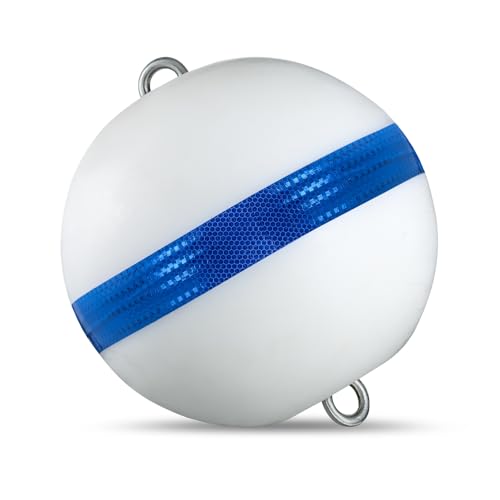
The Tellegloww 12-inch mooring buoy emphasizes visibility with reflective blue stripes designed to catch light at night. Its unique internal shaft and galvanized steel rings provide structural integrity through repeated berthing. The buoy’s design focuses on preventing berthing damage by offering clear, illuminated markers for safe docking. Best for: night-time mooring where enhanced visibility reduces collision risk. Limitation: the blue reflective stripe design may be less effective in very bright sunlight where high-contrast orange markers perform better.
Lewtemi 4 Pcs Buoys Floats Rope Floats

This Lewtemi four-pack includes buoy floats sized about 4.72 x 2.75 inches with a 0.98-inch hole, designed for marker buoy use, rope floats, or small moorings. Their bright red color increases daytime visibility, making them easy to locate in cluttered waters or among gear. They’re constructed from durable plastic and built to resist minor impacts and weather exposure. Best for: sailors and kayakers needing multiple small floats for marker lines or boundary markers. Caution: smaller size means they’re less suited for large vessels or heavy moorings where larger markers are preferable.
Buying Guide: Key Purchase Considerations
- Size and visibility: Larger buoys offer greater visibility in busy marinas and open water, while smaller markers work well for line tangents or light-use moorings.
- Material and durability: Marine-grade vinyl and injection-molded ends improve lifespan under sun, salt, and wave action. Consider UV resistance for long-term color retention.
- Intended use: Distinguish between marker buoys, fenders, and actual mooring anchors. Some items combine functions, while others serve a singular purpose.
- Reflective features: Blue or orange reflective stripes enhance nighttime visibility, reducing collision risk during berthing.
- Ease of use: Look for buoy holes and rope compatibility, simple inflation/deflation, and a design that supports repeated placement and retrieval.
- Quantity vs. need: A bulk pack is useful for marking multiple moorings or creating a buoy array for a larger dock or marina.
Frequently Asked Questions
- What is the primary purpose of a boat buoy? — To mark mooring points, identify anchor locations, and provide hull protection during docking.
- Which buoy is best for night visibility? — Buoys with reflective stripes, such as Tellegloww Mooring Buoy, offer improved nighttime visibility.
- Are inflatable buoys durable enough for daily docking? — High-quality marine-grade vinyl buoy cushions can withstand regular use, but check for UV and abrasion resistance in your environment.
- How many buoys should I buy for a small dock? — A mix of marker and mooring buoys, typically 3–6, depending on the docking layout and water conditions.
- Do buoy sizes matter for larger boats? — Yes. Larger boats benefit from bigger, more visible buoys with strong line holes and higher tensile strength.
- Can buoy color help differentiate uses? — Yes. Consistent color-coding helps distinguish mooring points, markers, and docking zones.