Choosing the right boat blower vent cover improves airflow, reduces bilge odors, and helps protect vents from debris. This guide highlights five practical options for different boat types and budgets. Best for compact cabins, larger yachts, or vessels with multiple vents, these picks emphasize durability, ventilation performance, and corrosion resistance. The table below summarizes the top five selections to help you compare at a glance.
| Product | Brand | Key Benefit |
|---|---|---|
| White 4″ Vent Grill | Replacement Boat Parts | Solid fit for 4″ hoses, double clamping readiness |
| Venturi Vent White | Attwood | Slim profile with ample cross-section area |
| 1494F1 Marine Venturi Vent | Attwood | ABYC area-compliant ventilation |
| Boat Blower Vent Cover 304 Stainless | Qiilu | Premium stainless steel and durable base |
| 4in Vent Cover 316 Stainless | Oreilet | Polished stainless with decorative finish |
White 4″ Vent Grill — Replacement Boat Parts

The 4″ vent grill is designed to clamp around a 4″ blower hose with a 1.5″ smooth barb, allowing double-clamping for a secure seal. The flange is 4-7/8″ in diameter and installs into a 4″ hole with two screws (not included). Best for boats needing a simple, low-profile 4″ intake or exhaust cover with easy retrofits. Choose this if you want a straightforward replacement part with compatible barb sizing.
Best for: small to mid-sized sail and powerboats needing a quick, affordable vent upgrade or repair. Limitation: screws are not included, so you’ll need to source hardware separately.
Venturi Vent White — Attwood
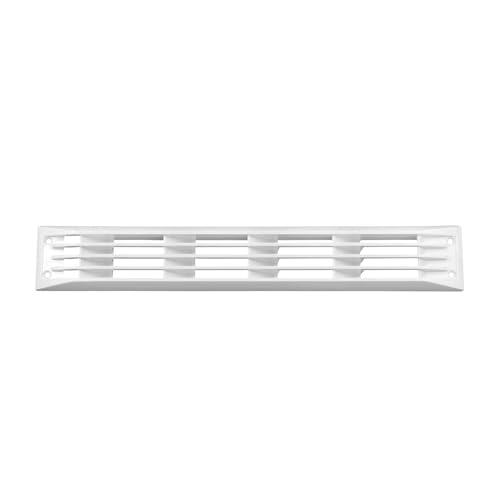
This Attwood Venturi Vent features a white finish with a compact footprint suitable for limited deck profiles. The size is listed as 17-9/16″L x 2-3/4″H x 11/16″W, providing a low-profile intake option. Best for boats needing a lightweight, corrosion-resistant vent with a simple installation approach. Caution: verify cutout dimensions against your existing deck opening before purchase.
Best for: boats that require a slim, flush-mount vent with straightforward mounting. Better for: installations where space is at a premium and ABYC cross-sectional area compliance is not the primary concern.
1494F1 Marine Venturi Vent Cover — Attwood

The 1494F1 vent cover from Attwood supports adequate ventilation while meeting ABYC H-2 cross-sectional area requirements. It is designed for a 2″ x 15-3/8″ cutout, making it suitable for larger installations or retrofit projects. Best for: boats that need ABYC-compliant ventilation with a dedicated large opening. Limitation: requires a precise, larger cutout which may not fit all existing openings.
Choose this if ABYC compliance and a robust vent cover are priorities and you have the appropriate cutout space.
Boat Blower Vent Cover — Qiilu

This 304 stainless steel vent cover with a nylon base targets durability and corrosion resistance, suitable for a wide range of boats and yachts. It is designed to help keep bilges odor-free and extend the service life of ventilation systems. Best for: vessels exposed to harsh marine environments where metal strength and long-term durability are essential. Limitation: heavier than some plastic alternatives, which could affect weight-sensitive installations.
Better for: larger boats or high-use areas where durability is a critical factor and biển water exposure is frequent.
4in Vent Cover — Oreilet, Stainless

The Oreilet vent cover is a 4″ stainless steel option with a high-polished finish and ABS-based inner construction. It aims to blend aesthetic appeal with robust weather resistance. Best for: boats that want a polished, maintenance-friendly vent cover that resists corrosion. Limitation: the dual-material design may require careful maintenance to prevent any loosening of the edge over time.
Choose this if you want a decorative yet durable vent cover with a strong stainless frame and a smooth inner surface for airflow.
Buying Guide
Key purchase considerations help ensure you select a vent cover that fits your boat and ventilation needs.
What size and cutout do I need?
Measure the existing opening or the intake hose size. Many covers specify 3″ or 4″ cutouts and may require exact hole dimensions for proper sealing and airflow.
What material is best for my environment?
Stainless steel provides corrosion resistance and durability in saltwater environments, while plastic options may be lighter and easier to install but less durable over time.
Is ABYC compliance important?
For commercial or more regulated vessels, choosing a vent cover that meets ABYC cross-sectional area requirements can be beneficial for ensuring adequate airflow and safety.
How important is appearance and finish?
Polished or white finishes can improve aesthetics on sailboats or yachts. If looks matter, consider the visual impact of a vent cover’s finish and how it matches other hardware.
Installation and maintenance considerations
Check for included mounting hardware and whether double clamping is possible. Consider accessibility for cleaning, debris removal, and potential interference with other deck components.
Compatibility and future-proofing
Choose a vent cover with a flexible enough profile to accommodate hose brands and changing configurations. If you plan upgrades, select a model with a readily available replacement or upgrade path.
FAQ
- Q: Do vent covers affect ventilation rate?
- A: Yes. Properly sized and installed vent covers support effective airflow while protecting the system from debris.
- Q: Can I install these on metal and fiberglass decks?
- A: Most covers are designed for common boat deck openings; confirm fitment with your deck material and screw patterns.
- Q: Are stainless steel vent covers harder to install than plastic?
- A: They can be heavier and may require robust mounting, but offer superior durability in marine environments.
- Q: Should I use sealant with vent covers?
- A: Use appropriate marine sealant or gaskets as recommended by the manufacturer to prevent leaks and corrosion.