Find the right boat block and tackle system for lifting, hoisting, and rigging on deck or in the shop. This guide highlights five strong options, explains who they’re best for, and notes any important limitations. Ideal buyers include boaters, garage workshop users, and DIY enthusiasts seeking durable, high-capacity pulleys with reliable rope and hardware.
Summary table of selected products:
| Product | Best For | Key Benefit | Capacity |
|---|---|---|---|
| YATOINTO Upgraded Rope Hoist Pulley System | Garage, warehouse, home projects | 8:1 lifting power with heavy-duty sling | 1100 lbs |
| Greteefor Heavy-Duty Double Block and Tackle | Attic, garage, heavy items | 4:1 mechanical advantage with dual pulleys | 7200 lbs |
| XSTRAP STANDARD Heavy-Duty 2,000 LB | Smaller lifts, hobby projects | 50 ft rope with soft loops | 2000 lbs |
| YATOINTO Rope Hoist Pulley System with Metal Bearing | Heavy lifting in cluttered spaces | 8:1 power with metal bearings | 4400 lbs |
| VEVOR Twin Sheave Block and Tackle | Rigging, hauling, general purpose | Dual pulleys for smooth runs | 7700 lbs |
YATOINTO Upgraded Rope Hoist Pulley System

The YATOINTO system uses a rust-proof zinc-plated housing and 304 stainless steel shackle with a 1″×8ft lifting sling. It features a diamond braid polypropylene rope for durability and lighter weight. It is designed to lift up to 1100 lbs in practical settings, making it suitable for garage or warehouse hoisting tasks. The 8:1 lifting power helps reduce manual effort, especially for repetitive lifts. Best for: small-to-moderate loads in home workshops or light-duty industrial tasks.
Best-for user notes: This setup is well-suited for users who want a complete kit with two slings and a shackle included. It’s a solid pick when you need a compact, corrosion-resistant unit for daily lifting. Caution: Ensure the rope and hardware are inspected regularly for wear, and avoid overloading the 1100 lb rating.
Greteefor Heavy-Duty Double Block and Tackle

This system uses a 4:1 mechanical advantage and dual pulleys to lift heavy loads with a fraction of the force. It accepts heavy-duty rope up to 15mm and is built from forged aluminum for rust resistance and durability. Rated for up to 7,200 lbs in practice, it suits garage or attic lifting tasks that require reliable, steady performance. Best for: users who need a robust, high-capacity rig for taller lifts or frequent use. Caution: Aluminum components can bend if misused under extreme, unbalanced loads.
XSTRAP STANDARD 50 Ft Rope Hoist

Notable for its 50-foot length and 2000 lb working load, this model includes two 18-inch soft loops and reflective rope for nighttime visibility. The zinc-plated steel housing and safety hooks offer solid reliability for lifting small to medium loads. Best for: hobbyists and light-to-moderate lifting tasks in garages or workshops. Limitation: It uses a non-specified power ratio, so users should plan around a conservative lifting strategy and avoid overextending rope length under heavy loads.
YATOINTO Rope Hoist Pulley System with Metal Bearing

This model emphasizes a metal bearing system for smoother operation and longer life. It provides 8:1 lifting power with 65 feet of rope and a 4400 lb capacity. The rope is described as diamond braid polypropylene, offering a balance of strength and manageability. Best for: lifting heavier items at a distance where smooth operation matters. Caution: Ensure the rope length is properly managed to prevent kinks or binding in the pulley path.
VEVOR Twin Sheave Block and Tackle
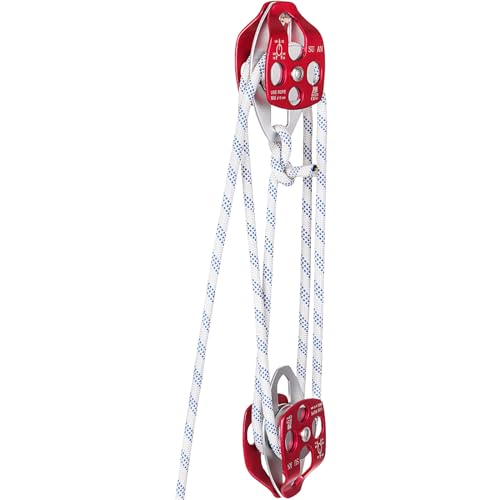
The VEVOR twin-sheave setup is designed for tough jobs with 7700 lb break rating on half-inch rope. It uses forged aluminum pulleys and a long-lasting axle, with 11-core braided polyester rope for consistent handling. Best for: heavy rigging tasks where multiple pulls are beneficial. Caution: As with any high-capacity system, proper training on safe load distribution is essential to prevent load imbalance.
Buying Guide
What should you consider when choosing a boat block and tackle system?
- Load capacity: Match the system to the heaviest lift you anticipate. Exceeding capacity risks equipment failure.
- Mechanical advantage: Higher ratios reduce effort but may require longer rope paths and more complex setups.
- Rope and hardware materials: Look for corrosion-resistant housings, stainless or galvanized components, and robust bearings for longevity.
- Rope length: Ensure the rope length accommodates the lift height you need without excessive trailing or tangling.
- Portability vs. fixed use: Some kits are compact for garages; others are bulkier and suited for warehouse environments.
- Safety features: Check for secure hooks, reliable latches, and the presence of soft loops for reducing load shock.
Practical buyer tips
- Choose a system with included slings or loops if you lack reliable lifting accessories.
- Prefer units with metal bearings for smoother operation and longer service life.
- Avoid overly cheap or unverified systems that may compromise safety with lean materials.
FAQ
- What is a block and tackle system best used for? It is used to lift, pull, or hoist heavy loads with mechanical advantage to reduce effort.
- Can I use any rope with a block and tackle? Use the rope type and diameter specified by the manufacturer to ensure compatibility and safety.
- How do I know the right capacity for my project? Assess the heaviest item you expect to lift and account for dynamic loads and anchor strength.
- What maintenance is required? Regularly inspect the housing, pulleys, bearings, and rope for wear, fraying, or corrosion; replace as needed.
- Are these suitable for outdoor use? Many are designed to resist rust, but prolonged exposure to harsh weather calls for protective storage and periodic checks.
- Is training needed to operate a block and tackle safely? Yes. Proper handling, load distribution, and anchor point setup are essential for safe operation.